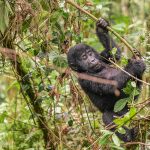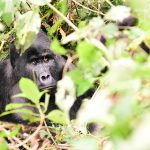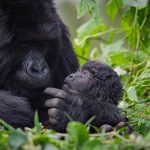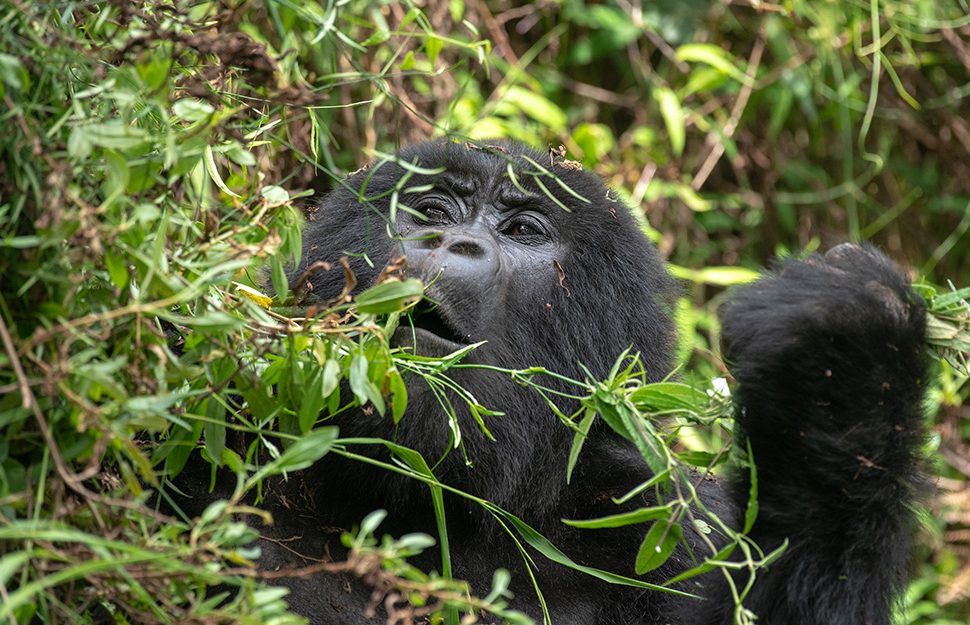

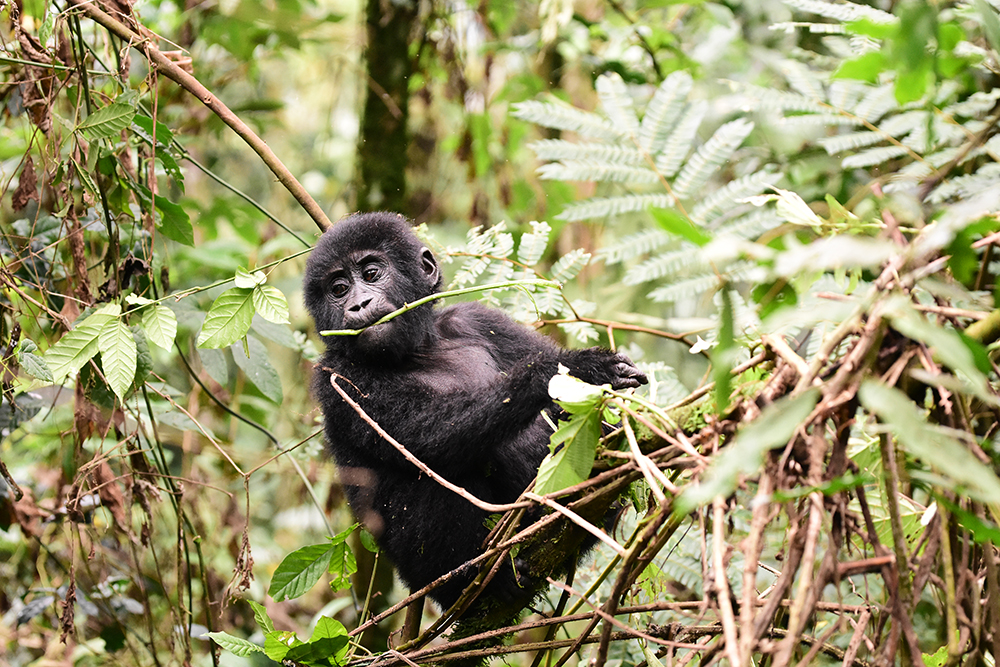
A 400-pound silverback sits just seven meters away, quietly eating bamboo and looking right at you. When your eyes meet, you realize you’re not just observing wildlife—you’re sharing a moment of connection. This is gorilla trekking in Rwanda. Thirty years ago, Rwanda was known for its tragic history. Today, it’s Africa’s leading destination for gorilla trekking. The hills that once saw hardship are now filled with the sounds of gorillas and the excitement of visitors.
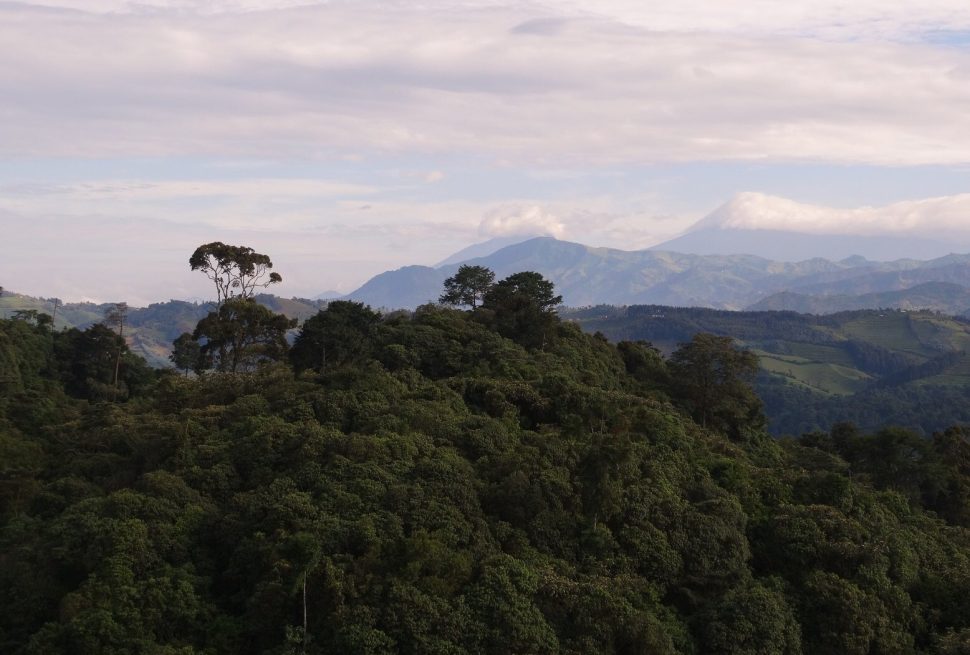
Rwanda has changed dramatically. Locals call it “the land of a thousand hills,” and the name fits. As you travel to Volcanoes National Park, you’ll see rolling green hills, terraced farms, and misty peaks where mountain gorillas live. There’s something the brochures don’t tell you: meeting a gorilla family can change you. I’ve seen even the toughest travelers moved to tears, and skeptics inspired to support conservation. These moments stay with people long after their visit.
This guide covers more than just the basics. You’ll find tips on choosing the right gorilla family for your fitness level, learn about local culture, and see what makes Rwanda’s conservation efforts unique. Without further ado, let’s dive into the details.
Key Takeaways
- Gorilla trekking in Rwanda is one of the world’s top wildlife experiences. At Volcanoes National Park, you can see over 400 mountain gorillas in 12 habituated families. The $1,500 permit is a big investment, but the great infrastructure and unique encounters make it worth it.
- Gorilla trekking in Rwanda is easier to access and more comfortable than in other countries. The drive from Kigali is only 2.5 hours, compared to 8-10 hours in Uganda. Top-quality lodges and experienced guides help make your trip enjoyable from start to finish.
- You need to be moderately fit for gorilla trekking in Rwanda. Hikes can last from 1 to 6 hours, depending on which gorilla family you visit. The park’s well-kept trails and porter services make this adventure possible for most people aged 15 and older.
Mountain Gorillas
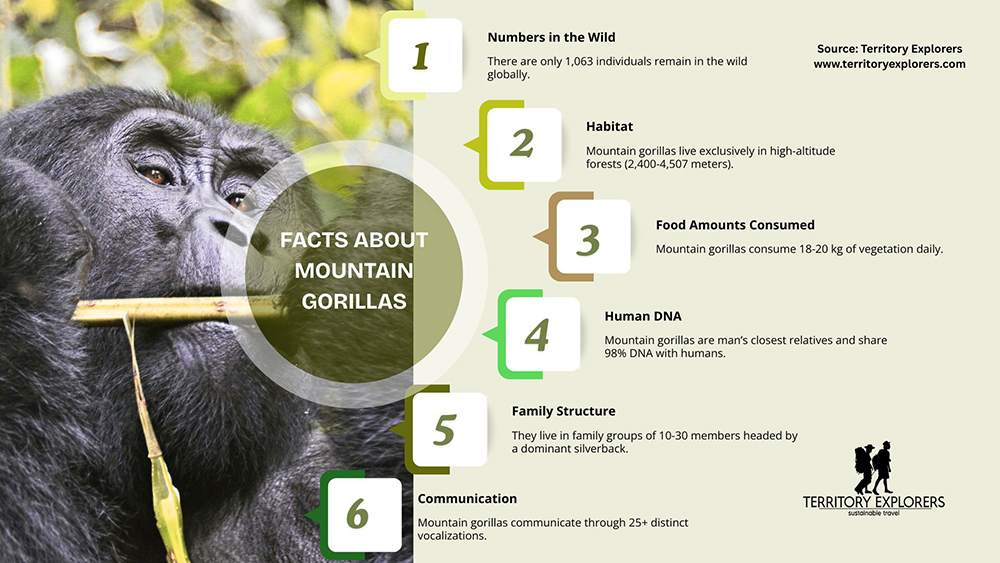
Mountain gorillas share 98% of human DNA, and this similarity is clear when you see them up close. You can only find these amazing primates in the Virunga Mountains. Rwanda is home to about 400 gorillas in 12 well-habituated families. The rest live in the Virunga Massif, which stretches into Uganda and DR Congo, including Uganda’s Bwindi Impenetrable National Park and Mgahinga. Every gorilla has its own personality, as unique as a human fingerprint.
Adult silverbacks can weigh up to 220 kilograms and stand almost two meters tall. Despite their size, they are gentle and focus on protecting their families and finding food. The silver-gray hair on their backs appears after age 15, showing they are ready to lead their group.
Mountain gorilla families usually have 10 to 30 members, led by a dominant silverback. Their social lives are a lot like ours, with caring parents, sibling rivalries, and several generations living together. Seeing a huge silverback gently play with babies is a moving sight, often bringing tears to visitors.
Mountain gorillas are one of the world’s most endangered animals, with just 1,063 left in the wild. They live only in the cool, thick forests of the Virunga Mountains, at elevations between 2,400 and 4,507 meters. Each mountain gorilla eats 18 to 20 kilograms of plants every day. Even though they are large, they are gentle plant-eaters, so it is safe for people to visit them on guided tours.
Mountain gorillas communicate with over 25 different sounds and calls. Each sound has its own meaning. For example, they may grunt happily while eating or make warning calls if there is danger. They also use body movements and facial expressions to share their feelings and needs with their family.
Volcanoes National Park – The Mountain Gorilla Habitat
Park Geography and Volcanic Landscape
Volcanoes National Park sits on 160 square kilometers of untouched mountain forest, with five impressive volcanic peaks shaping the landscape. Mount Karisimbi, Bisoke, Muhabura, Gahinga, and Sabyinyo are the heart of this UNESCO World Heritage site. Over millions of years, volcanic activity has produced rich soils supporting a wide variety of plants and animals.
The park sits between 2,400 and 4,507 meters above sea level, which creates a range of habitats from thick bamboo forests to open alpine meadows. In the mornings, mist often covers the peaks, giving the mountains a mysterious feel. Although the park is near the equator and temperatures stay steady throughout the year, the high elevation means it can be quite cool.
Old lava flows have formed special features in the park, such as crater lakes, steep cliffs, and lava tubes. The mix of volcanic soil, high elevation, and equatorial weather creates small areas with unique conditions, allowing rare plants to grow. When you stand on the rim of Mount Bisoke’s crater, surrounded by giant lobelias, it can feel like you’ve stepped into another world.
Biodiversity Beyond Gorillas
The park is home to more than 200 types of trees, forming layered habitats from the ground up to canopies 40 meters high. The air is filled with the smell of earth and wild celery, which gorillas love to eat. Mossy ground and rotting logs provide places for new trees to grow and support many kinds of fungi.
Notable Wildlife Species:
• 178 bird species (13 Albertine Rift endemics)
• Forest elephants and buffalo
• Black-fronted duiker and bushbuck
• Over 100 butterfly species
• Numerous endemic plant species
You can hear Rwenzori turacos and see sunbirds darting through the misty trees. Photographers will find plenty of chances to capture colorful birds with volcanoes in the background. These forests are a great example of nature’s diversity and show why it’s important to protect them.
Conservation History and Dian Fossey’s Legacy
Volcanoes National Park, founded in 1925 as Africa’s first national park, has nearly a century of conservation history. It began as a colonial hunting reserve and has become a famous gorilla sanctuary, mirroring Rwanda’s shift from conflict to conservation leadership. The healthy gorilla populations seen today are thanks to many years of dedicated protection.
When Dian Fossey arrived in 1967, she began important mountain gorilla research and conservation at her Karisoke Research Center. Over 18 years, she showed how complex gorilla social lives are and proved they deserve protection, not fear. The film “Gorillas in the Mist” helped people worldwide see gorillas as individuals with unique personalities and family bonds.
Visiting Fossey’s grave, surrounded by gorillas like Digit and Uncle Bert, is a strong reminder that conservation often means personal sacrifice. Since Fossey’s time, the park has shown how involving local communities can turn former poachers into protectors. Rwanda’s revenue-sharing approach also gives people economic reasons to protect wildlife and helps raise living standards.
Rwanda’s Gorilla Families
Easy Trek Families: Perfect for Beginners
1. Sabyinyo Group – The Gentle Giants (20+ members) Led by Guhonda, Rwanda’s largest silverback at over 220 kilograms, this family is known for its calm nature, making visits relaxed and enjoyable. Meeting Guhonda is like seeing a gentle giant from a storybook. The 1-2 hour trek is perfect for visitors with limited mobility or those who want to focus on photography instead of a tough hike.
The family stays calm because of Guhonda’s confident leadership, which helps everyone feel at ease during visits. They often eat in open bamboo areas, making it easy to take great photos. Watching this family interact gives you a look at gorilla social life, which can be surprisingly similar to our own families.
2. Amahoro Group – The Peaceful Family (17+ members) This family’s name means “peace,” and they live up to it. Under silverback Ubumwe’s gentle leadership, they are very tolerant of visitors and often go about their day as if tourists are just part of the forest. The 1-2 hour trek through beautiful bamboo forests is a great way to start gorilla trekking.
Because they are so relaxed, this family is a favorite for photographers, especially during long grooming sessions and playful moments. They often gather in open clearings, which can feel more like a family picnic than a wildlife encounter. Spending time with them helps you appreciate the deep emotional bonds gorillas share.
3. Agashya Group (Group 13) – The Large Family (25+ members) This is Rwanda’s biggest gorilla family, and being with them feels like joining a lively family reunion. Agashya became leader after a dramatic takeover from Nyakairima, which adds an interesting story to your visit. Even with so many members, the group stays close-knit, making for great viewing.
The 1-3 hour trek to see them is manageable for most people and almost always leads to memorable encounters. Watching over 25 gorillas at once is a real lesson in primate behavior, with something interesting happening everywhere you look. The many playful young gorillas often come close, making the one-hour visit feel far too short.
Moderate Trek Families: Adventure with Comfort
4. Umubano Group – The Independent Spirit (11+ members) This family split from the Amahoro group, making for some interesting stories about gorilla social life that can feel as dramatic as human family issues. Silverback Charles, named after Prince Charles, leads with a flair that makes it seem like he enjoys being watched. The 2-3 hour trek takes you through different parts of the forest, giving you a full experience of the ecosystem.
This group is very interactive and often seems curious about visitors, especially during playful acrobatics and chest-beating that look more fun than scary. Because the family is smaller, you get a close-up view of each member. Charles is known for his strong but friendly presence, often putting on a show for guests.
5. Kwitonda Group – The Border Crossers (18+ members) This family’s 2008 move from the Democratic Republic of Congo to Rwanda is like an adventure story and shows the importance of cross-border conservation. Led by the gentle silverback Kwitonda, they brought new behaviors and genetic diversity to Rwanda. The 2-4 hour trek to see them takes you through several different habitats in the park.
Their adventurous nature means they move across large areas, so every visit is different. Because they travel so much, they stay in great shape, and you can watch them handle tough terrain with ease. Their mixed backgrounds also make their social life interesting for researchers studying how gorilla groups come together.
6. Hirwa Group – The Lucky Family (16+ members) Hirwa means “lucky one” in Kinyarwanda, and this family has lived up to its name with many new births, showing the success of gorilla conservation. Formed in 2006, several generations have grown up safely here. The 2-3 hour trek to see them goes through beautiful areas where you might spot other wildlife too.
Silverback Munyinya leads this family, and they are very comfortable around people, often going about their usual feeding, grooming, and playing. The many young gorillas make for some of the park’s best photo opportunities, with playful moments that seem made for the camera. Watching how they care for their young can remind you of human families.
Challenging Trek Families: For Adventure Seekers
7. Susa A Group – The Movie Stars (33+ members) This was Dian Fossey’s favorite research group and the stars of the movie “Gorillas in the Mist.” With over 33 members, they are Rwanda’s largest gorilla family and put on wildlife displays that rival Africa’s top parks. The trek to see them takes 4-6 hours through steep, muddy trails, making it a real test of endurance and excitement.
These gorillas are comfortable around people thanks to decades of research that began with Fossey. With several silverbacks, their group has interesting social dynamics that researchers study to understand gorilla hierarchies. Their remote home offers a true explorer’s experience in untouched forests that few people ever visit.
Meeting the descendants of gorillas that Fossey knew personally gives visitors a deep connection to conservation history. Watching these thriving families in the same places where Fossey did her research turns a wildlife visit into a meaningful tribute to the pioneers who protected them.
8. Karisimbi Group – The High Altitude Specialists (15+ members) This family lives high on the slopes of Mount Karisimbi, Rwanda’s tallest mountain. They are known for being the park’s toughest group to reach, with treks going above 4,000 meters and challenging even the fittest hikers. Their remote home means you can see them behaving naturally, often without any disturbance for days.
Living at high altitude has led these gorillato develop unique traits that set them apart from their lowland relatives. Their thick fur and strong bodies help them handle conditions that even experienced climbers find tough. They also eat special high-altitude plants that aren’t found anywhere else in the park.
Visiting this group feels more like reaching a mountaineering milestone than a regular wildlife outing. The altitude, challenging trails, and incredible gorilla encounters make it an adventure you’ll remember as a true highlight.
9. Bwenge Group – The Nomadic Wanderers (11+ members) Led by silverback Bwenge, this family is known for being the park’s most mobile group. They move often, like true wanderers, which makes tracking them a real adventure. Because their location changes so much, every trek to find them is different.
Their wandering lifestyle keeps them in great shape and lets them find a wide variety of food across large areas. Because they’re always on the move, they stay alert and aware of their surroundings, making encounters with them feel wild and untamed. Trekking through different landscapes to reach them is perfect for visitors who want a true wilderness adventure.
Bwenge leads his group with quick decisions and smart route choices, showing the intelligence that helps gorillas thrive in tough environments. Watching him guide his family through difficult terrain highlights their awareness and impressive navigation skills.
Research and Conservation Groups
10. Ugenda Group – The Constant Travelers (11+ members) True to their name – mobile, this family is always on the move, searching for the best feeding spots and safe places to rest. Silverback Wageni, whose name means “visitor,” leads the group with a spirit of exploration that keeps researchers on their toes and offers important insights into gorilla movement. Their unpredictable routes make them a top choice for scientists studying territory and ranging behavior.
Finding this group adds a real sense of adventure to wildlife tracking, which many visitors find more rewarding than meeting gorillas in predictable spots. Their constant movement takes visitors through untouched parts of the park, offering experiences that feel like those of early explorers. Because they are always on the go, these gorillas are especially fit and alert, making encounters feel truly wild.
Tracking this group gives visitors a chance to see how gorillas choose where to eat, sleep, and travel. Because they are so unpredictable, finding them feels like a real accomplishment and makes the experience more rewarding than simply visiting a known location.
11. Ntambara Group – The Warrior Family (14+ members) This family is led by the strong silverback Ntambara, whose name means “fighter.” Their history is full of territorial disputes and leadership challenges, making their story dramatic and intense. Ntambara’s reputation as a warrior shapes the group’s dynamics, which researchers study to better understand territorial behavior. Treks to see this group often last 2-4 hours and pass through areas where signs of past conflicts can still be seen.
Ntambara’s strong personality has shaped his family, making them seem more alert and united than groups with quieter histories. His protective nature keeps the family close together and aware of their surroundings. His displays of strength and authority show why silverbacks are respected in gorilla society.
Even though Ntambara is known as a fighter, he is gentle with his family, especially the young ones. This contrast between his tough reputation and his caring side shows the complex emotions gorillas have. It helps visitors see that gorilla aggression is usually about defense, not malice.
12. Pablo Group – The Research Legacy (19+ members) Dian Fossey named this family after Pablo Picasso, and they have become a symbol of conservation and research. As one of the original groups studied by Fossey, they connect the early days of gorilla research to today’s conservation work. Their silverback, Cantsbee, is calm and used to people, making this group ideal for ongoing research.
Because of their long history with people, this group is comfortable around visitors and goes about their daily lives even when people are nearby. The family includes several generations, from great-grandparents who knew Fossey to infants born into a safe, protected environment. Their story reflects the recovery of mountain gorillas over time.
Visiting this group is like stepping into a living piece of conservation history. Each family member stands for the progress made in protecting the species and the success of community conservation. Their calmness around people and rich social lives make them perfect for photography and observation, while also honoring the pioneers who helped protect them.
Indigenous Banyarwanda Culture and Traditions
Cultural Heritage: Living with the Land
The Banyarwanda have lived in Rwanda’s volcanic highlands for over a thousand years, creating cultural traditions that work in harmony with the mountain environment long before modern conservation began. Their society is based on the Ubuntu philosophy, which teaches that individual wellbeing depends on the community’s prosperity. This idea now inspires many conservation efforts. When you visit their villages today, you can see farming methods passed down through generations that show how to live sustainably.
Traditionally, the Banyarwanda were led by kings (Mwami), chiefs, and clan leaders who made decisions through group discussions and agreement. These ways of making decisions have been adapted for today’s conservation programs that manage natural resources. Their oral traditions also hold a wealth of knowledge about wildlife, seasonal changes, and ecological relationships, which researchers continue to study and learn from.
The unique conical-roofed ‘nyakatsi’ houses are built from local materials and have little impact on the environment, making them well-suited to the mountain climate. The Banyarwanda’s cultural calendar follows the rhythms of farming seasons and natural cycles, keeping people closely connected to the land and wildlife. Their traditional dances, music, and crafts all celebrate this deep bond with nature.
Modern Integration: Conservation Champions
Today, the Banyarwanda are known as one of Africa’s best examples of an indigenous community leading wildlife conservation while keeping their cultural identity and improving their economy. Moving from subsistence farming to community tourism has opened up new ways to share their heritage, such as gorilla-themed crafts and performances for visitors from around the world.
Many local guides are former farmers or reformed poachers who bring deep knowledge of the forest and animal behavior, making visits more meaningful and providing steady jobs for the community. Their traditional tracking skills, developed over generations, help them identify individual gorillas and predict their behavior, working hand-in-hand with modern conservation science.
After the genocide, Rwanda’s efforts to bring people together also shaped its conservation work. Protecting gorillas became a symbol of national healing that goes beyond ethnic differences. Community meetings about conservation use traditional ways of reaching agreement while facing today’s challenges. Cultural exchanges give visitors a chance to see how conservation can meet both human and wildlife needs.
Where to Stay: Accommodations for Every Budget
Ultra-Luxury Lodges: Where Comfort Meets Conservation
1. Bisate Lodge – Volcanic Crater Luxury
Location & Setting:
- Perched on an ancient volcanic crater rim
- Panoramic views of the Virunga Mountains
- Six villa-style suites with contemporary design
- Traditional Rwandan architectural elements
Amenities & Features:
- Floor-to-ceiling windows framing volcanic peaks
- Private terraces with outdoor bathtubs
- Interiors crafted by local artisans using sustainable materials
- Personal butler service anticipating every need
- Award-winning spa with traditional Rwandan healing practices
Conservation Impact:
- Environmental commitment includes reforestation projects
- Over 100,000 indigenous trees planted
- Supports local sustainable agriculture partnerships
Dining & Service:
- Gourmet cuisine featuring locally-sourced ingredients
- International chefs working with community partners
- Pre-trek breakfast preparation and post-encounter refreshments
2. Singita Kwitonda Lodge – Slopes of Sabyinyo
Location & Setting:
- Situated on Mount Sabyinyo slopes
- Eight suites with unobstructed volcanic landscape views
- Architecture growing from volcanic rock
- Seamless environment integration
Luxury Features:
- Private heated pools in each suite
- Spacious living areas with panoramic windows
- Dedicated butler service for personalized attention
- “Luxury with purpose” design philosophy
Community Connection:
- Employment opportunities for local communities
- Skills training and traditional craft support
- Authentic Rwanda experience souvenir opportunities
- Farm-to-table dining from organic lodge farms
Activities & Wellness:
- Wellness center incorporating local healing traditions
- Guided property walks for golden monkey viewing
- Bird watching opportunities on lodge grounds
3. One&Only Nyungwe House – Rainforest Luxury
Location & Setting:
- Near Nyungwe National Park
- Twenty-two rooms and suites available
- Private terraces overlooking ancient rainforest
- Elevated position for stunning canopy views
Accommodation Features:
- Locally-crafted furnishings throughout
- Spacious bathrooms with soaking tubs
- Private outdoor spaces for morning coffee
- Intimate atmospheres connecting guests with nature
Activity Options:
- Chimpanzee tracking opportunities
- Canopy walk experiences
- Cultural village visits
- Complements Volcanoes National Park gorilla experiences
Dining & Wellness:
- Contemporary Rwandan cuisine alongside international favorites
- Traditional wellness-inspired spa treatments
- Locally-sourced ingredients from farmer partnerships
- Generational healing techniques incorporated
Mid-Range Comfort: Quality Without Premium Pricing
1. Mountain Gorilla View Lodge – Park Views
Location Benefits:
- Located outside Volcanoes National Park
- Direct volcanic peak views
- Thirty rooms available
- Easy park access for early morning treks
Room Features:
- Private bathrooms in all rooms
- Mountain climate heating systems
- Private terraces for sundowner drinks
- Comfortable accommodations balancing affordability with quality
Dining & Entertainment:
- Restaurant serving international and Rwandan cuisine
- Local specialties introducing traditional flavors
- Evening Banyarwanda cultural performances
- Local dance groups showcasing indigenous culture
Services & Activities:
- Tour desk arranging additional activities
- Golden monkey trekking coordination
- Volcano hiking arrangements
- Cultural village visit planning
2. Da Vinci Gorilla Lodge – Town Convenience
Strategic Location:
- Situated in Musanze town center
- Easy Volcanoes National Park access
- Twenty well-appointed rooms
- Modern accommodation with convenience focus
Room Amenities:
- En-suite bathrooms with quality fixtures
- Comfortable beds with quality linens
- Heating systems for cool mountain nights
- Budget-conscious without sacrificing comfort
Local Access:
- Walking distance to local restaurants
- Easy access to craft markets
- Cultural attractions showcasing contemporary Rwandan life
- Central location maximizing exploration opportunities
Services:
- Property restaurant with continental and local cuisine
- Dietary requirement accommodations
- Introduction to Rwandan coffee culture
- Staff assistance with permit and transportation arrangements
3. Le Bambou Gorilla Lodge – Garden Setting
Property Features:
- Set in landscaped gardens
- Volcanoes National Park views
- Fifteen comfortable rooms available
- Intimate atmosphere preferred over larger properties
Design Elements:
- Local architectural elements incorporated
- Modern conveniences meeting international standards
- Authentically Rwandan spaces with comfort focus
- Garden setting attracting various bird species
Dining & Activities:
- Restaurant emphasizing locally-sourced ingredients
- International and traditional style preparations
- Dietary restriction attention with cultural introduction
- Casual wildlife watching and photography practice
Community Connections:
- Partnerships with local craft cooperatives
- Authentic souvenir purchases supporting artisan families
- Direct community support through business partnerships
Budget-Friendly Options: Affordable Comfort
1. Kinigi Guesthouse – Community Connection
Location & Philosophy:
- Located in Kinigi village near park headquarters
- Locally-owned and operated
- Twelve rooms with essential amenities
- Community life integration opportunities
Accommodation Features:
- Private bathrooms in all rooms
- Comfortable beds for restful nights
- Communal areas for simple meal preparation
- Clean, safe environment for budget travelers
Community Benefits:
- Walking distance to park headquarters
- Minimizes transportation costs
- Local staff providing authentic insights
- Conservation effort understanding opportunities
Services:
- Local transportation arrangements
- Park permit connections
- Certified guide introductions
- Personal touches over commercial operations
2. Muhabura Hotel – Town Center Base
Central Location:
- Situated in Musanze town center
- Twenty-five rooms with essential amenities
- Basic but clean accommodation
- Proving incredible experiences don’t require luxury pricing
Room Features:
- Private bathrooms with reliable hot water
- Comfortable beds for post-trek recovery
- Essential amenities without unnecessary extras
- Appreciated luxuries after muddy forest days
Local Integration:
- Easy access to markets and restaurants
- Transportation hub connectivity
- Authentic Rwandan town life insights
- Simple but satisfying meal options
Community Connections:
- Staff family connections to park guides
- Community conservation program perspectives
- Local gorilla conservation insights
- Community development learning opportunities
3. Red Rocks Rwanda – Backpacker Hub
Accommodation Options:
- Premier backpacker destination in Musanze
- Dormitory beds and private rooms available
- Flexible options for various traveler types
- Cultural immersion prioritized over luxury amenities
Community Tourism:
- Strong community connections throughout region
- Partnerships with local schools and cooperatives
- Conservation group collaborations
- Direct community development contributions
Budget Services:
- Budget-friendly gorilla trekking packages
- Local transportation coordination
- Cultural activities at reasonable prices
- Experience maximization with cost minimization
Social Atmosphere:
- Evening campfires for experience sharing
- Communal dining areas for traveler connections
- Meeting opportunities with like-minded explorers
- Independent Rwanda exploration community
Comprehensive Activities and Unique Park Features
Gorilla Trekking
Gorilla trekking is one of the most rewarding wildlife experiences. It gives you the chance to see mountain gorillas in their natural environment and helps support conservation and local communities. The day starts early at Kinigi park headquarters, where you’ll get a briefing on gorilla behavior, safety, and conservation efforts. You can savour a cup of Rwandan coffee as the sun rises over the volcanoes.
Each trek is different and can last from one to six hours, depending on where the gorilla families are and how they move. You’ll walk through bamboo forests and alpine meadows, following fresh tracks over easy or steep ground. Seeing mountain gorillas for the first time in the wild is a powerful moment that goes beyond a typical wildlife encounter.
The one-hour limit with each gorilla family is strictly enforced to protect their natural behavior. This gives you enough time to watch, take photos, and take in the experience. Meeting these gentle, expressive animals often changes how visitors think about wildlife and our connection to them.
Golden Monkey Adventures
Golden monkey trekking offers a different kind of primate experience that goes well with gorilla encounters. You’ll watch these endangered, agile monkeys in bamboo forests as they leap and play. The trek is less physically demanding than gorilla trekking, making it a good option if you want something easier. Golden monkeys are curious and playful, so you may get closer to them than you would with gorillas.
Their bright golden-orange fur stands out against the green bamboo, making for great photos, especially in the early morning light. Golden monkeys live in large troops of up to 100, so you’ll see lots of lively interactions. Watching them gives you a chance to learn about their social behavior, communication, and feeding habits, which are very different from gorillas.
Golden monkey treks are lively and unpredictable. The monkeys jump between bamboo stalks, chase each other, and sometimes come close to visitors, as if they are just as curious about you. The bamboo forest feels open and bright, with sunlight shining through the leaves and lighting up the monkeys as they play.
Volcano Hiking
Mount Bisoke (3,711m) – Crater Lake Adventure Mount Bisoke offers spectacular crater lake summit rewards after challenging 6-8 hour round-trip hikes through rapidly changing weather conditions and steep terrain. The crater lake ranks among Central Africa’s most photogenic mountain lakes, surrounded by giant lobelias and endemic high-altitude plants found nowhere else on Earth. Standing on crater rims provides a sense of achievement rivaling any mountain-climbing accomplishment.
The trail takes you through various vegetation types, from bamboo forests to alpine meadows, highlighting the diverse habitats that support gorillas. The weather can change quickly, it’s important to be prepared and flexible. From the summit, you’ll see wide views across Uganda, Rwanda, and the Democratic Republic of Congo, with the whole Virunga volcanic chain in sight.
Mount Karisimbi (4,507m) – Two-Day Expedition Rwanda’s highest peak demands serious mountaineering commitment, requiring overnight camping and proper high-altitude preparation. The two-day expedition rewards determined climbers with the opportunity to stand atop Central Africa’s tallest mountains, surrounded by the continent’s most pristine montane ecosystems. Camping at 3,700m elevation offers stargazing in Africa’s darkest skies while providing unique sensations of sleeping on active volcanic mountains.
This tough climb will push your physical limits, but you’ll also get to see high-altitude wildlife, rare birds, and plants that only grow in these conditions. Sometimes, mountain gorillas move up to these heights, so you might have a surprise encounter. You’ll need the right gear, experienced guides, and good fitness, but the experience is unforgettable.
The Dian Fossey Legacy
Hiking to Dian Fossey’s grave is a special journey to the place where modern gorilla conservation began. Visitors come to honor her dedication and sacrifice for these animals. The moderate two- to three-hour hike goes through thick forest along the same paths Fossey used during her 18 years of research, which helped the world understand gorilla social life.
At her grave, you’ll also see the graves of gorillas she loved, like Digit and Uncle Bert. This is a strong reminder that real conservation takes personal sacrifice and dedication. The hike also includes a visit to the old research station, where guides share stories about Fossey’s daily life, her research, and the challenges she faced developing the gorilla habituation methods still used today.
Educational displays show visitors how her work helped start modern gorilla tourism and community conservation programs that now protect mountain gorillas better than before. These experiences turn gorilla trekking into a chance to join ongoing conservation efforts, inspired by one woman’s belief that gorillas deserved protection instead of harm.
Bird Watching
Volcanoes National Park is home to 178 bird species, including 13 species and 16 subspecies found only in the Albertine Rift. This makes it a top bird watching spot for both casual visitors and serious birders hoping to see rare species. The park’s habitats, from bamboo forests to alpine meadows, support a wide range of birds, from small sunbirds darting through the trees to the impressive Rwenzori turacos whose calls ring out in the morning mist.
Volcanoes National Park Endemic Bird Species Highlights:
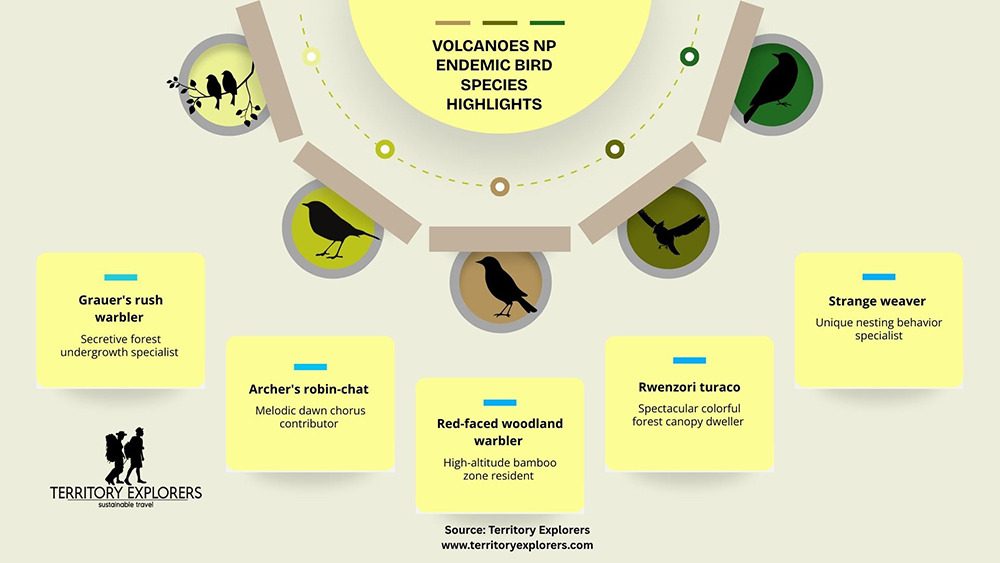
Early morning bird walks are the best time to spot many species, as birds are most active and the forest comes alive with sounds. Different elevations in the park support different bird groups, with highland species found higher up and tropical birds in the lower bamboo areas. These changes can be seen over short hikes.
Forest Walks
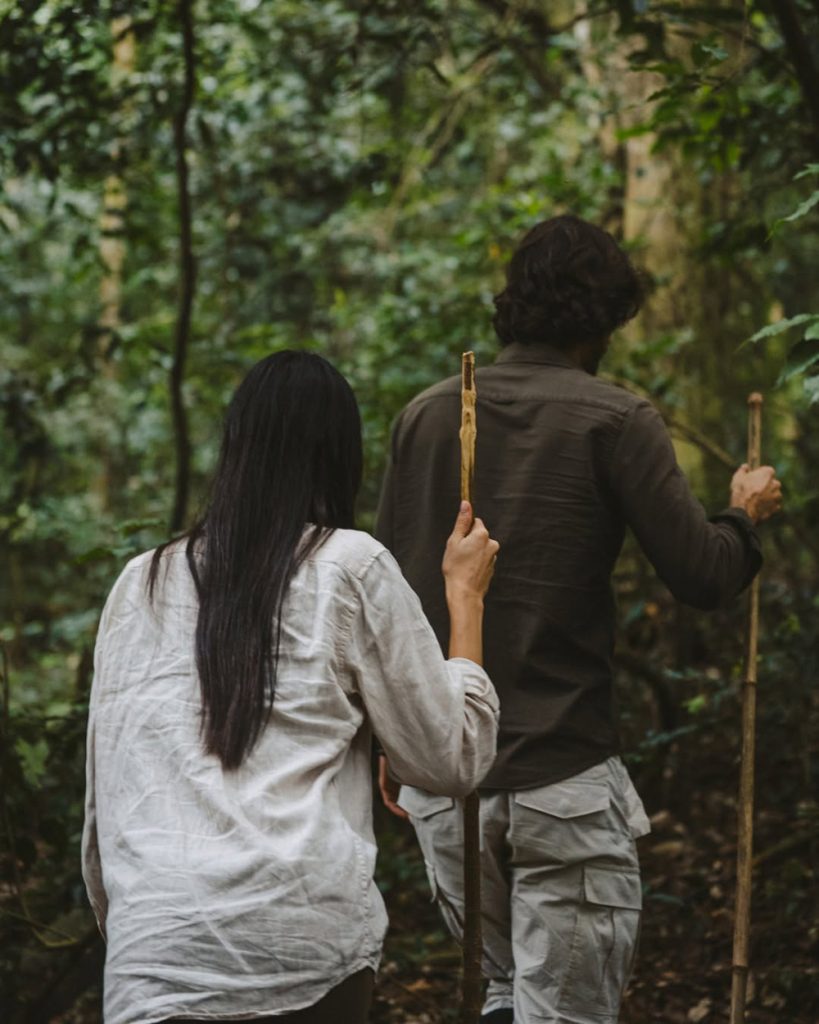
Guided nature walks show the rich biodiversity and complex ecology of the montane forest, home to many well-known animals. Visitors learn about local plants, geology, and how different species help keep the park healthy. These walks also reveal the forest’s layers, from ground plants to shrubs and tall trees, which create the habitats that mountain gorillas and other animals need.
The forest floor holds many interesting details that are easy to miss when tracking wildlife, such as different types of fungi, moss, and the natural processes that recycle nutrients and keep the soil healthy. Streams and springs also offer a chance to see aquatic life and learn how animals depend on these water sources to survive.
On nature walks, visitors can spot signs of wildlife like tracks, feeding spots, nests, and markings that show how animals use the forest and interact with each other. Guides also share information about plants used for medicine, traditional uses by local people, and how different species work together to keep the forest healthy and support conservation.
Cultural Visits
Visiting local Banyarwanda communities offers real cultural experiences that go along with wildlife encounters and directly support families who have shifted from farming to tourism jobs that help conservation. Traditional performances feature Intore dancing, drumming, and singing, celebrating Rwanda’s heritage and giving community members jobs that help keep these traditions alive.
Walking through local villages gives visitors a look at daily life, farming methods, and how communities are organized. These walks help people see how locals live alongside mountain gorillas and other wildlife. Cooking demonstrations with local ingredients let visitors taste real Rwandan food and learn about nutrition and food security practices that have supported these communities for generations.
Cultural Experience Highlights:
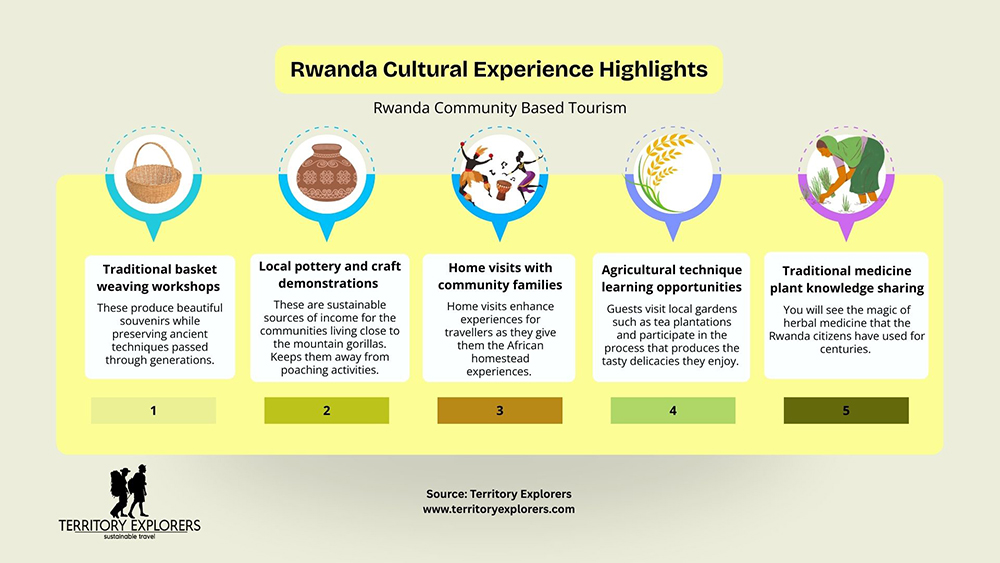
Visiting local families helps visitors make personal connections and see how conservation is more than just an idea—it’s about real people. Tourism revenue supports education, healthcare, and economic growth in communities that help protect gorillas. Craft demonstrations show traditional skills like basket weaving, pottery, and wood carving, creating unique souvenirs and keeping old techniques alive.
Photography Experience: Capturing Gorilla Magic
Technical Mastery in Forest Conditions
Taking photos of mountain gorillas is challenging and needs good preparation and flexible camera settings. The thick forest, frequent rain, and low light make it tough even for skilled photographers. Because the light is often dim, you may need to use ISO settings between 800 and 3200, so cameras that work well in low light are important for getting clear shots, especially since gorillas don’t stop for photos.
Fast lenses (f/2.8 or faster) are important for getting sharp photos, especially of young gorillas that move quickly and can be hard to focus on. Weather protection is also a must, as Rwanda’s mountain weather can change quickly from sun to heavy rain. Waterproof camera covers and lens hoods help protect your gear and let you keep shooting in any conditions.
Essential Camera Settings:
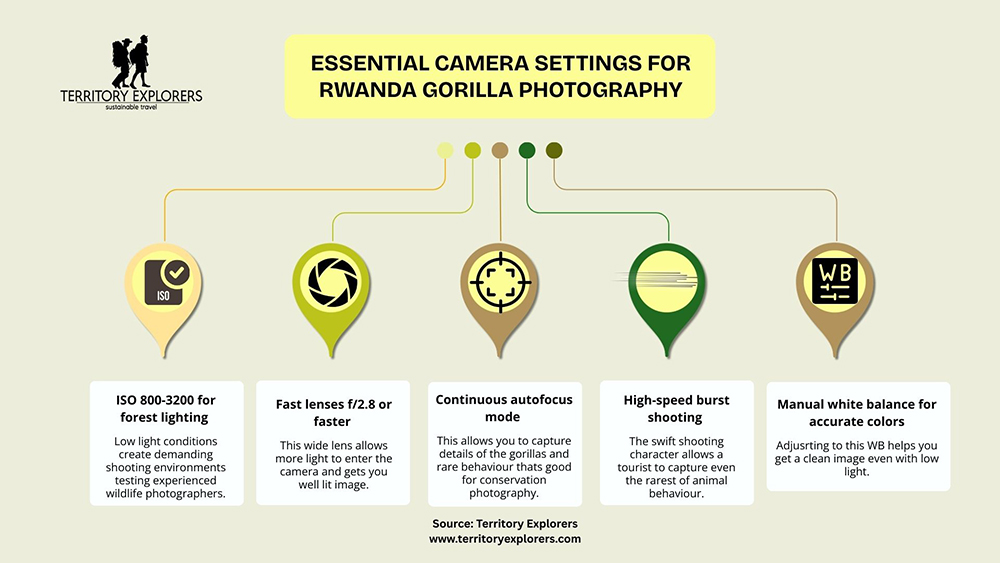
Knowing how gorillas behave helps photographers spot moments like movement, feeding, or social interactions that make for great photos. Because gorilla behavior can be unpredictable, photographers need to stay alert and always keep the required seven-meter distance.
Ethical Photography Guidelines
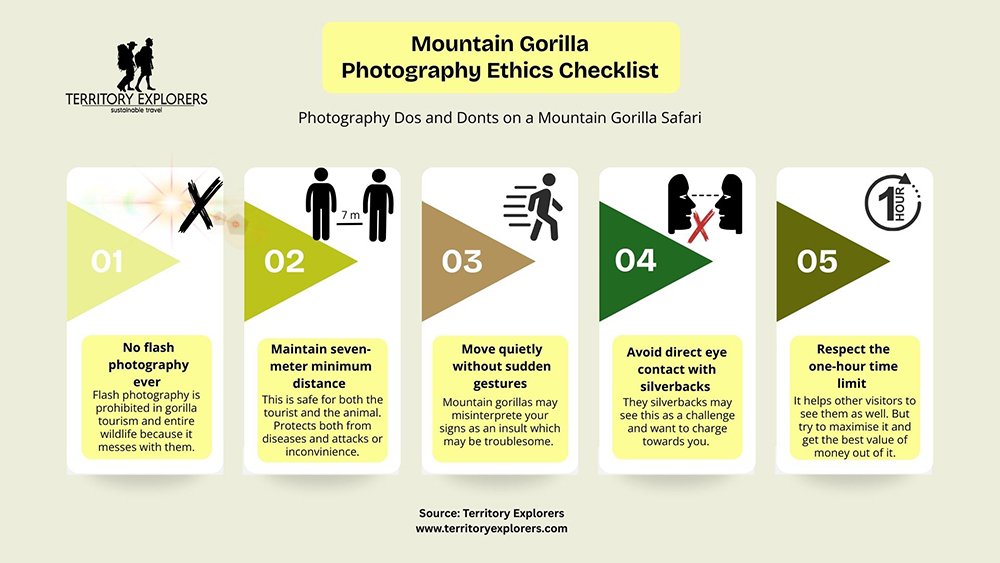
Ethical gorilla photography means wanting great photos but also respecting the animals and their natural behavior. Photographers must keep at least seven meters away, just like all visitors. Telephoto lenses help you get close-up shots without breaking this rule. Flash photography is not allowed because it can scare gorillas and disturb their behavior.
Photographers should stay quiet and avoid sudden movements so they don’t disturb the gorilla families. It’s important to blend in and not draw attention. The one-hour time limit with the gorillas applies to everyone, so photographers need to work efficiently and avoid taking too many photos or disrupting the group just to get the perfect shot.
Photography Ethics Checklist:
Composition Techniques for Forest Photography
To take great gorilla photos, you need to know how to compose shots in the dense forest and capture both the emotions and behaviors of the animals. The forest’s natural light can create dramatic effects, like rim lighting and moody scenes, which add to the special feeling of seeing gorillas in their natural home.
Photos that show gorillas in their forest home help viewers see their real habitat and avoid making the images look like they were taken in a zoo. Pictures that focus on gorilla family interactions, like grooming, playing, or caring for young, tell better stories and help share important conservation messages.
Because time with the gorillas is short, photographers should quickly choose the best shots and focus on capturing the unique personalities and behaviors of each family, instead of trying to photograph every gorilla. Eye contact and facial expressions are important for creating emotional connections in photos, but photographers need to be patient, as gorillas often avoid looking directly at people and these moments happen naturally.
Planning Your Gorilla Trek
Permit Booking
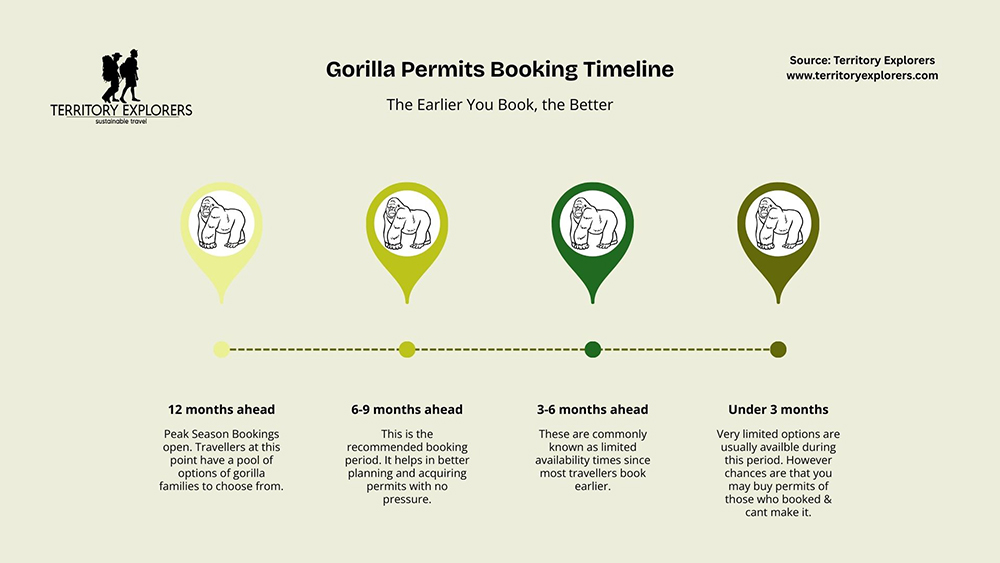
Securing gorilla trekking permits requires 6-12 months of advance planning, especially for the busy seasons from June to September and December to January. Rwanda issues only 96 permits per day to visit 12 gorilla families, to protect the animals. This system puts conservation first by limiting visitor numbers, making the experience more exclusive and helping fund both gorilla protection and local community projects.
Booking with registered tour operators like Territory Explorers helps you secure your permit and takes care of all trip details, from airport transfers to booking your stay. These professionals know the area well, have access to backup permits, and can solve problems that independent travelers might struggle with on an international trip.
The $1,500 permit fee per person is a major investment that directly supports gorilla conservation. Ten percent of tourism revenue goes to local communities to encourage them to protect gorilla habitats instead of turning forests into farmland. The permit covers park entry, guide services, and one hour with a gorilla family, but you’ll need to budget extra for transportation, accommodation, and other activities.
Permit Booking Timeline:
Physical Preparation Requirements
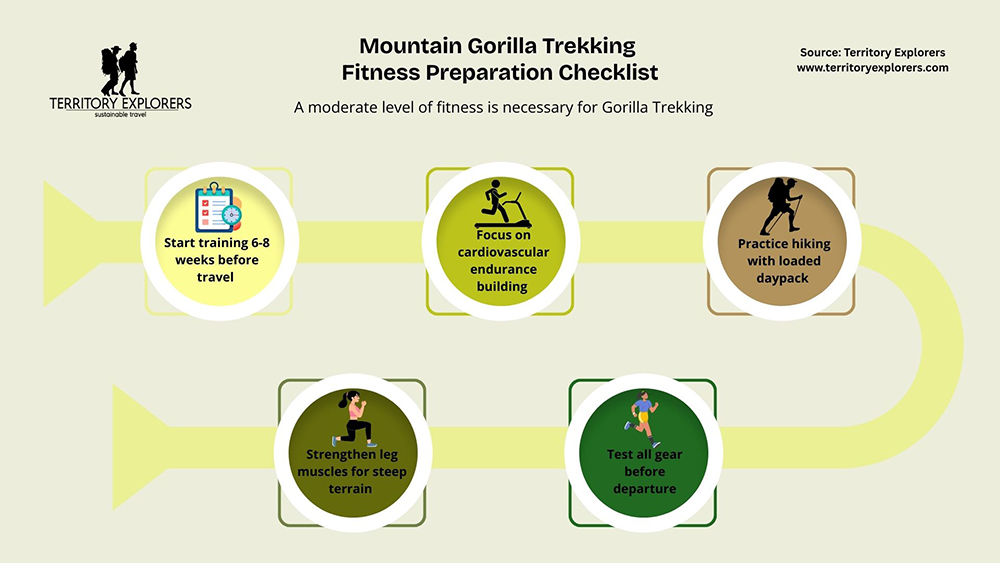
Gorilla trekking requires a moderate to high level of fitness, depending on which gorilla family you visit. Hikes can be as short as 1-2 hours or as long as 6 hours or more, often through steep and muddy trails at high altitudes. The mix of high elevation (2,400-4,000+ meters), humidity, and rough ground can be tough, even for people who are usually fit.
Before your trek, get ready by doing regular cardio exercises like hiking, walking, and climbing stairs. This will help you handle the physical effort needed to reach the gorillas, whose locations change every day. Try hiking with a loaded daypack, wearing waterproof shoes, and using layered clothing to get used to the real trekking conditions and to test your gear before you arrive in Rwanda.
If you have mobility issues, you can ask for an easier gorilla family to visit, but even the easier treks involve walking on uneven, sometimes muddy and slippery forest paths. The park offers porter services to help with heavy bags and to give support on tough terrain, but you still need to be able to walk on your own for several hours and keep up with the group.
Fitness Preparation Checklist:
Health Requirements and Medical Screening
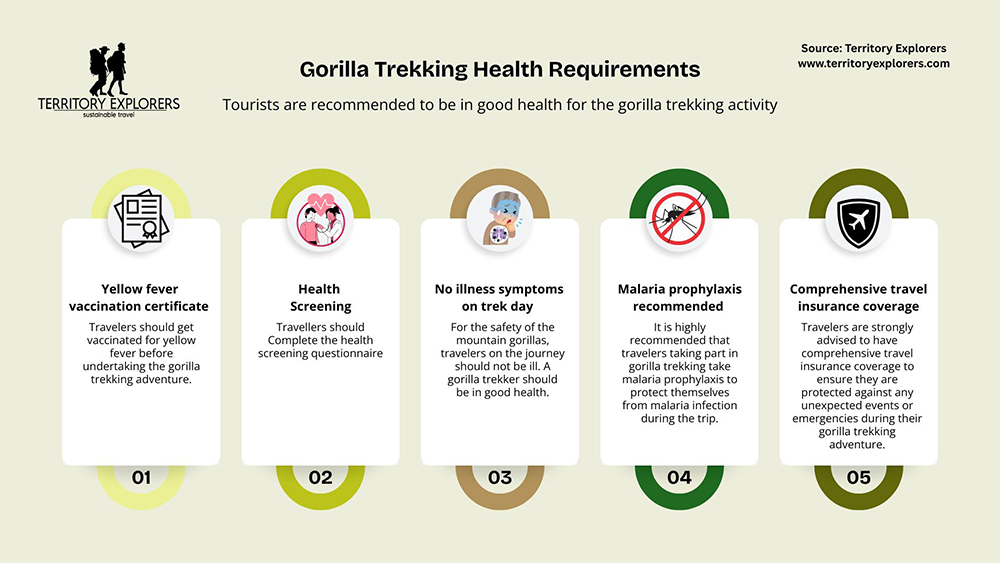
Health rules for gorilla trekking are strict to prevent spreading diseases from humans to gorillas, since they are very similar to us and can catch our illnesses. If you have symptoms like a cold, cough, stomach issues, or a fever, you won’t be allowed to trek. You’ll need to get medical help and reschedule your permit until you’re fully recovered.
Before your trek, park staff will check your temperature and ask about any symptoms. They can stop anyone whose health might put the gorillas at risk. You should have proof of vaccination for yellow fever (required to enter Rwanda), hepatitis A and B, typhoid, meningitis, and other routine shots, as medical care in the area can be limited.
You still need to take malaria prevention medicine, even though the park’s high elevation lowers the risk. This is especially important if you plan to visit lower areas or travel elsewhere in Rwanda. It’s also important to have travel insurance that covers medical evacuation, since the park is remote and local medical care for serious issues is limited.
Health Requirements:
Costs and Budgeting Your Adventure
Gorilla trekking in Rwanda is a big investment. The $1,500 permit is the main cost, and it directly helps fund conservation and community projects.
Complete Cost Breakdown:
• Gorilla Permit: $1,500 per person (includes guide, park entry, one-hour encounter)
• Accommodation: $30-2,000+ per night (budget guesthouses to ultra-luxury lodges)
• Transportation: $150-300 from Kigali Airport (group shuttles to private transfers)
• Daily Meals: $30-100 depending on dining choices and accommodation inclusions
• Porter Services: $15-20 per trek (highly recommended for assistance)
• Guide Tips: $20-30 per visitor for professional expertise
• Additional Activities: Golden monkey trekking ($100), volcano hiking ($75), cultural visits ($30)
Budget Planning by Experience Level:
• Budget Experience: $2,000-2,500 per person (3 days, basic accommodation, group transfers)
• Mid-Range Experience: $3,500-5,000 per person (3-4 days, comfortable lodges, private transport)
• Luxury Experience: $8,000-15,000+ per person (4-5 days, ultra-luxury lodges, exclusive services)
Conservation Impact and Responsible Tourism
How Mountain Gorilla Tourism Transforms Conservation
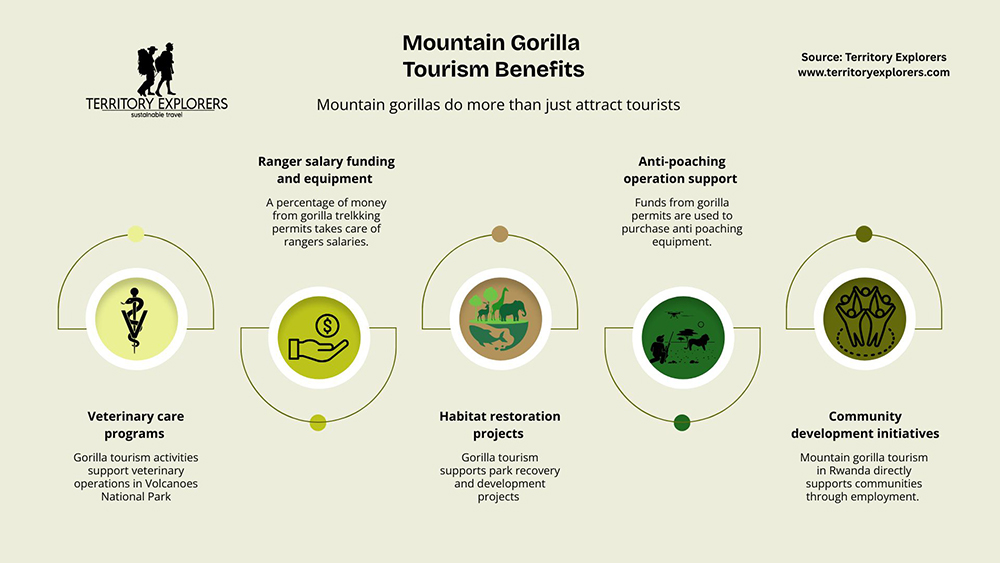
Gorilla tourism brings in over $18 million each year for Rwanda and helps fund conservation programs that have grown the mountain gorilla population from under 300 in the 1980s to over 1,000 today in the Virunga region. Ten percent of tourism income goes straight to local communities for projects like schools, health clinics, water, and infrastructure, which improves lives and encourages people to protect gorilla habitats.
Each permit sold helps pay rangers’ salaries, fund anti-poaching work, provide vet care for injured gorillas, and restore forest habitats needed for gorillas to survive. Gorilla tourism also creates jobs, turning former poachers, farmers, and unemployed youth into guides, porters, lodge staff, and community tourism workers. These jobs help people earn a living and learn new skills in hospitality, languages, and wildlife management.
Tourism revenue also funds research that helps us learn more about gorilla behavior, health, and ecology, and it trains local researchers and conservationists for future protection work. Rwanda’s success with gorilla tourism has drawn international attention and made the country a leader in community-based conservation, showing that wildlife is worth more alive when local people benefit from protecting it.
Conservation Benefits:
Responsible Tourism Practices
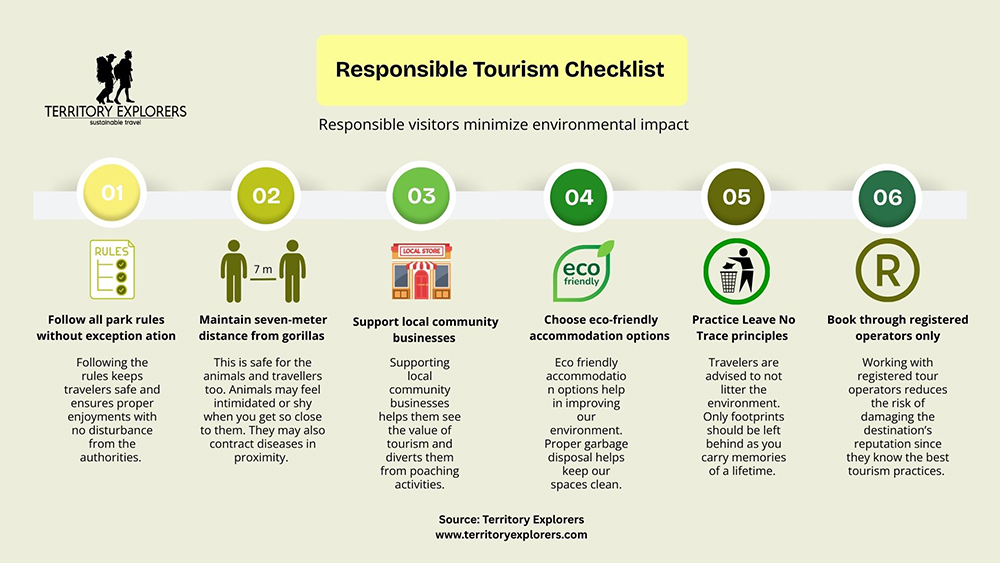
Responsible gorilla tourism means following strict rules that put the gorillas’ well-being first, even before getting photos or spending extra time with them. These encounters are a privilege, and visitors must act respectfully and follow conservation guidelines. Keeping at least seven meters away helps prevent disease and stress, letting the gorillas behave naturally without being disturbed.
You can support local communities by staying in local lodges, eating at local restaurants, buying crafts, and joining cultural activities. This way, tourism benefits reach the villages where people work to protect gorillas and their habitats. Pick registered tour operators who care about conservation and community development to make sure your money goes to real programs, not just profit-driven businesses.
Be a responsible visitor by throwing away waste properly, saving water, and choosing eco-friendly places to stay. These actions show you care about the environment and support conservation. In the fragile mountain ecosystem, following Leave No Trace principles is important because every visitor’s actions affect the balance that helps gorillas survive.
Responsible Tourism Checklist:
Best Time to Visit Rwanda
Seasonal Weather Patterns
Rwanda’s location near the equator means the weather is fairly steady all year, but there are clear dry and wet seasons. Dry seasons (June-September and December-February) have less mud, better hiking, and good conditions for photos and camping, but more visitors mean permits are harder to get and places to stay cost more.
The shorter dry season from December to February has great weather and fewer tourists than the main June-September period, making it a good choice if you want nice weather without big crowds. Wet seasons mean more afternoon rain and muddy, slippery trails, but the forests are lush, the air is clear, and dramatic clouds around the volcanoes make for amazing photos if you’re ready for the weather.
The rainy seasons are also when many gorillas have babies, so you might see new infants and family bonding, which can be a special experience. Weather in the mountains can change quickly at any time of year, so always bring waterproof gear and dress in layers to stay comfortable and safe while trekking.
Monthly Planning Guide
June to September is the peak dry season, bringing dry weather, clear mountain views, and great hiking conditions. However, permits are harder to get and accommodation prices are highest because of increased demand during European and North American summer holidays. To secure your spot, book 6-12 months in advance. While prices are higher, the weather is excellent.
December to February offers great weather with fewer crowds and more affordable accommodation. This is a good time for budget travelers who want good weather without paying peak season prices. Temperatures are comfortable and rainfall is low, making this period a favorite for many visitors.
March to May is the green season, with heavy rains making trekking more difficult but turning the forests lush and vibrant. Flowers are in full bloom, and there are far fewer visitors, so you can enjoy a more personal experience. Lower accommodation rates can also make luxury stays more affordable for many travelers.
October and November are the shoulder season, with moderate rainfall, fewer tourists, and reasonable accommodation prices. The weather can be unpredictable, so bring rain gear and keep your plans flexible. Wildlife is often more active, and it’s easier to find available places to stay than during peak times.
Expert Tips for Gorilla Trekking Success
Physical Preparation Strategies
Start getting in shape 6–8 weeks before your trip by hiking, walking, or climbing stairs to build endurance for trekking at high altitude, where the thin air can be tough even for fit people. Practice hiking with a loaded daypack on uneven ground to get used to forest conditions and test your gear before you travel.
Training Schedule:
• Weeks 1-2: Daily 30-minute brisk walks
• Weeks 3-4: Add stair climbing and incline walking
• Weeks 5-6: Practice hikes with full daypack
• Weeks 7-8: Longer hikes on challenging terrain
Work on your flexibility and balance to help prevent injuries on muddy, slippery trails, where good footing is important even for experienced hikers. If you have mobility issues, let your tour operator know about your abilities so they can assign you to the right gorilla family and arrange any needed support, like a porter.
Photography Mastery Tips
Get comfortable with your camera before you go by practicing in low light, like you’ll find in the forest, where autofocus can be tricky and high ISO is important for clear photos. Bring a telephoto lens (300–600mm) to keep your distance while getting close-up shots, but also pack a shorter lens for wider shots in tight spaces.
Equipment Recommendations:
• Mirrorless cameras for weight advantages
• 24-70mm f/2.8 lens for versatility
• 70-200mm f/2.8 for respectful distance shots
• Multiple extra batteries and memory cards
• Waterproof protection for humid conditions
Learn about gorilla behavior before your trip so you can spot good photo moments, like grooming, feeding, playing, and socializing. With only one hour to take pictures, work quickly and think about your shots to make the most of your time, instead of taking too many similar photos.
Cultural Sensitivity Guidelines
Treat local communities with respect and real interest in their culture, rather than seeing them as just photo subjects or entertainment. Learning a few basic Kinyarwanda greetings shows respect and can lead to more meaningful interactions and better cultural understanding.
Cultural Etiquette:
• Learn basic Kinyarwanda greetings
• Dress modestly for community visits
• Ask permission before photographing people
• Purchase crafts directly from artisans
• Show genuine interest in local traditions
Always ask permission before photographing local people and be sensitive to their beliefs about photos, which may be different from Western ideas about privacy. Paying fairly for cultural performances, crafts, and guide services helps support the local economy and shows you value their knowledge and skills.
Conservation Awareness and Contribution
Learn about mountain gorilla conservation challenges and successes before your trip to better appreciate how tourism has helped their recovery and to understand the ongoing threats they face. Choose tour operators, places to stay, and service providers who are truly committed to conservation and community support, not just using it as a marketing tool.
You can keep supporting conservation after your trip by donating to real conservation groups, speaking up for wildlife protection, and sharing positive messages with others who might help in the future. When sharing your photos and stories, do so responsibly to raise awareness, and avoid sensationalizing encounters or showing unsafe behavior.
Conclusion
Gorilla trekking in Rwanda is more than just seeing wildlife. It’s a chance to be part of a major conservation success, where mountain gorillas have grown from fewer than 300 to over 1,000. This progress shows that people and wildlife can both thrive with the right efforts. Many visitors feel deeply moved when they first see a gorilla up close, realizing how much has been done to protect these animals.
Spending time with gorilla families can change how you see the links between conservation, community growth, cultural traditions, and responsible tourism. Rwanda’s approach to tourism shows how a country can use its natural resources to support both the environment and local people.
When you visit Volcanoes National Park, surrounded by old volcanoes and meeting mountain gorillas, you’ll see why this is one of the world’s top wildlife experiences. The memories you make here often inspire people to support conservation and share their stories with others.
Gorilla trekking in Rwanda is a dream for many adventurous travelers. If you want to experience this adventure, contact us at info@territoryexplorers.com, and we will help you plan your trip, just as we have done for many others.
Frequently Asked Questions
Gorilla trekking permits in Rwanda cost $1,500 per person for international visitors, which is more expensive than in Uganda ($800) or the Democratic Republic of Congo ($450). The higher price reflects Rwanda’s better infrastructure, shorter travel times, and focus on low-impact, high-value tourism that supports conservation and offers excellent visitor experiences.
The permit fee covers park entry, a professional guide, ranger escorts, and one hour with a gorilla family. It does not include transportation, accommodation, meals, or tips for guides and porters. While the cost is high, it directly supports gorilla conservation, community projects, and anti-poaching efforts that have helped Rwanda succeed in protecting mountain gorillas.
The total cost of gorilla trekking in Rwanda ranges from $2,000 to $15,000 per person, depending on where you stay, how long you visit, and the services you choose. The $1,500 permit is just one part of the total cost, which also includes lodging, meals, transport, guides, and extra activities. Budget travelers can have a rewarding experience for about $2,500 per person over three days by choosing basic accommodation, group transport, and fewer extra activities.
Luxury trips can cost over $10,000 per person if you choose top lodges, private guides, helicopter transfers, and full activity packages. However, the main gorilla experience is just as special no matter your budget. Most visitors find that mid-range options ($3,500–$5,000) offer a good mix of comfort and value while still supporting conservation and local communities.
Gorilla trekking can range from easy 1-2 hour walks to tough 6-hour hikes, depending on which gorilla family you visit. Factors like altitude (2,400–4,000+ meters), steep and muddy trails, and changing weather mean you need moderate to high fitness. The park matches families to visitors’ fitness levels, so those who prefer an easier trek can request a shorter route.
You can hire a porter for $15–$20 to help carry your bag and support you on tough trails, but you still need to be able to walk on your own for several hours and keep up with the group. Most people with reasonable fitness and preparation finish their treks successfully, and many find the physical challenge adds to the experience.
Gorilla trekking in Rwanda is very safe thanks to strong safety protocols, well-trained guides, and excellent security. Rwanda is one of Africa’s safest tourist destinations, with crime rates lower than in many developed countries. Every group is led by professional guides trained in first aid, gorilla behavior, and emergencies, and armed rangers are always present to protect visitors.
The main safety issues are slipping on muddy trails and dealing with altitude, not security threats. Good footwear and physical preparation are more important than special safety gear for most visitors. Rwanda’s strong recovery and focus on tourism safety mean you can enjoy the wildlife without worrying about security, unlike in some other destinations.
You need to book gorilla trekking permits 6–12 months in advance, usually through registered tour operators like Territory Explorers. They handle all the paperwork, logistics, and work with the Rwanda Development Board to secure your permit and plan your trip. Booking directly with the park is possible, but it can be complicated and you may miss out on helpful local advice for accommodation and activities.
Working with established operators ensures backup permits, flexible scheduling, and local support that can resolve problems quickly, rather than leaving visitors stranded with booking issues that potentially ruining expensive international trips. Professional tour operators like Territory Explorers provide significant advantages beyond simple permit booking, including essential backup plans, comprehensive packages that eliminate logistical concerns, and experienced local guides that dramatically enhance understanding through insider knowledge.
To go gorilla trekking in Rwanda, fly into Kigali International Airport, then take a 2.5-hour drive to Volcanoes National Park. Most visitors book packages that include airport pickup, accommodation, transport, and guides, rather than traveling independently. The drive from Kigali to the park passes through scenic hills and villages, giving you a glimpse of Rwandan culture and building excitement for your trek.
You can also reach the park by traveling overland from Uganda or flying into regional airports, but Kigali is the easiest and most reliable entry point, with good international flights and roads. Most international flights arrive in the evening, so it’s common to spend a night in Kigali before heading to the park the next morning.
Gorilla treks can take anywhere from 1 to 8 hours, including the hike to find the gorillas and the one-hour visit with them. The length depends on where the gorilla family is, how fast your group moves, and the terrain. Some families are close and need only a 30–60 minute hike each way, while others may require 4 or more hours of trekking through steep, muddy trails.
The one-hour limit with the gorillas is strictly enforced to protect them from stress, but most visitors find the experience feels much longer because it’s so memorable. The whole day includes briefings, travel to the trailhead, and certificate ceremonies, so plan for a full-day outing no matter how long the hike itself takes.
Gorilla trekking in Rwanda means hiking with guides through Volcanoes National Park’s forests to see mountain gorilla families in their natural home. By joining a trek, you help conservation efforts that have brought these endangered animals back from the brink. The experience combines adventure, wildlife photography, cultural learning, and conservation, making it a truly memorable encounter with our closest relatives.
On each trek, professional guides and armed rangers lead you through different forest areas to spend an hour watching gorilla families interact. You’ll see behaviors and social bonds that are surprisingly similar to our own. This is more than just wildlife viewing—it’s a chance to take part in a conservation success story, as your visit helps fund gorilla protection and community projects.
Wear long pants and long-sleeved shirts in earth tones to blend in and protect yourself from thorns, insects, and cool mountain weather, which can be surprising in a tropical country. Waterproof hiking boots with ankle support and good grip are a must for muddy trails, and gaiters help keep mud and debris out of your boots.
Dress in layers so you can adjust to changing temperatures and weather. Always bring a waterproof outer layer, as mountain rains can come quickly and soak you if you’re not prepared. Avoid bright colors, camouflage, or military-style clothes, as these can disturb the gorillas or confuse rangers. Choose comfortable, practical clothing that puts function first.
Pack waterproof hiking boots, rain gear, warm layers for chilly mornings, work gloves for grabbing plants, and a daypack for water, snacks, and your camera. For photography, bring a telephoto lens to keep your distance, extra batteries (since cold drains them fast), memory cards, and waterproof covers for your electronics.
Bring insect repellent, sunscreen, a basic first aid kit, water purification tablets, and any personal medications. Porters can carry heavy items if you want to hike with less weight. Pack light but make sure you have the essentials, and avoid bringing extra items that will just add weight on tough hikes.
Gorilla trekking starts with a 7:00 AM briefing at the park headquarters in Kinigi, where you’ll get safety instructions, learn about conservation, and find out which gorilla family you’ll visit. Groups leave for the trailheads around 8:00 AM. Early starts mean cooler temperatures, more active wildlife, and better light for photos, plus plenty of time for longer treks.
You’ll usually leave your accommodation before dawn (around 6:00–6:30 AM) to have breakfast and get to the park headquarters on time for the mandatory briefing. Arriving late means you could lose your permit. This schedule helps keep things running smoothly for both visitors and gorillas.
The best time to go gorilla trekking depends on what you prefer. Dry seasons (June–September, December–February) have better hiking and clear mountain views, while wet seasons (March–May, October–November) offer lush forests, fewer crowds, and lower prices. Dry seasons are busier, so you’ll need to book early and pay more.
During the wet seasons, it’s easier to get permits and prices are lower, but you’ll face muddy trails and more rain. Gorilla trekking is possible all year because of Rwanda’s climate, but always bring rain gear and be ready for sudden weather changes, no matter when you visit.
All gorilla trekking in Rwanda happens in Volcanoes National Park, in the northwest Musanze Province, about 2.5 hours by road from Kigali International Airport. The park is in the Virunga Mountains, which it shares with Uganda and the Democratic Republic of Congo. The headquarters in Kinigi village is the starting point for all treks, and there are 12 habituated gorilla families spread across 160 square kilometers of forest.
The park’s location near the borders with Uganda and the Democratic Republic of Congo makes it part of the larger Virunga ecosystem. Gorillas move freely across these borders, and this cross-border conservation helps protect their habitat and supports healthy, diverse populations.
You can stay in ultra-luxury lodges like Bisate Lodge and Singita Kwitonda, which have top amenities and mountain views, or choose budget guesthouses in Kinigi and Musanze for basic comfort at lower prices. Most people pick places within 30 minutes of the park headquarters to cut down on early morning travel and get more rest before trekking.
During peak seasons, it’s important to book your accommodation 6–12 months ahead, as places near the park fill up fast. Early booking is just as important as getting your permit. When choosing where to stay, consider location, comfort, and budget, and try to pick properties that support local communities and conservation.
Rwanda charges more for gorilla trekking because it aims to be a luxury destination, with better infrastructure, shorter travel times, nicer places to stay, and more exclusive experiences than Uganda, which is more budget-friendly. The higher permit fees help keep visitor numbers low and maximize support for conservation and local communities.
Rwanda’s investment in roads, airports, security, and tourism services justifies the higher prices and ensures a luxury experience that meets international standards. The extra cost means shorter travel times, better safety, top accommodations, and professional service—benefits many visitors find worth it for a once-in-a-lifetime trip.
Both Rwanda and Uganda offer amazing gorilla encounters. Rwanda has more premium experiences, shorter travel from the capital (2.5 hours vs. 8–10 hours), better roads, and more luxury places to stay. Uganda’s permits are cheaper ($800 vs. $1,500) and there are more gorilla families in several parks. Rwanda’s smaller size and focus on tourism make for a more predictable and comfortable trip.
To make your gorilla trekking trip as smooth as possible, use a registered tour operator like Territory Explorers. They handle all the paperwork, permits, and arrangements in either country, so you can focus on enjoying the wildlife instead of worrying about logistics. These professionals offer local expertise, backup plans, and full support to help ensure a great experience wherever you go.