
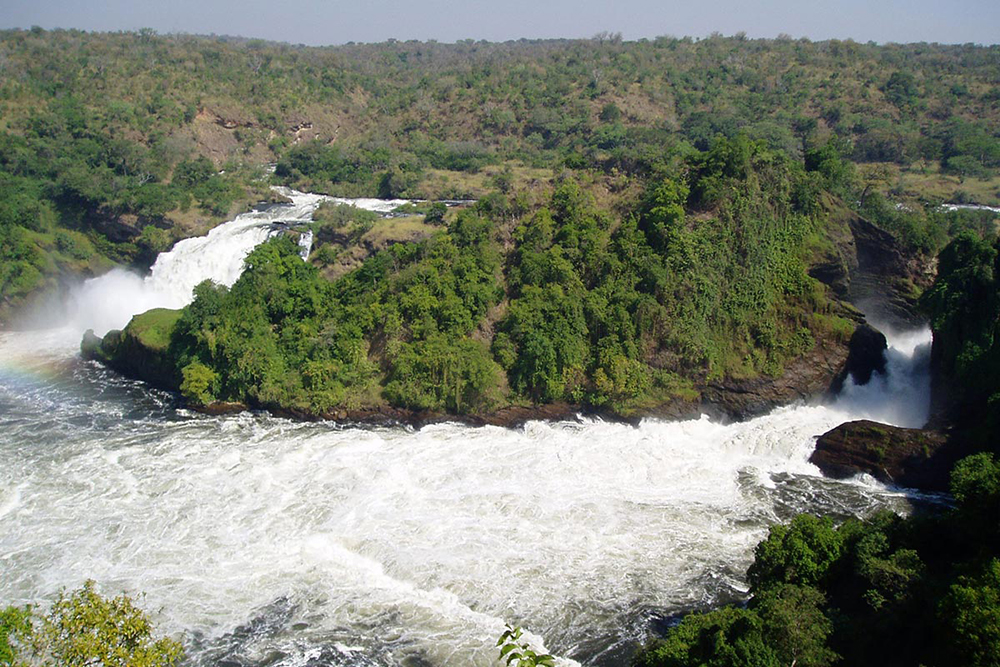
Murchison Falls National Park deserves a spot at the top of your travel bucket list, and here’s why. This park has earned its reputation as one of Africa’s premier safari destinations, and once you experience it firsthand, you’ll understand the hype.
What sets Murchison apart? First, it’s home to the world’s most powerful waterfall, Murchison Falls. But there’s much more. Picture yourself seeing crocodiles on the Nile’s banks, hippos in the delta, and lions roaming the savannah. You’ll spot tall Nubian giraffes, elephants, hear hyenas at dusk, and see over 450 bird species, like the African ground hornbill and pied kingfisher.
The variety of wildlife and scenery here is amazing, with something special for every traveler. This is also where the classic 1951 movie “African Queen” was filmed, starring Humphrey Bogart and Katharine Hepburn, at Butiaba on Lake Albert and below Murchison Falls. Without further ado, let’s dive into the details.
Key Takeaways:
• What You Need to Know About Murchison Falls National Park. This park is Uganda’s largest protected wilderness, covering 3,893 square kilometers. At its center is the world’s most powerful waterfall, where the Nile River rushes through a narrow 7-meter gorge with thunderous force that will leave you speechless.
• Why This Should Be on Your Safari Bucket List. Murchison Falls offers a unique wildlife experience with 76 mammal species, including the world’s largest group of critically endangered Nubian giraffes. More than 450 bird species live here, and you can spot lions, leopards, elephants, and buffalo. Visit the nearby Ziwa Rhino Sanctuary to see all of the Big 5.
• When to Plan Your Visit. For the best wildlife viewing, visit during the dry seasons from June to September or December to February, when animals gather near water. If you like fewer crowds and don’t mind some rain, the wet seasons offer lower prices and a green landscape.
• How Much Time You Actually Need. Don’t shortchange yourself with a rushed day trip. Plan for at least three days to enjoy morning and afternoon game drives, a boat cruise to the base of the falls, and a hike to the top. Anything less means missing the park’s full magnificence.
• Getting There Without the Hassle. The most practical route involves a 4.5-hour drive from Kampala through the Kichumbanyobo gate—scenic and straightforward. For those with deeper pockets, charter flights to Pakuba airstrip take less than an hour and offer great views from above.
• Real Talk About Costs. Foreign visitors pay $45 per day for park entry – a bargain for the experience. Accommodation ranges from budget camping at about $20 per night, mid-range lodges at $100-300, to luxury stays over $800 per night. Prices reflect the park’s remote location and unique experience.
• The Experiences That Matter Most. Game drives in the Delta area often bring lion sightings, large elephant herds, and giraffes set against the African sky. The boat cruise upstream isn’t optional—it’s the only way to truly appreciate the falls’ raw power from below. Hiking to the top tests your stamina but rewards you with views that photographs simply cannot capture. Wildlife enthusiasts should consider adding chimpanzee trekking in nearby Budongo Forest.
• Insider Knowledge That Makes a Difference. Book accommodations months ahead during dry seasons—popular lodges fill up fast. Malaria prevention isn’t negotiable in this region, so consult your doctor well before departure. A quality telephoto lens transforms your photography from snapshots to portfolio-worthy images. Most importantly, invest in experienced guides who know animal behavior patterns and the best viewing locations.
• The Bottom Line. Murchison Falls National Park is one of Africa’s top safari destinations. It offers a rare mix of diverse wildlife, dramatic scenery, and the powerful Nile. This isn’t just a park visit—it’s witnessing one of nature’s greatest performances on one of the world’s most legendary rivers.
Quick Facts About Uganda’s Largest National Park
Murchison Falls is Uganda’s largest protected area. Established in 1952, the park covers 3,893 square kilometers and includes Murchison Falls National Park itself, plus the Bugungu and Karuma Wildlife Refuges.
The park is home to 76 mammal species and over 451 bird species. You’ll find the world’s tallest animal here—the critically endangered Nubian giraffe, once called the Rothschild giraffe. Murchison Falls has the largest population of these giraffes anywhere, and the acacia woodlands at Chobe are their favorite spot.
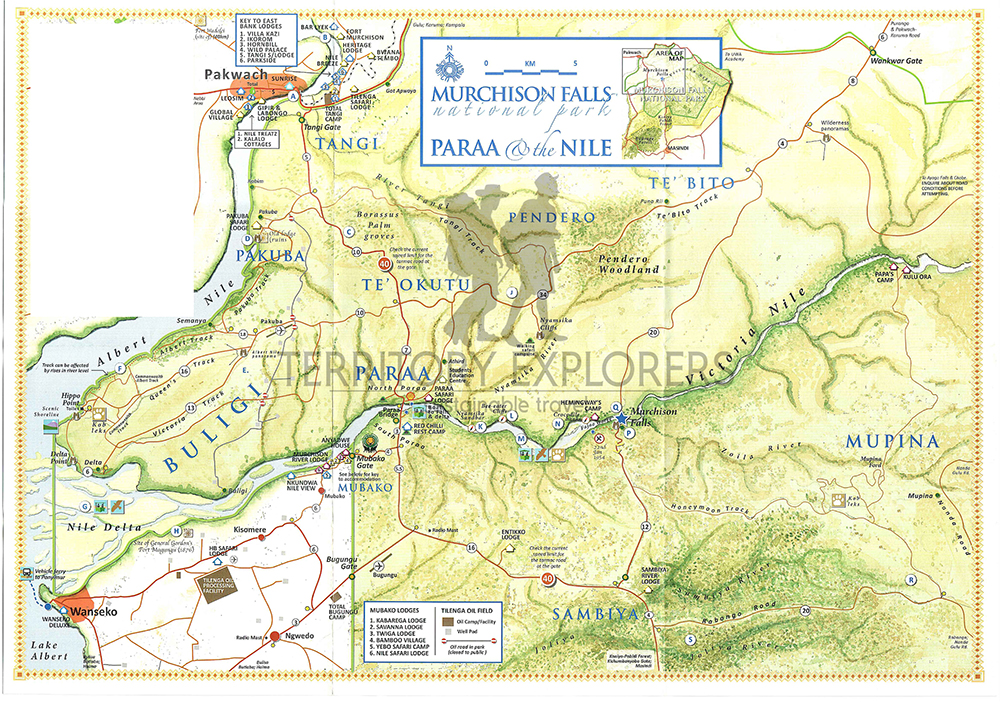
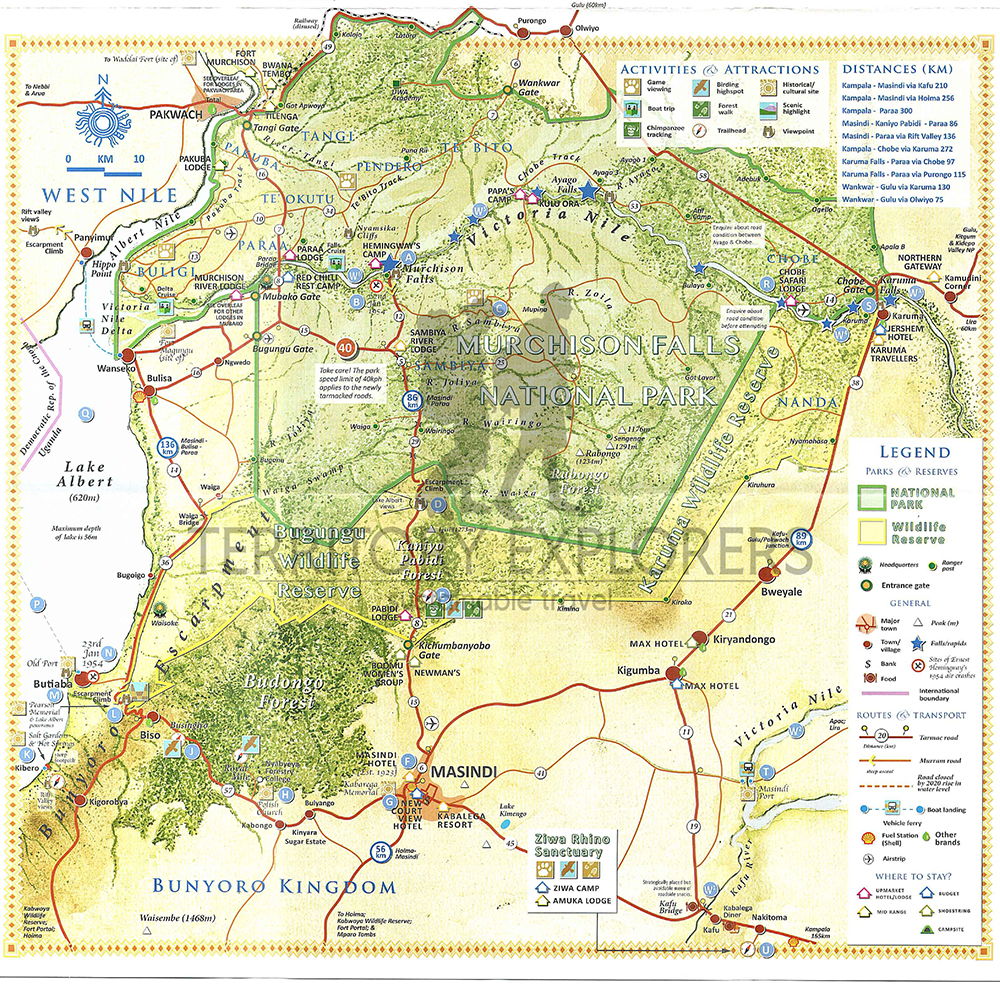
The park has six main entry gates, split between the north and south. In the north, you’ll enter through Chobe, Wangkwar, or Tangi gates. In the south, access is via Mubako, Kichumbanyobo, or Bugungu gates. This setup helps manage conservation across different areas, including Tangi, Wangkwar, Karuma, Bugungu, South Murchison, Semanya, and the headquarters at Mubako.
Starting in 2025, some parts of the park were used for oil extraction. The park borders the Lake Albert oil field, but these activities do not take place in the areas visited by tourists.
The Victoria Nile runs through the park from east to west for about 115 kilometers. This powerful river forms Murchison Falls, where the Nile squeezes through a narrow 7-meter gorge and drops 43 meters, creating a thunderous waterfall and a rainbow that lasts all day.
Karuma Falls, found along the Masindi-Gulu Highway, is also in the park. It’s now the site of Uganda’s largest power station, the 600-megawatt Karuma Power Station, which opened in 2023. You can watch the rapids from the south bank, but don’t take photos here, as soldiers guard the area for security.
The History of Murchison Falls National Park
Murchison Falls National Park has a rich and colorful history, with stories of royalty, explorers, and even Hollywood stars. It was first called Kabalega National Park, named after the powerful King of the Bunyoro Kitara Empire.
In 1864, British explorer Sir Samuel Baker and his wife Florence discovered what they thought was the greatest waterfall on the Nile. Amazed by its beauty, Baker named the falls after Sir Roderick Murchison, a famous geologist and then President of Britain’s Royal Geographical Society.
The area’s colonial history continued to unfold dramatically. In 1872, Sir Samuel Baker returned to the kingdom of Bunyoro, hoping to incorporate the kingdom into the Egyptian colony of Equatoria. However, Omukama Kabalega successfully thwarted his plans at the famous Battle of Masindi, now commemorated by a memorial.
Hollywood came calling in the 1950s when the legendary African Queen was filmed here, but the park’s most famous celebrity incident occurred on January 22nd when a Cessna carrying Mr. and Mrs. Ernest Hemingway over Murchison Falls clipped an old telegraph line in Fajao Gorge and crash-landed in the riverside forest. After an uncomfortable night, the couple and their pilot were rescued by a sightseeing boat and taken to Butiaba. Tragically, Hemingway was seriously injured when a rescue flight crashed during takeoff from Butiaba airstrip.
When the park was officially established in 1952, it shifted from a royal hunting ground to a protected wildlife sanctuary. Despite facing political and conservation challenges over the years, Murchison Falls is now Uganda’s leading national park and a model for wildlife protection in East Africa.
Today, when you stand at the falls just as Baker did, you’ll see the same powerful landscape that has amazed visitors for generations—and still does.
Historical Transportation and Infrastructure
The park’s location has made it a crucial transportation hub throughout history. Steamships once linked a busy port at Butiaba with destinations in Congo and Sudan before they sank during the great storm of September 1962, marking the end of an era in regional transportation.
Transportation Evolution: Lake steamers once linked Masindi post to the Uganda railways terminus on the Nile at Namasagali near Jinja, representing an earlier era when water transport dominated regional travel.
Modern Accessibility: The park is served by five road bridges across the Nile in Uganda, with Pakwach being the most northerly crossing point.
Weather and Climate Guide
Murchison Falls National Park enjoys a tropical climate with relatively consistent temperatures year-round, though seasonal variations affect both comfort and wildlife-viewing opportunities.
Temperature Patterns: Daytime temperatures typically hover around 31°C (88°F), providing warm but manageable conditions for activities. Nighttime temperatures drop to approximately 18°C (64°F), making evenings pleasant and comfortable for relaxation. The park’s altitude ranges from 619 to 1,292 meters above sea level, creating microclimates where higher elevations experience slightly cooler temperatures – a welcome relief during midday heat.
Seasonal Variations: Two distinct dry seasons occur from December to February and June to July, characterized by clear skies, minimal rainfall, and concentrated wildlife viewing around water sources. Two wet seasons run from March to May and August to November, with April, May, August, September, October, and November typically receiving the most rainfall. During these periods, the landscape transforms into lush green scenery, but wildlife disperses more widely.
Practical Considerations: Game drives can become quite hot in the afternoon, with noticeable sun glare affecting photography and comfort. Evenings tend to be warm and windless, perfect for boat cruises and relaxed wildlife viewing.
Weather affects how animals behave, so timing your visit is important for the best safari. In the dry season, animals gather at water sources. In the wet season, you’ll find great landscape photography and fewer people.
Geological Wonders and Landscape Formation
Understanding the geological forces that shaped Murchison Falls adds fascinating depth to your visit. Lake Albert lies within the Albertine Rift Valley, a feature that has been torn, twisted, shaken, and cracked into its present shape by tectonic forces over the last 15 million years.
The Nile’s Dramatic Journey: During the most frantic section of the river’s 6,650-kilometer journey to the Mediterranean Sea, the Nile descends 400 meters as it drains towards the Rift Valley floor. This dramatic descent transforms the torrent into a broad, placid stream that flows across the Rift Valley floor towards Lake Albert.
Ancient River Systems: The small, northeast-flowing Kafu River was once a prototype Nile – a large southwest-bound river carrying the waters of Lake Victoria to Lake Albert in the Rift Valley. Uplift along the margins of the Rift Valley blocked the Kafu’s route, causing flow from Lake Victoria to back up, flooding the Kafu’s basin to create Lake Kyoga.
As water levels rose in the nascent Lake Kyoga, the tributary eventually burst its banks at Karuma, creating a new link between Lake Victoria and the Rift Valley – this became the modern Nile. The new Nile then scoured a rocky course towards the Rift Valley floor, 350 meters below.
Spectacular Viewpoints: The descent from Biiso onto the floor of the Albert Rift Valley provides panoramic views across Lake Albert towards the blue mountains of Congo, offering visitors a stunning perspective on these ancient geological forces.
Wildlife & Activities
Wildlife in Murchison Falls: The Big 5 and Beyond
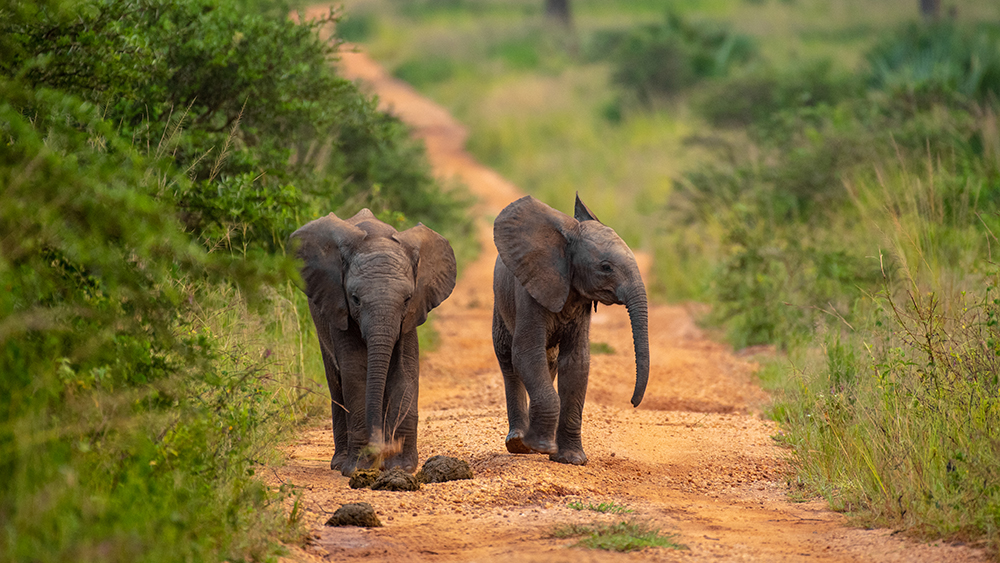
This is where Murchison Falls becomes truly exciting. You can enjoy a Big 5 safari if you add the nearby Ziwa Rhino Sanctuary to your trip. Rhinos are protected at Ziwa, and the park itself is home to elephants, lions, leopards, and buffaloes.
On game drives in the Delta areas, have your camera ready for herds of elephants, strong lions, and leopards, which are most active early in the morning and late in the evening.
The boat cruise on the Nile shows you a different side of the park’s wildlife, with large crocodiles sunbathing on the riverbanks and hippos relaxing in the water. Don’t be surprised if these same hippos visit your lodge at night, casually grazing on the grounds as they search for food.
The park’s greatest treasure is its large population of critically endangered Nubian giraffes, the biggest in the world. These tall, beautifully marked animals are often found in the acacia woodlands, especially near the Chobe area.
If you love birds, you’ll be thrilled to find over 450 species here. Don’t forget about the smaller mammals, though—watching antelopes and defassa waterbucks in their daily routines can be just as interesting as seeing the big cats.
Top Activities and Attractions in Murchison Falls National Park
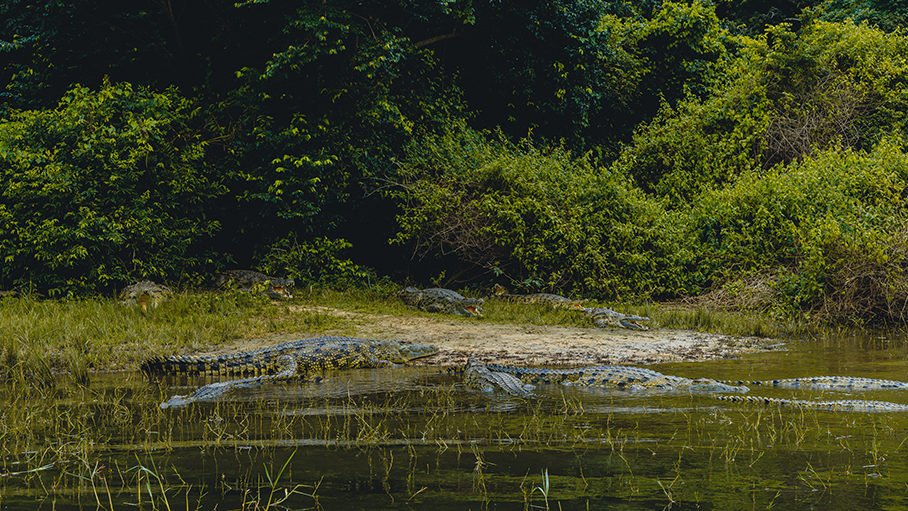
There are plenty of activities to enjoy at Murchison Falls. Game drives are a main highlight, but boat cruises on the Nile River are just as important. These trips let you see wildlife and also take you right to the base of the famous falls.
If you’re feeling adventurous, hiking to the top of the falls gives you a new view and great chances for photos. You can watch birds during any activity, but special birding walks help you find species you might not see otherwise.
Beyond the park boundaries, chimpanzee trekking in Budongo Forest adds a primate element to your safari. The Kaniyo Pabidi section of Budongo Forest offers exceptional opportunities to search for troops of habituated chimpanzees among a variety of forest birds. The local avifauna includes the stunning Narina Trogon, Great Blue Turaco, Puvel’s Illadopsis, Pygmy and Dwarf Kingfishers, and White-thighed Hornbills.
If you prefer a slower pace, try sport fishing. Nature walks are also a great way to see smaller animals and plants up close.
Visiting communities in Pakwach and Buliisa adds a cultural side to your trip, showing how local people live alongside the park’s amazing wildlife.
Game Drives in Murchison Falls: What to Expect
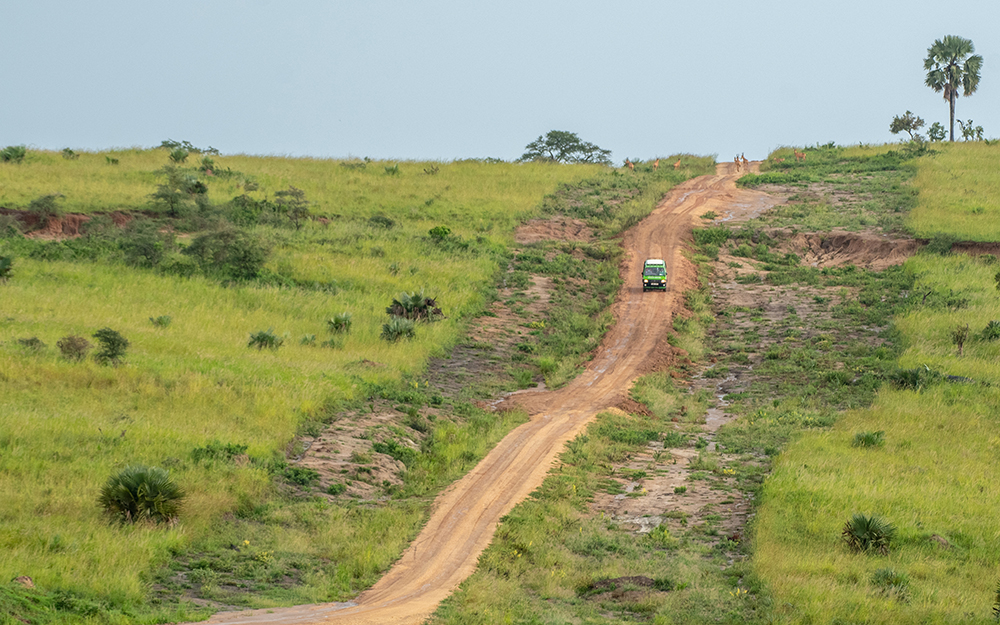
Game drives in Murchison Falls are conducted primarily on the park’s northern side, between the Victoria Nile Delta and Paraa. This strategic location offers some of the best wildlife viewing opportunities in Uganda. Morning drives are special because you see animals as they wake up, often still sleepy and less cautious. In the evening, you’ll spot different animals as the night creatures become active and daytime animals head to water.
There are new routes to explore, like the reopened Rabongo Road and the new Honeymoon Track. These take you through wide, wildlife-rich grasslands in the remote parts of Murchison. After about 20 kilometers, Rabongo Road leads into open grasslands, and turning left onto the Honeymoon Track takes you past kob gathering spots watched by lion prides.
The landscape has its own stories. The Borassus palm tree, with its fronds making noise in the wind, is a lasting symbol of northwestern Murchison Falls. These trees have grown from seeds spread by elephants’ poop over many years, creating special habitats that reach as far as Sudan.
Historical Landscape Changes: In the 1960s, southern Murchison Falls was an open grassland roamed by huge numbers of herbivores, courtesy of 14,000 elephants whose browsing and trampling kept scrub at bay. When poaching decimated elephant numbers in the 1970s, their controlling influence was lost and woody vegetation spread unhindered to create today’s bushy landscape.
Winston Churchill once said in 1908 that the Murchison plains are like “Kew Gardens and the zoo on an unlimited scale.” You’ll likely agree as you travel across the savannah between Pendero and Te’Bito. Watch for the rare Nubian giraffe, which lives in only a few places in the world. Spotting a leopard takes patience and luck, but it’s a moment you’ll never forget. You might also see the famous shoebill stork near the Nile Delta, though they are very good at hiding.
Nile River Boat Safari: A Must-Do Experience
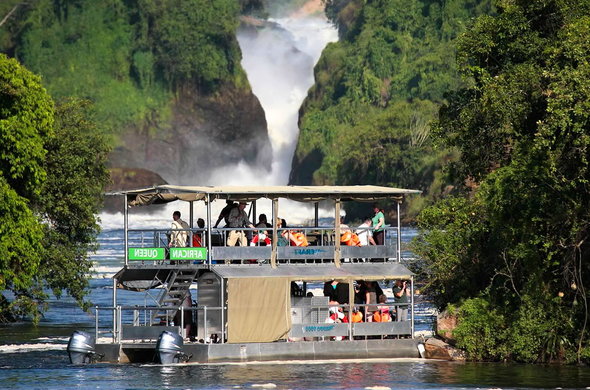
The boat safari on the Nile is more than just an activity; it’s a key part of the Murchison Falls experience. As you travel along the river, you’ll see many bird species fishing and hunting by the banks. Crocodiles rest in the sun, and hippos often block the way in the water.
Guaranteed Wildlife Sightings: Crocodile and hippo sightings are guaranteed during the boat trip, but watch too for elephants, giraffes, waterbucks, buffaloes, and others coming to drink from the Nile. The boat trip through the Delta gives an excellent chance of sighting the elusive shoebill, plus plenty of other waterbirds.
Spectacular Birdwatching: During the river voyage, watch for African Fish Eagle, Goliath Heron, Shoebill, African Skimmer, White-headed Turaco, Red-winged Warbler, Saddle-billed Stork, and Open-billed Stork. Spectacular seasonal congregations of Red-throated Bee-eaters nest in the river cliffs, creating a vibrant display of color and activity.
The most exciting part is reaching the viewpoint at the base of Murchison Falls. The boat takes you as close as it safely can, so you can feel the spray and hear the powerful roar that has filled the gorge for thousands of years.
Historical Connection: Imagine the scene in 1876 as Romolo Gessi brought the first river steamers around the broad bend in the river below Fort Murchison to reach and circumnavigate Lake Albert. You’re following in the wake of these early explorers.
Take a moment here with your camera to enjoy one of nature’s most amazing sights. The Nile pushing through the narrow gorge is something you have to see for yourself. No photo or video can really show the energy and beauty of this famous waterfall.
Hiking to the Top of Murchison Falls
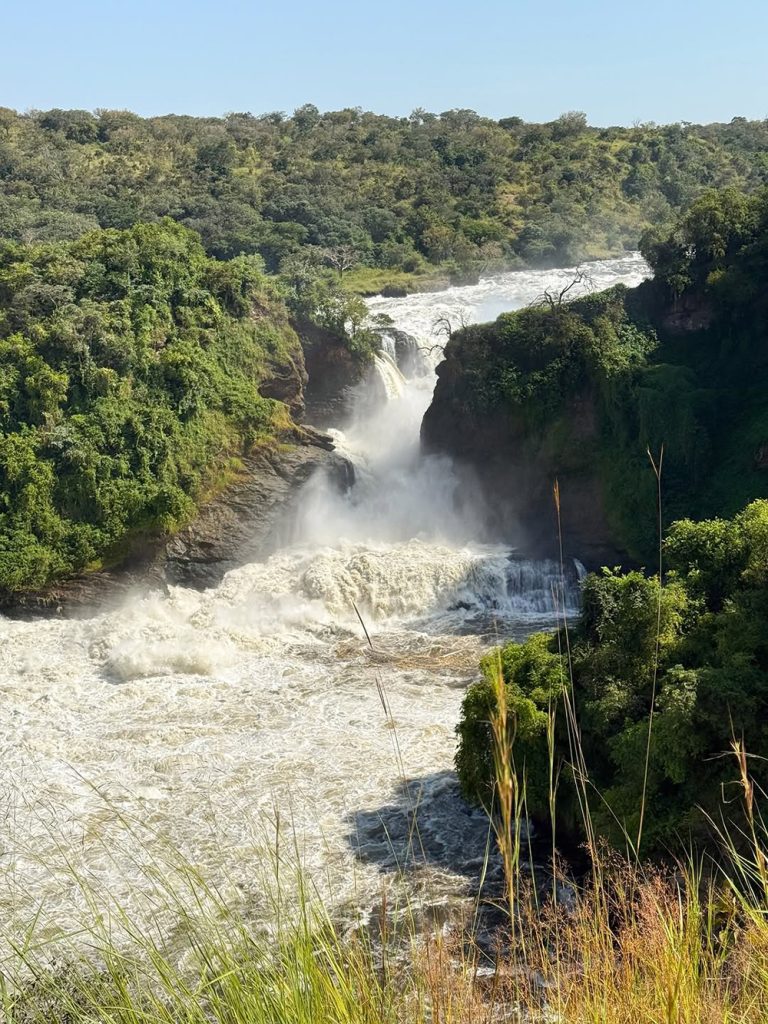
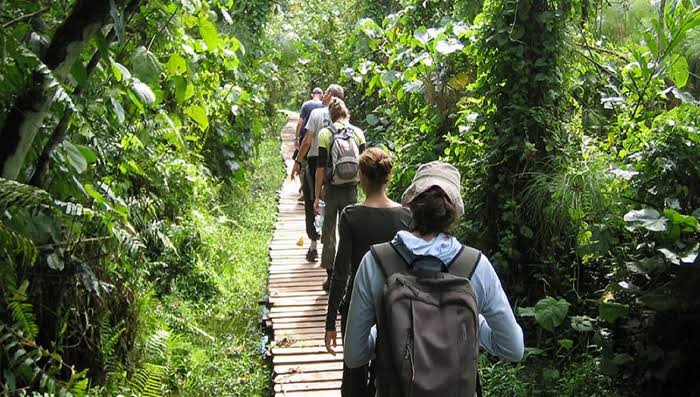
Hiking to the top of Murchison Falls is a walk through both history and nature. It usually takes 45 minutes to an hour, depending on your pace and how often you stop for photos—you’ll probably want to stop a lot. The trail is moderately challenging, with some steep and uneven parts, so bring waterproof hiking shoes and suitable clothes. The path goes through wet areas and has steps, but every bit of effort is worth it.
Along the way, you’re literally retracing the footsteps of famous explorers like Sir Samuel Baker and Sir Winston Churchill. Your guide will share stories of these early adventurers while pointing out various bird species, butterflies, and the occasional monkey family.
The reward at the top is amazing. You’ll stand at the “Devil’s Cauldron,” where the Nile squeezes through a narrow 6-meter gorge. When the river is high, extra water flows over nearby Uhuru Falls, creating a wide curtain of whitewater 30 meters across. The cool mist helps you escape the heat, and the loud roar and constant rainbow make the experience unforgettable. You’ll have wide views of the park and Albert Delta, perfect for photos and moments of awe. Murchison Falls is the most powerful waterfall in the world and has, for decades, drawn visitors from all corners of the globe.
Pro Tip: Don’t just view the falls from the river. Drive to the top of the gorge to stand in the spray as the Nile rushes through the narrow gap. It’s a different and equally amazing view.
Bird Watching: 450+ Species to Spot
With over 450 bird species calling Murchison Falls home, birdwatchers are in for an absolute treat. The park’s mix of savannah, wetlands, river forests, and woodlands is perfect for both local and migrating birds.
Forest Specialties: Budongo Forest, home to two of Uganda’s best birding sites at Kaniyo Pabidi and the Royal Mile, rattles with forest rarities including spillovers from Congo. Search for troops of habituated chimpanzees while enjoying sightings of Narina Trogon, Great Blue Turaco, Puvel’s Illadopsis, Pygmy and Dwarf Kingfishers, and White-thighed Hornbills.
Morning and evening game drives along the Queen’s, Albert, and Buligi tracks offer excellent birding opportunities. Watch for the impressive Secretary bird striding through the grasslands, the distinctive Open-billed Stork, and the remarkable Abyssinian Ground Hornbill.
Both upstream and downstream boat cruises offer unparalleled access to waterbirds. The legendary Shoebill Stork, though elusive, sometimes appears near the Nile Delta. The massive Goliath Heron and the majestic African Fish Eagle are more reliable sightings that never fail to impress.
Guided nature walks, especially through savannah areas, allow for closer encounters with smaller species and opportunities to learn about bird behavior and habitat preferences.
Tips for Bird Watching in Murchison Falls National Park
A skilled guide can turn a good birdwatching trip into a great one. They know where to find certain species and can identify calls you might not notice. It’s worth investing in a guide.
Bring good binoculars and a camera with a zoom lens. Birdwatching takes patience, so give yourself enough time for each outing instead of hurrying from place to place.
The migratory season from November to April brings additional species to the park, making it an especially exciting time for serious birders.
Accommodation & Logistics: Where to Stay – Best Lodges and Camps In and Near Murchison Falls
Luxury Options:
• Paraa Safari Lodge: The park’s flagship accommodation offering stunning Nile views and premium amenities
• Chobe Safari Lodge: This luxury property has enjoyed varied fortunes since its inception in the 1960s. After being looted in the 1970s and used as a rebel hangout in the 1980s and 1990s, it was restored and reopened as a luxury hotel in 2010. The lodge now offers luxury tented accommodation, exceptional service, and prime wildlife-viewing locations.
• Nile Safari Lodge: Boutique property with intimate atmosphere and personalized experiences
Mid-Range Options:
• Pakuba Safari Lodge: Comfortable accommodation with good facilities and reasonable pricing. The ruins of the original 1970s Pakuba Lodge enjoy a superb view down the Nile towards the Congo Mountains.
• Sambiya River Lodge: Charming riverside location with solid amenities
• Murchison River Lodge: Well-appointed rooms with beautiful garden settings
Budget-Friendly Options:
• Red Chilli Rest Camp: Popular backpacker choice with camping and basic room options
• Hornbill Bush Lodge: Simple but clean accommodation at affordable rates
• Heritage Safari Lodge: Basic facilities with friendly service
• Camping options: Several designated camping areas within the park for the truly budget-conscious
No matter where you stay in Murchison Falls, you’ll still see the same amazing wildlife and scenery. Budget places may be simpler, but they don’t take away from the safari experience.
What to Pack for Your Murchison Falls Safari
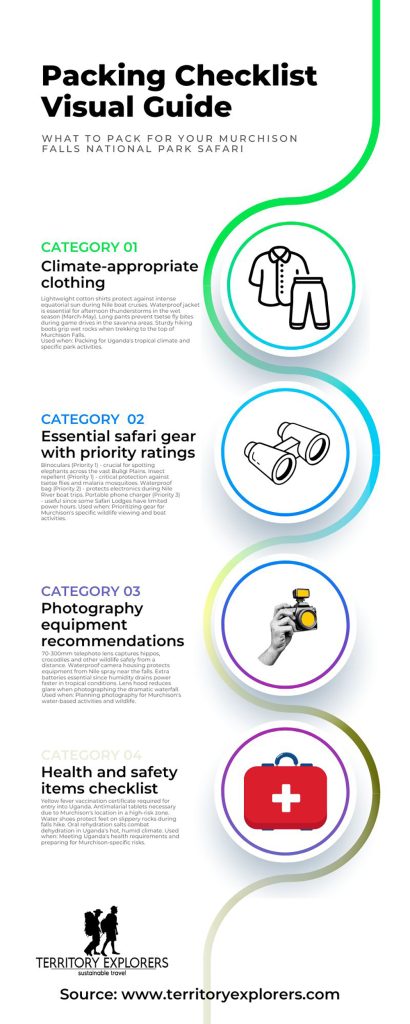
Essential Items:
• Lightweight, long-sleeved shirts and pants (protection from sun and insects)
• Wide-brimmed hat and quality sunglasses
• Waterproof hiking boots and comfortable walking shoes
• High-SPF sunscreen and insect repellent
• Reusable water bottle
• Binoculars and camera with extra batteries
• Light rain jacket for wet season visits
• Personal medications including antimalarial prophylaxis
• Flashlight or headlamp for evening use
• Neutral-colored clothing (avoid bright colors and camouflage patterns)
Planning Your Visit
Best Time to Visit Murchison Falls National Park
Timing can make or break your safari experience, so let’s talk about when to visit Murchison Falls. The sweet spot is during the dry seasons, and there’s solid logic behind this recommendation.
During the dry periods, usually from June to September and December to February, water is hard to find on the savannah. This actually helps you, since animals gather around the few water sources, making it much easier and more rewarding to spot wildlife. Rather than being spread out, animals come together at waterholes and along riverbanks.
The wet seasons, from March to May and late September to November, are different. Animals can find water almost anywhere, so they are harder to spot, but these months have their own benefits. If you like having more privacy and fewer crowds, and you don’t mind searching a bit more for wildlife, the wet season could be ideal. Accommodation is often cheaper, and you’ll have much of the park to yourself.
Our guides are skilled at finding wildlife in any season, so you can visit whenever suits you best without worrying about the weather.
How to Get to Murchison Falls National Park from Kampala
Reaching Murchison Falls is simple, with choices available for different budgets and schedules.
If you prefer to fly, you can take a charter flight from Kajjansi Airfield straight to Pakuba airstrip inside the park. This is the fastest way to get there and gives you great views from above.
Most people travel by road, and Murchison Falls has good roads for a comfortable safari. From Kampala, the main route goes through Kichumbanyobo gate via Luwero, Nakasongola, and Masindi. The drive is about 234 kilometers and usually takes around 4 hours and 20 minutes, giving you plenty of time to enjoy the changing scenery as you leave the city.
Historical Note: Lake steamers once linked Masindi post to the Uganda railways terminus on the Nile at Namasagali near Jinja, representing an earlier era of transportation to this region.
If you’re combining your visit with other northern parks like Kidepo Valley, you’ll likely enter through the Tangi Gate near Pakwach or through the Chobe gate, which offers a completely different approach to the park. Pakwach is notably home to the most northerly of the five road bridges that cross the Nile in Uganda.
Entry Fees and Park Permits (2026 Updated Prices)
Here are the costs to help you plan your budget. In 2026, entry to Murchison Falls National Park is $45 per day for foreign non-residents and UGX 25,000 for East African citizens. The fee covers 24 hours from when you enter, so you have flexibility for your activities.
If you’re traveling with children aged 5 to 15, their entry fee is lower: $20 for foreign non-residents and UGX 10,000 for East African citizens. Remember, there may be extra charges for vehicles or aircraft, so include these in your budget.
Your entry fees help fund conservation and community programs, so you support the park’s protection while you visit.
How Many Days Do You Need in Murchison Falls?
For most visitors, three days is just right. This gives you enough time to enjoy the park’s main attractions without feeling rushed. You can go on several game drives to spot rare animals, take a boat cruise on the Nile, and maybe visit the nearby Ziwa Rhino Sanctuary.
In three days, you can also visit nearby places like Budongo Forest, which is famous for birdwatching and seeing chimpanzees. If you love photography, you’ll enjoy having several game drives, since each one offers new lighting and animal activity.
If you have extra time, consider staying longer. Murchison Falls often reveals something new every day.
Sample Itineraries
Sample Itineraries to Murchison Falls and Beyond
Many of our guests have enjoyed exploring Uganda with these itineraries. They can be a great starting point for you to discover the beauty of Uganda, beginning with Murchison Falls National Park and other amazing places.
Self-Drive vs Guided Tours: Which is Right for You?
Self-Drive Advantages:
• Complete freedom to explore at your own pace
• Ability to customize your itinerary spontaneously
• Potential cost savings on guide fees
• Privacy and independence
Self-Drive Considerations:
• Requires careful planning and navigation skills
• Language barriers in remote areas
• Responsibility for vehicle maintenance and emergencies
• Less wildlife knowledge without a professional guide
Guided Tours Advantages:
• Expert local knowledge enhances wildlife spotting
• Structured itinerary handles all logistics
• Professional drivers navigate challenging roads
• Cultural insights and historical context
• Safety support and emergency assistance
Guided Tours Considerations:
• Less flexibility for spontaneous exploration
• Higher overall cost
• Group dynamics may not suit everyone
• Set schedules may feel restrictive
Our Recommendation: First-time visitors to Uganda benefit enormously from guided tours, while experienced African travelers might enjoy the freedom of self-driving. If you choose self-drive exploration, consider a hybrid approach: guided activities within the park and self-drive transportation between destinations. Don’t forget to carry maps and ensure you have reliable communication devices.
Conservation Efforts and Responsible Tourism
Murchison Falls National Park serves as a model for how tourism can directly support conservation efforts. The park actively protects wildlife through anti-poaching patrols and habitat restoration, while community engagement programs ensure local people benefit from conservation efforts.
Through a revenue-sharing program, communities receive 20% of park entrance fees, which fund crucial infrastructure projects such as health facilities and schools. This creates a direct incentive for local communities to protect rather than exploit park resources.
Ecotourism initiatives involve communities in establishing campsites and lodges, providing alternative livelihoods that discourage poaching and park encroachment. The park features eco-lodges and campsites designed to minimize ecological impact while blending seamlessly with natural surroundings.
Visiting Murchison Falls means you’re not only having a great safari, but also helping with wildlife conservation and community projects. Your entrance fees, accommodation, and guided activities all help protect this special place for the future.
Additional Value Sections
Photography Tips for Murchison Falls National Park
Golden Hour Magic: Sunrise and sunset give you the best light for wildlife and landscape photos. The soft, warm light at these times can turn ordinary pictures into something special.
Essential Equipment:
• Telephoto lens (200-400mm minimum) for wildlife shots
• Wide-angle lens for landscapes and the falls
• Fast lens for low-light conditions
• Sturdy monopod or bean bag for vehicle-based photography
• Extra batteries and memory cards
Technical Excellence: Use RAW format if you know how to edit photos, or set your camera to the best JPEG quality. Use continuous focus and burst mode for moving animals. Pre-focus on where animals might appear and try not to check your photos too often—stay ready for the action.
Ethical Photography: Always respect animals’ space and never pressure guides to get closer for better shots. Try to include the environment in your pictures, not just close-ups. Leave space in front of moving animals to show motion and make your photos more interesting.
Pro Tips: Use your vehicle as a natural hide, since animals are less bothered by cars than by people walking. The loud sound of Murchison Falls can cover up camera noises, so it’s easier to take photos of wildlife near the water. The constant rainbow at the falls also gives you great chances for creative photos all day long.
Practical Information
Safety Tips for Visiting Murchison Falls
Staying safe in Murchison Falls means respecting the wildlife and using common sense. Never try to approach or feed animals—they are wild for a reason. On game drives, stay in your vehicle unless your guide tells you it’s safe to get out.
On boat tours, remain seated and resist the urge to lean over the edge, especially near riverbanks where hippos and crocodiles might be lurking just below the surface.
Health-wise, consult your doctor about antimalarial medication before traveling, and use mosquito repellent religiously, particularly during evening hours. Pack long sleeves and pants to protect against insect bites and sun exposure.
Stay hydrated by carrying a reusable water bottle and drinking plenty of fluids throughout the day. When walking around your lodge or campsite, stay alert and ask staff about areas to avoid, especially after dark.
Always follow park rules, stick to designated areas and on trails, and hire experienced guides for safety and wildlife knowledge. Tell someone your travel plans and return times, and consider travel insurance that covers medical evacuation.
Local Culture and Communities Around the Park
Murchison Falls National Park is surrounded by vibrant communities, including the Banyoro, Alur, and Acholi, each with its own rich cultural traditions and warm hospitality.
Cultural Attractions: The Boomu Women’s Group near Kichumbanyobo offers fascinating cultural encounters, including traditional dances, local crafts like woven baskets and mats, and even cooking lessons. Their craft shop features beautiful handmade items that make perfect souvenirs while supporting local artisans.
Historical Sites: Built in 1923 and named in anticipation of a rail link that never materialized, the Railway Hotel (now the Masindi Hotel) was the first hotel to be constructed in the area. Back then, it used to house passengers traveling overland between lake steamer services.
Religious Heritage: The imposing church at Nyabyeya is the work of a community of Polish refugees who were resettled in Uganda during World War II, a unique piece of the area’s diverse cultural tapestry.
Traditional Industries: At Kibiro, at the foot of the steep Rift Valley escarpment, people have been making salt from mineral-rich soil since the 13th century, continuing ancient traditions that connect the present to the distant past.
In the Mubako Community near the park’s northern sector, visitors can experience traditional thatched-roof architecture and enjoy captivating music and dance performances. The villagers perform energetic dances accompanied by drums, singing, and the distinctive adungu – a traditional Ugandan harp made from cowhide and twine.
These cultural experiences make your safari richer, showing how local people keep their traditions while living alongside the park’s amazing wildlife.
Nearby Attractions: Budongo Forest and Ziwa Rhino Sanctuary
Budongo Forest: Adjacent to Murchison Falls, Budongo Forest represents one of Uganda’s most important forest reserves and a critical habitat for chimpanzees. This ancient forest is home to approximately 600 chimpanzees, making it an excellent complement to your safari experience.
Budongo Forest is home to two of Uganda’s best birding sites: Kaniyo Pabidi and the Royal Mile, both rattling with forest rarities including spillovers from Congo. Beyond chimpanzees, Budongo is a birder’s paradise with over 360 bird species, including several forest specialists you won’t find in the savannah areas of Murchison Falls.
Clear Weather Advantage: When the weather is clear, you can see the blue mountains of Congo beyond Lake Albert from the open area north of Kaniyo Pabidi forest. The views are truly spectacular.
The forest also harbors over 290 tree species, some of which are hundreds of years old, creating a cathedral-like atmosphere that’s perfect for nature walks and photography. Chimpanzee tracking in Budongo offers a more intimate experience than some of Uganda’s more famous chimpanzee destinations, often with smaller groups and longer viewing times.
Ziwa Rhino Sanctuary: Located along the route between Kampala and Murchison Falls, Ziwa Rhino Sanctuary represents one of conservation’s greatest success stories in Uganda. This 7,000-hectare sanctuary is home to the only wild rhinos in Uganda, carefully protected and bred as part of a program to eventually reintroduce them to Uganda’s national parks.
Conservation Success Story: Fifteen years after Uganda’s last wild rhino was killed in 1984, white rhinos from Kenya were brought to the Ziwa Rhino Sanctuary. Today, the sanctuary currently houses over 30 southern white rhinos, and tracking them on foot with experienced guides provides an incredibly intimate wildlife experience.
Unlike traditional game drives, rhino tracking at Ziwa involves walking through the savannah and getting remarkably close to these magnificent creatures. The sanctuary also supports over 40 other mammal species and more than 300 bird species, making it a worthwhile destination in its own right, not just a convenient stop en route to Murchison Falls.
Cost Breakdown: Budget for Your Murchison Falls Trip
Planning your Murchison Falls budget requires considering several key components, each offering different levels of comfort and experience to match your preferences and financial situation.
Transportation Costs:
• Self-drive vehicle rental: $50-150 per day depending on vehicle type
• Fuel for round trip from Kampala: $60-80
• Guided tour with transportation: $200-500 per person per day
• Charter flight to Pakuba airstrip: $300-500 per person each way
Accommodation Range:
• Budget camping and basic lodges: $20-60 per person per night
• Mid-range lodges and tented camps: $100-250 per person per night
• Luxury safari lodges: $300-800+ per person per night
Activity Costs:
• Park entrance fees: $45 per person per day (foreign non-residents)
• Game drives with guide: $30-50 per vehicle per drive
• Boat cruise to Murchison Falls: $30-40 per person
• Hiking to top of falls: $15-25 per person
• Chimpanzee trekking in Budongo: $90 per person
Additional Expenses:
• Meals (if not included in lodge): $25-60 per person per day
• Guide tips: $10-20 per guide per day
• Souvenirs and crafts: $20-100 depending on purchases
• Travel insurance: $30-80 per person for the trip
Sample Budget Ranges:
• Budget traveler: $100-350 per person per day
• Mid-range comfort: $350-600 per person per day
• Luxury experience: $600-2000+ per person per day
Tourism is all about experiences, and Murchison Falls gives you great value no matter your budget. The wildlife is the same for everyone—whether you stay in luxury or budget places, you’ll see the same amazing falls and animals and make unforgettable memories. Most safari packages can be adjusted to fit your budget, so you won’t miss out on what makes Murchison Falls special. The main thing is to find the right balance between comfort and cost so you can enjoy this natural wonder.
Frequently Asked Questions About Murchison Falls National Park
Yes, Murchison Falls is considered very safe for tourists when proper precautions are followed. The park has professional guides, well-maintained roads, and established safety protocols. Wildlife encounters are managed professionally, and the main risks are the same as any African safari – staying in vehicles during game drives and respecting wildlife distances.
You can see four of the Big 5 at Murchison Falls (lion, leopard, elephant, and buffalo), but rhinos are only found at the nearby Ziwa Rhino Sanctuary. Most visitors combine both destinations for a complete Big 5 experience.
Early morning (6:00-9:00 AM) and late afternoon (4:00-7:00 PM) offer the best wildlife viewing opportunities. Animals are most active during these cooler periods, and the lighting is perfect for photography.
The boat cruise takes you to within about 50 meters of the base of the falls, while the hiking trail leads directly to the top where you can look down into the “Devil’s Cauldron.” Both perspectives offer incredible views and photo opportunities.
Yes, several lodges and camps operate within the park boundaries, ranging from luxury safari lodges to budget camping options. Staying inside the park offers the advantage of being close to wildlife and activities.
Never approach dangerous wildlife. Immediately inform lodge staff or park rangers, who are trained to handle these situations safely. Most lodges have protocols for wildlife encounters and will escort you safely if needed.
Yes, the park is open year-round, though the dry seasons (June-September and December-February) offer easier wildlife viewing. The wet seasons have fewer crowds and lush scenery, but roads can be more challenging and animals more dispersed.
Murchison Falls combines world-class wildlife viewing with the legendary Nile Falls, offering a unique blend of savannah safari and dramatic waterfall experience. It’s home to the world’s largest population of critically endangered Nubian giraffes and provides access to both forest (chimpanzees) and savannah wildlife in one destination.
Conclusion
Murchison Falls National Park gives you Uganda’s most complete safari experience, with top wildlife viewing, the famous Nile Falls, and great value. From the powerful roar of the falls in Fajao Gorge to seeing rare Nubian giraffes against the sky, every moment here is memorable.
You might follow the path of Sir Samuel and Florence Baker, who named the falls in 1864, retrace Hemingway’s adventure, or just look for your own African dream. Murchison Falls offers both natural beauty and rich history.
When you stand at the “Devil’s Cauldron,” where the Nile squeezes through a 6-meter gorge, or cruise the same waters once used by steamships, you’re not just visiting a park. You’re joining a story that has lasted for centuries and grows with every visitor.
Whether you want a 3-day trip or a longer East African safari, our team can help you plan the perfect itinerary for your interests and budget.
Contact us at info@territoryexplorers.com to start planning your Murchison Falls safari, where every game drive brings new discoveries, every sunset over the Nile creates lasting memories, and every moment connects you to one of Africa’s legendary landscapes.