
A few places on Earth have stayed the same for 25,000 years, and Semuliki National Park is one of them. While civilizations have come and gone, this ancient rainforest has barely changed since the last ice age. It offers a glimpse of what tropical Africa looked like when early humans first arrived. The forest extends from the vast Ituri Forest in the Democratic Republic of Congo. Semuliki is a true treasure for nature lovers, so let’s explore what makes it special.
Established in 1993, Semuliki National Park protects 220 square kilometers of ancient forest that has changed little in over 25,000 years. Walking here feels like stepping back to the time when early humans first appeared in Africa. The park is special not just for its age, but also because it sits where East and Central African ecosystems meet. This unique location supports species found nowhere else in the region.
Key Takeaways
- Location: Semuliki National Park is located in Bundibugyo District, western Uganda, within the Great Rift Valley
- Size: The park covers approximately 220 square kilometers of pristine tropical rainforest
- Biodiversity: Home to 441 bird species (216 forest birds), 63 mammal species, and over 300 butterfly species
- Unique Features: Famous for Sempaya Hot Springs with temperatures reaching 103°C, and being Uganda’s only true lowland tropical rainforest
- Special Wildlife: Houses 46 Central African bird species found nowhere else in East Africa, plus forest elephants, chimpanzees, and 8 primate species
- Cultural Heritage: Traditional home of the Batwa pygmy people with rich forest-based culture
- Best Time to Visit: Year-round destination, though dry seasons (June-August, December-February) offer easier access
- Access: Accessible via Fort Portal (67km) or Kampala (300km) with various accommodation options from budget to luxury
Location and Geography
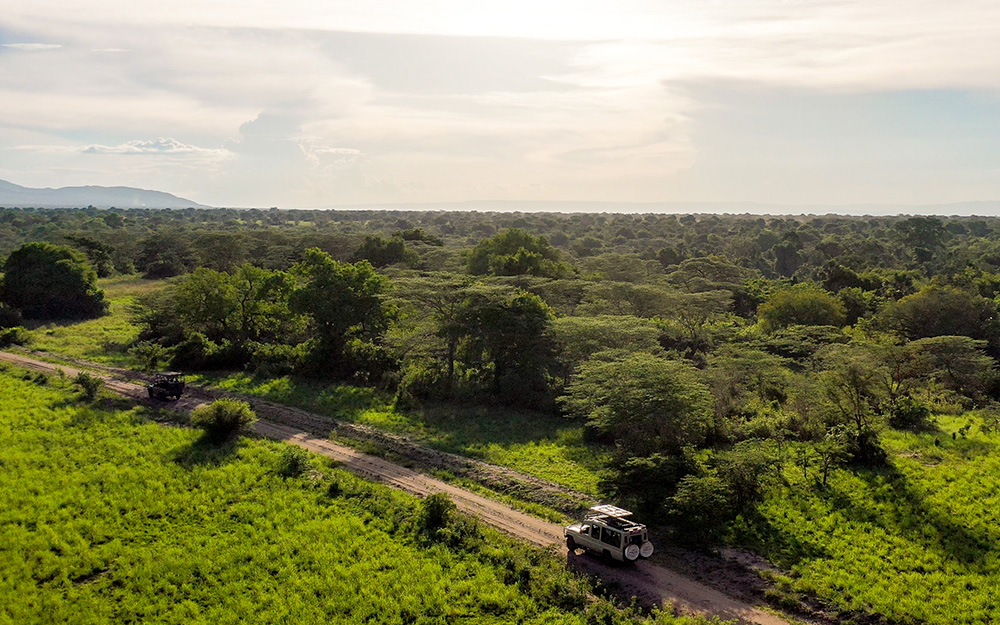
Located in the heart of the Great Rift Valley, Semuliki National Park sits on the floor of the western branch in Bundibugyo District, western Uganda. Its position is important because it brings together several major ecosystems, making it a unique ecological crossroads.
The Semuliki River, after which the park is named, serves as the border between Uganda and the Democratic Republic of Congo. It flows northward to Lake Albert. The park’s elevation varies from 670 to 760 meters above sea level, making it one of Uganda’s lowest national parks.
This location within the Albertine Rift is important because it gives the area remarkable geological features, like the famous hot springs that rise from deep underground. The flat terrain, crossed by many rivers and streams, creates a mix of habitats that support a wide variety of life.
Park History and Establishment
The history of Semuliki National Park showcases a combination of conservation awareness and ancient natural wilderness. Even before officially becoming a national park in October 1993, the forest was acknowledged for its remarkable biodiversity and distinctive ecological features. Initially part of the Semliki Forest Reserve, created during colonial times, the region experienced several conservation designations before finally securing its protected status.
The decision to upgrade the forest reserve to national park status was made after detailed biological surveys showed how important the area is as a refuge for Central African forest species. Visitors are often fascinated to learn that this forest is one of Africa’s oldest, having survived the climate changes that wiped out other forests during the last ice age. Walking here means experiencing a true survivor of Earth’s climate history.
The park’s creation also recognized the cultural importance of the area to the indigenous Batwa people, who have lived in harmony with the forest for generations. Today, the park is both a sanctuary for rare wildlife and a living museum of one of Africa’s oldest forest ecosystems.
How Did Semuliki Get Its Name?
The story behind Semuliki’s name is one of those classic miscommunication tales that somehow ended up shaping history. When European explorers first arrived in the area, one of them approached a local woman and asked what the river was called. The problem was, they didn’t speak the same language. The woman, thinking he was asking about the empty basket she was carrying, replied “Semuliki” – which means “my basket is empty” in the Luwisi language.
The explorer, completely unaware of the mix-up, dutifully wrote down “Semuliki” as the river’s name in his records. And just like that, a simple misunderstanding became permanent. The name stuck, was passed down through official documents and maps, and eventually became the name we know today for both the river and the national park.
It is remarkable that a brief moment of misunderstanding between two people who did not share a language became part of Uganda’s official geography.
Natural Features and Landscape
The Great Rift Valley Setting
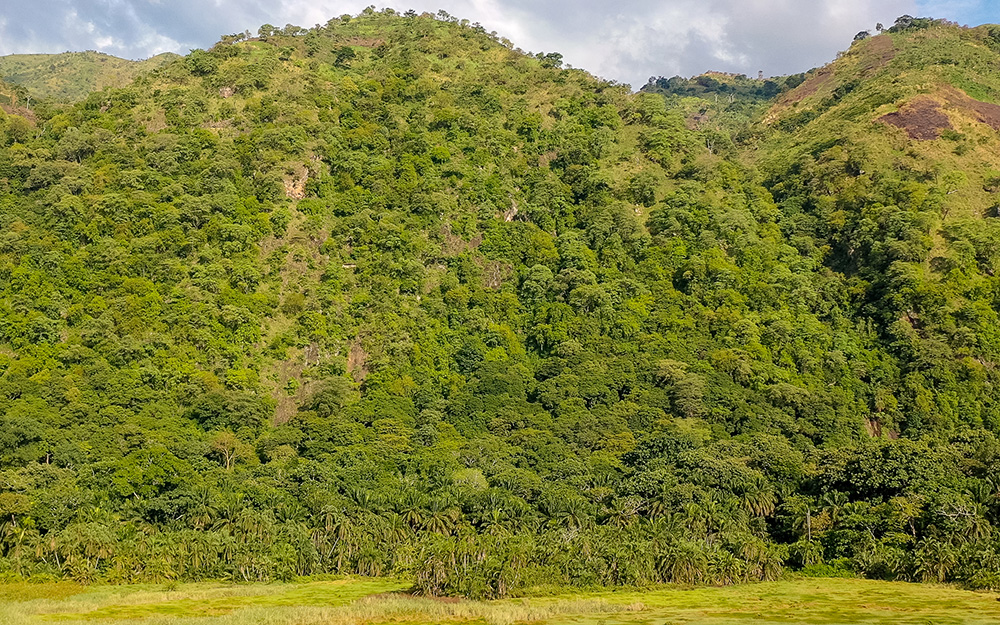
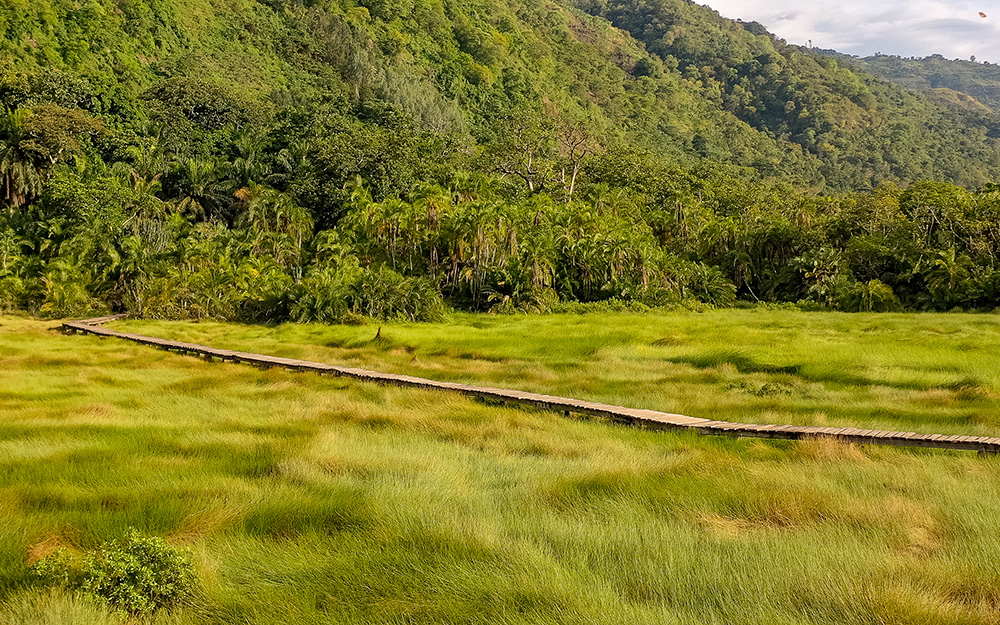
Imagine standing on the floor of one of Earth’s most dramatic geological features, the Great Rift Valley. This formation stretches from Lebanon to Mozambique. Semuliki National Park’s location in the western arm of this valley creates a unique landscape with flat terrain, bordered by the Rwenzori Mountains to the southeast and the Blue Mountains of the Democratic Republic of Congo to the northwest.
This valley floor setting is important because it allows for the growth of lowland tropical rainforest, which is rare in East Africa where most forests are at higher elevations. The park’s location also affects its climate, creating hot, humid conditions that support lush vegetation and diverse wildlife.
Hot Springs and Geothermal Features
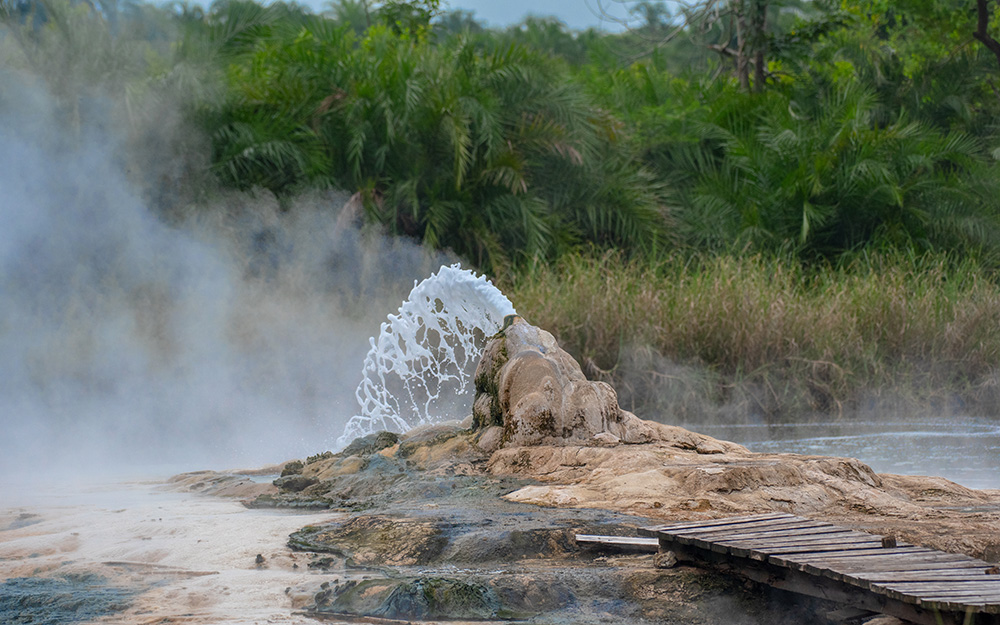
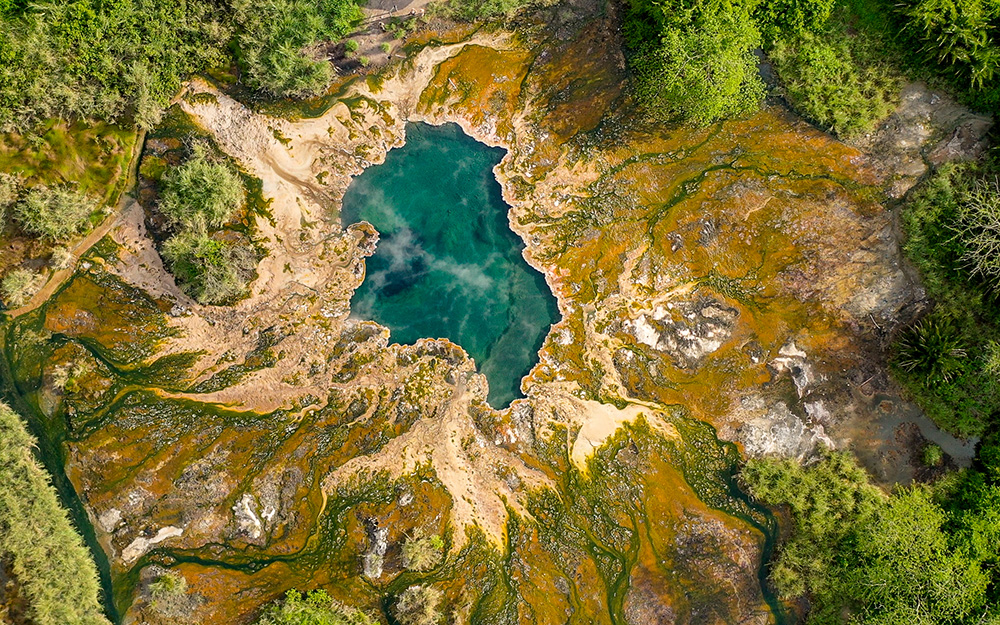
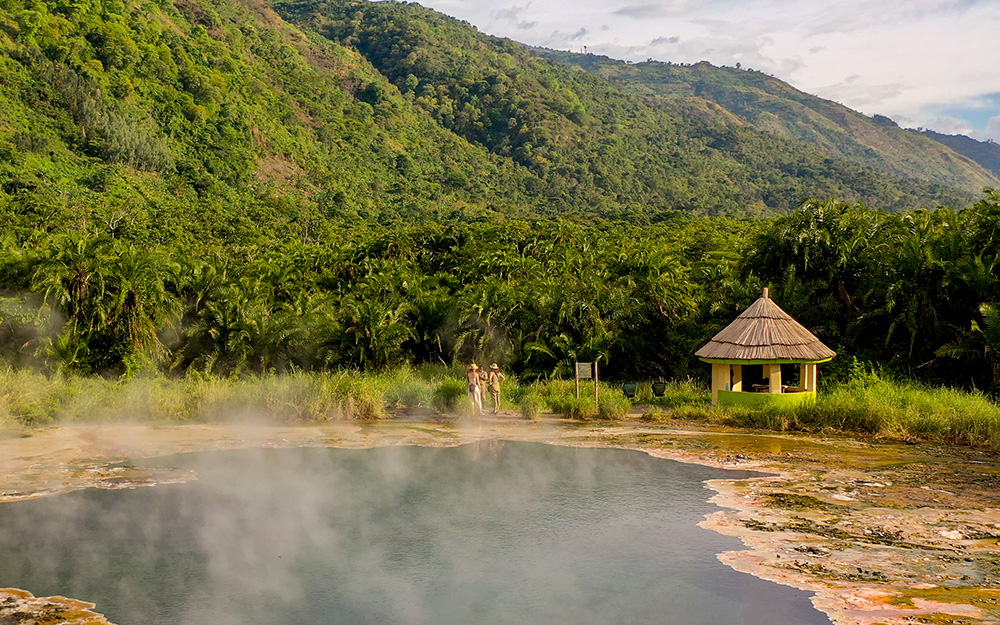
The most famous of Semuliki’s geological features is the Sempaya Hot Springs. The park has two main hot spring sites: the “Male” hot spring (Bintente) and the “Female” hot spring (Nyasimbi), named according to local Bamaga traditions and beliefs about their different qualities.
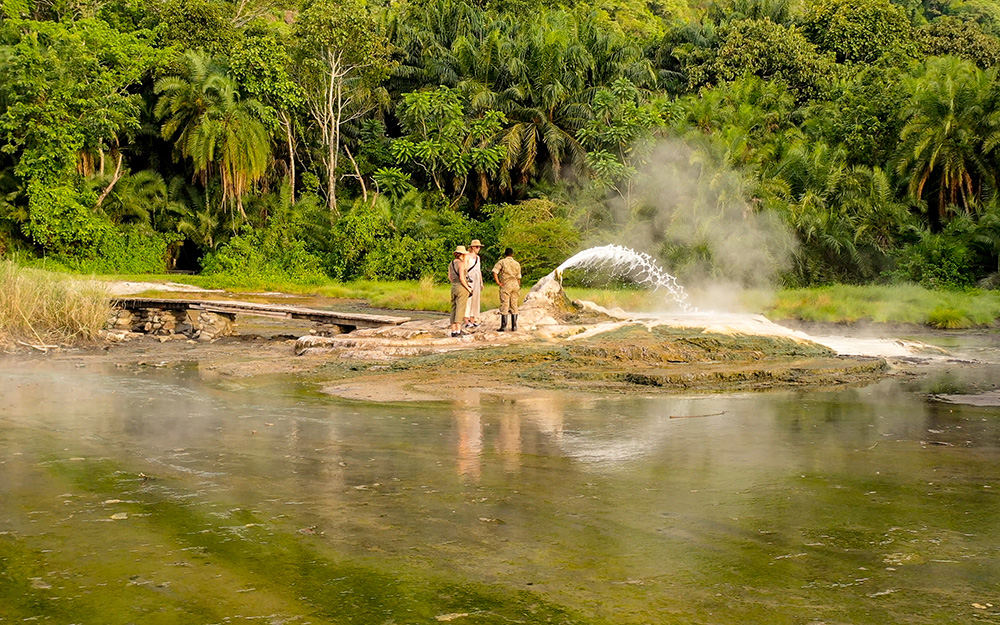
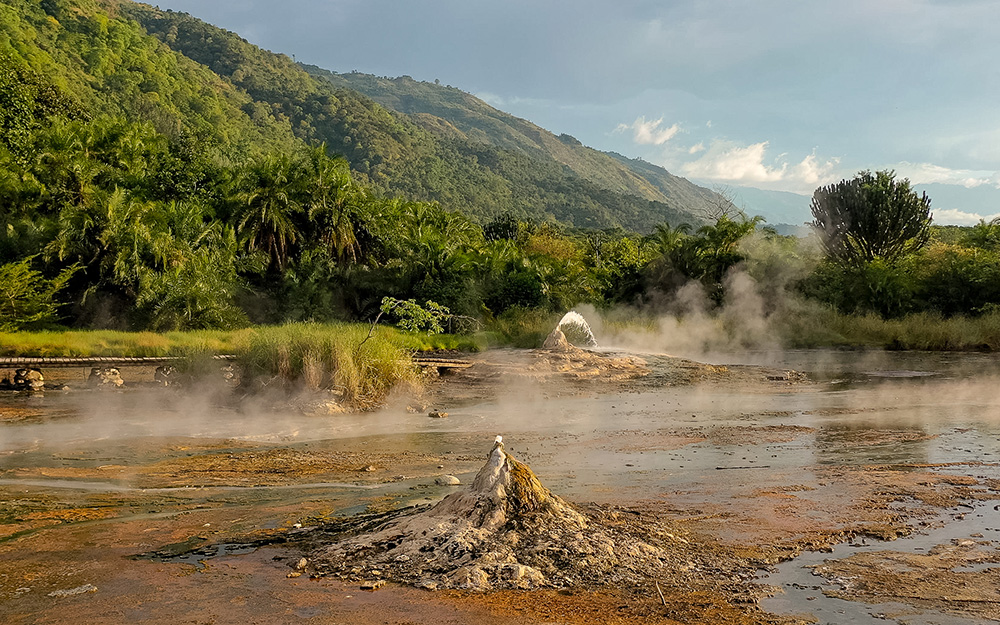
The Female hot spring, Nyasimbi, is the larger and more dramatic of the two, with a geyser that shoots boiling water and steam up to two meters high. The water reaches temperatures of 103°C (217°F), which is hot enough to cook food. Locals and visitors often boil eggs and bananas in the spring. The mineral-rich waters are believed by local communities to have healing properties, and the springs are culturally significant to the surrounding tribes.
The Male hot spring, Bintente, is smaller but still impressive, with bubbling pools surrounded by sulfur deposits that create a unique landscape. The constant steam and sulfur smell remind visitors of the powerful geological forces at work beneath the surface.
Forest Ecosystems and Vegetation Types
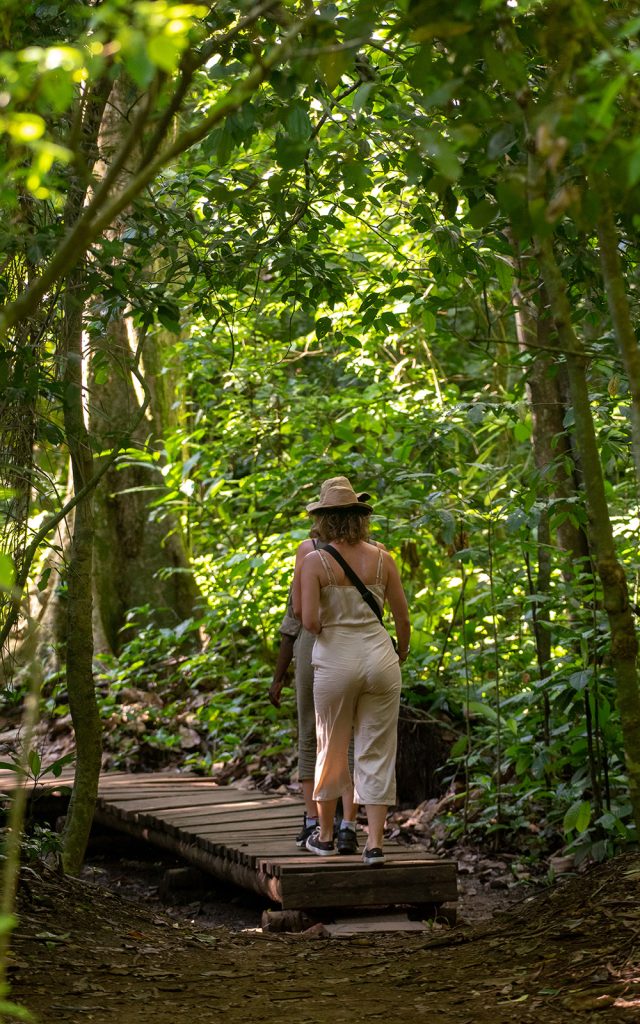
Semuliki’s forest ecosystem is a rich example of tropical botany. The park protects medium-altitude semi-deciduous forest, which is the easternmost extension of the great Ituri Forest that stretches across Central Africa. This ancient forest supports a remarkable diversity of plant species, with over 336 tree species recorded in the park.
Semuliki’s forest is a classic tropical rainforest, with clear canopy layers that form different habitats. The tallest trees, like mahogany and ironwood, reach 40-50 meters and have been growing for centuries. Beneath them, the main canopy forms a thick green roof at 25-35 meters, while the understory and forest floor are filled with smaller trees, shrubs, ferns, and many other plants.
Botanists are especially interested in Semuliki because it has many plant species usually found in Central African forests, not East African ones. As you walk through the forest, you’ll see huge buttress roots, hanging lianas, and a wide variety of epiphytes that create gardens high up in the trees. It feels like discovering a hidden world that most visitors to East Africa have never seen.
Rivers and Water Systems
The lifeblood of Semuliki’s ecosystem is maintained by its many rivers and streams, forming a network that sustains wildlife and the forest. The Semuliki River runs along the western boundary of the park, winding north through the Rift Valley floor toward Lake Albert.
Inside the park, smaller rivers and streams add to the variety of habitats, supporting different wildlife and offering scenic places for visitors. These waterways are especially important for the park’s rich birdlife, giving homes to many waterbirds and forest species that rely on plants growing along the banks. The sound of flowing water is always present during a forest walk, adding to the peaceful and unique atmosphere of this ancient woodland.
Wildlife and Biodiversity
Bird Species and Birdwatching Opportunities
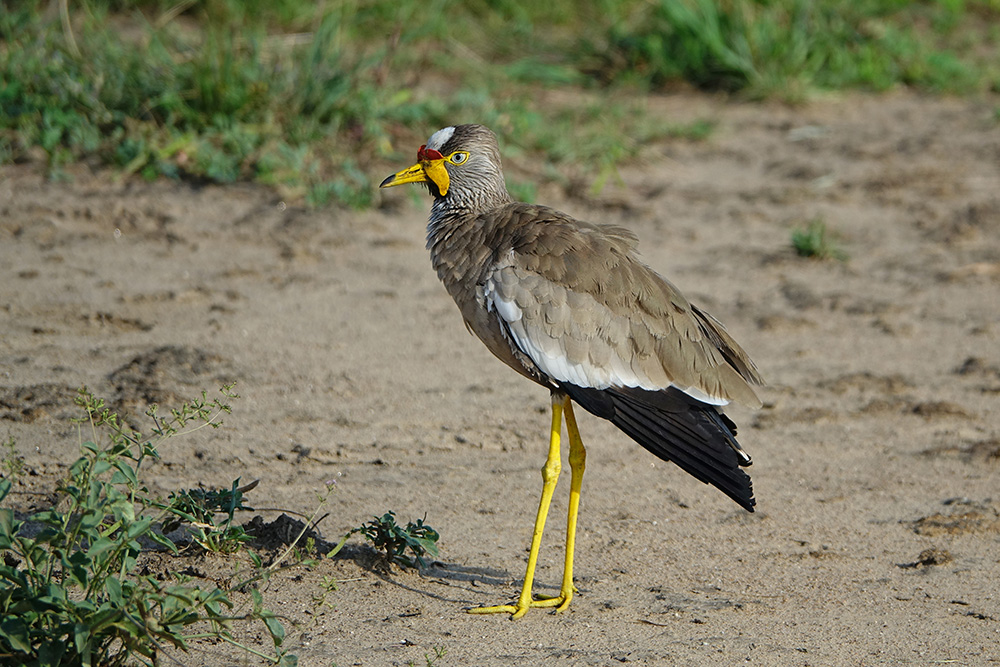
If you enjoy birdwatching, Semuliki National Park is one of Africa’s top destinations. With 441 recorded bird species, the park has more bird diversity per square kilometer than almost anywhere else on the continent. Every walk through the forest offers the chance to spot something new.
Semuliki stands out for its impressive variety of Central African forest birds. Out of 216 forest bird species in the park, 46 are Central African species not found anywhere else in East Africa. Highlights include the Shining Blue Kingfisher, known for its glowing blue feathers, and the small but striking Black Dwarf Hornbill.
Semuliki is home to many hornbill species, such as the White-crested, White-thighed, Black-wattled, and Red-billed Dwarf Hornbills. Each has adapted to its own part of the forest, and their calls fill the canopy at dawn and dusk.
Birds such as Grant’s Bluebill, Blue-billed Malimbe, and Crested Malimbe bring bright colors to the green forest. The Orange-cheeked Waxbill and Green Twinspot are shy finches that can be hard to spot. Photographers will enjoy trying to capture the Blue-throated Roller and White-throated Blue Swallow in flight.
Semuliki’s wetlands are home to different birds, such as the hard-to-find Grey-throated Rail and the striking Blue-breasted Kingfisher. Some species, like the Ituri Batis, African Piculet, and Chocolate-backed Kingfisher, are so rare that birders travel from all over the world to see them.
Birds that live on the ground, like the Red-tailed Ant Thrush, need special observation methods and sometimes respond to recorded calls. Flycatchers such as the Olivacious and Chestnut-capped Flycatchers show the wide range of insect-eating birds in the forest.
Mammals and Primates
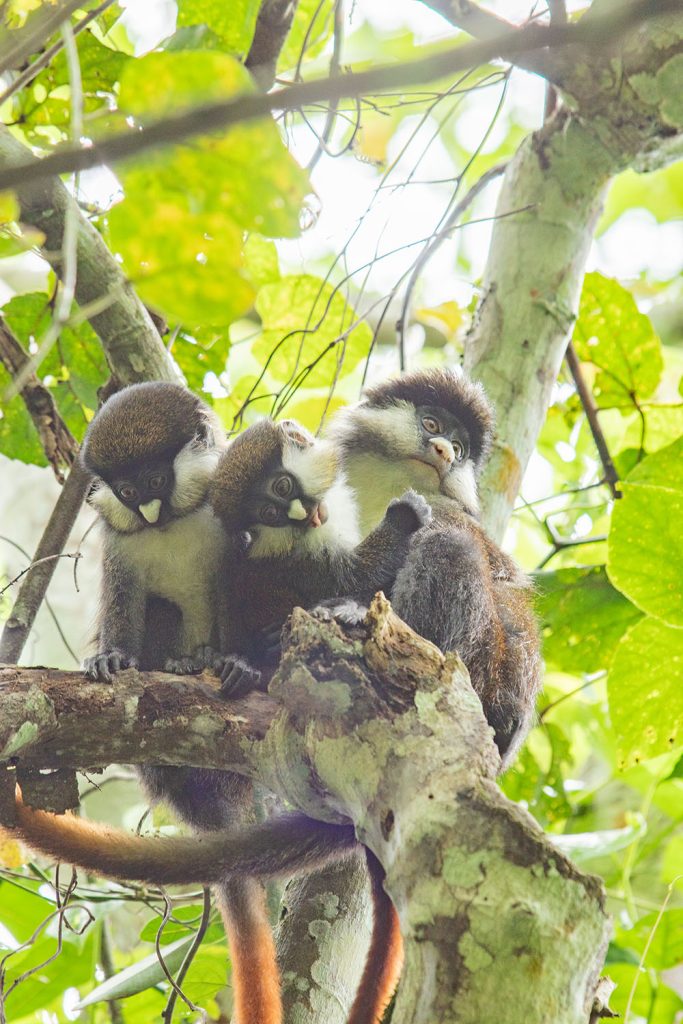
Semuliki boasts a rich mammalian diversity, featuring 63 species from tiny shrews to large forest elephants. Its position at the crossroads of East and Central African ecosystems results in a distinctive mix of species that cannot be seen together elsewhere.
Semuliki’s forest elephants are a unique group adapted to living in thick woodland instead of open savanna. They are smaller than savanna elephants and have straighter, downward-pointing tusks that help them move through dense plants. Seeing these gentle animals in the forest is a special experience, as their intelligence and grace stand out in such a challenging environment.
Primates of Semuliki
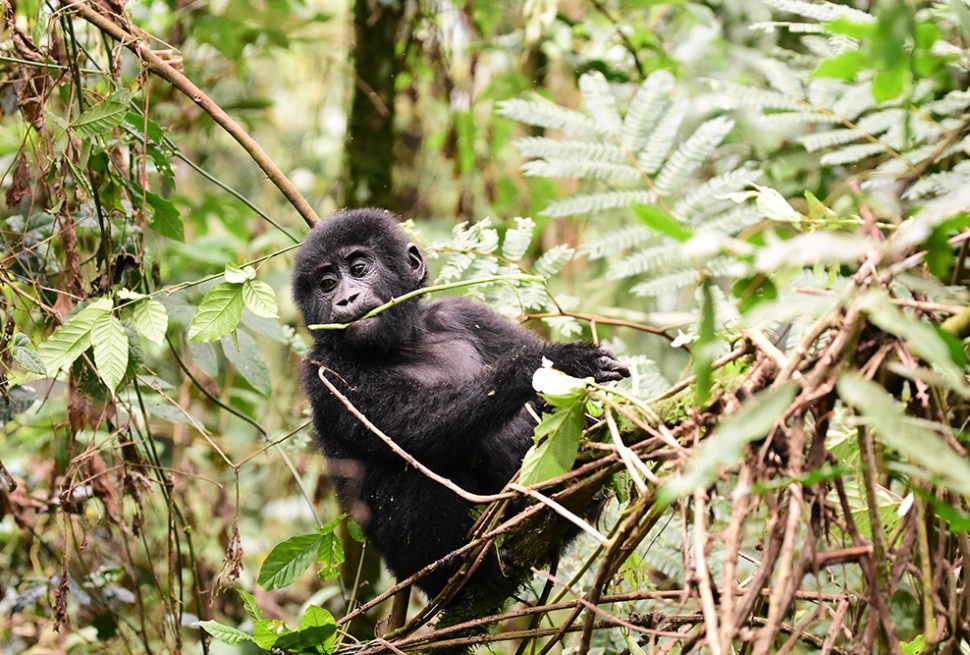
The primate diversity in Semuliki National Park is nothing short of extraordinary, with eight species inhabiting these ancient forests. Each species occupies its own ecological niche, forming a complex web of primate interactions that has wowed researchers for decades.
Chimpanzees are the main attraction among Semuliki’s primates. They live in complex social groups and move through the forest with impressive intelligence. Observing them in their natural setting is a powerful experience, as their expressions, use of tools, and social behaviors highlight our close evolutionary connection. The chimpanzees in Semuliki are part of a larger group that also lives in the Ituri Forest in the DRC.
Red-tailed Monkeys are among the most frequently seen primates in Semuliki. Their white cheeks and long red tails make them easy to spot. These social monkeys travel in large groups, moving gracefully through the treetops and calling out to each other as they go.
Blue Monkeys like to stay deep inside the forest, where their blue-gray fur helps them blend into the shadows. They are shyer than red-tailed monkeys, so watching them often takes patience and a quiet approach.
Black-and-white Colobus Monkeys are known for their acrobatic leaps through the trees, with long white hair that flows as they move. Seeing a group of colobus monkeys in the canopy is impressive, as they jump between branches with ease and skill high above the ground.
Vervet Monkeys spend more time on the ground than other primates in the park, but they are comfortable both in trees and on land. Their unique social habits and calls have attracted a lot of scientific study.
Grey-cheeked Mangabeys are some of the hardest primates to spot in Semuliki. Their loud calls in the morning often let you know they are nearby, even if you can’t see them. These large, dark monkeys usually stay high up in the trees and are best seen with patience.
Olive Baboons live in the biggest and most ground-based groups in the park. Their social structure is complex, and watching a troop move through the forest clearings gives you a glimpse into how primate societies work.
De Brazza’s Monkeys are known for their striking white beards and orange-red markings, making them easy to recognize if you spot them in the forest. They are shy and often stay hidden, but you might find them near water since they are good swimmers.
Butterflies and Insects
Semuliki is home to over 300 butterfly species, filling the forest with color and movement. The park’s location at the meeting point of different regions creates perfect conditions for many types of butterflies from both East and Central Africa.
Butterflies in Semuliki range from very small, colorful species to large swallowtails with wingspans up to 20 centimeters. Many types look different depending on their sex, with males often showing bright colors and females having more muted tones for better camouflage.
In addition to butterflies, Semuliki has many kinds of insects, including beetles, ants, termites, and more. These insects are important for the forest’s health. At night, different insects become active, filling the forest with new sounds.
Unique Species and Endemics
Semuliki stands out because it is home to rare and unique species not found anywhere else in East Africa. The park acts as a safe haven for Central African forest animals that have been separated from their main populations for thousands of years, resulting in special adaptations.
Some of the park’s mammals, such as the Pygmy Antelope and different forest shrews, are remnants of Central African species. The carnivores here include hard-to-spot animals like the Golden Cat and forest genets, which are rarely seen but are important top predators.
Climate and Weather Patterns
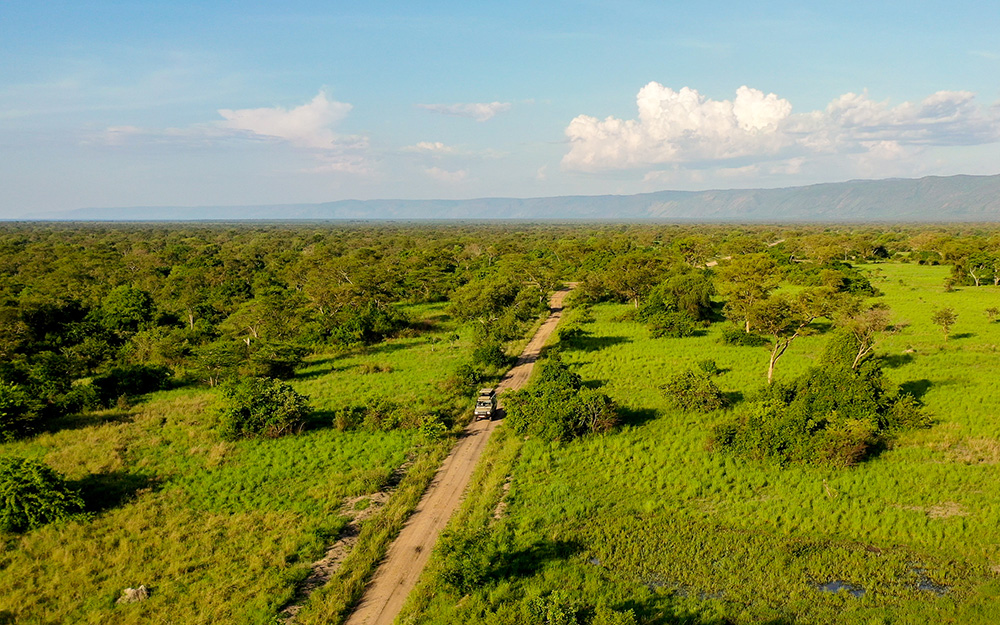
Semuliki’s location in the Rift Valley gives it a unique climate, different from other Ugandan parks. The weather is hot and humid year-round, but changes in rainfall and wildlife activity happen with the seasons. Knowing this helps you plan a better visit.
Temperatures in Semuliki are steady, with daytime highs between 25-30°C (77-86°F) and nights rarely below 18°C (64°F). The forest canopy helps keep things cooler, but open areas can get much hotter at midday. Most visitors find the high humidity more challenging than the heat, so lightweight, breathable clothing is important for comfort.
Rainfall in Semuliki follows East African patterns, with two rainy seasons and drier periods in between. The long rains (March-May) bring heavy afternoon showers, making trails muddy but also causing lots of flowers and wildlife activity. The short rains (September-November) are lighter but less predictable. Dry seasons are better for hiking, but you may see less wildlife near water sources.
Seasonal Wildlife Activity varies with rainfall patterns, as different species respond to changing food availability and weather conditions. Bird activity peaks during early morning and late afternoon throughout the year, but species composition can vary seasonally as some birds track flowering and fruiting cycles through the forest ecosystem.
Forest Trees and Vegetation
Walking through Semuliki’s ancient forest, you’ll find a huge variety of plant species and ecological relationships that have developed over thousands of years. The park has more than 336 recorded tree species, making it one of East Africa’s most diverse forests.
Emergent giants like African Mahogany (Khaya species) and Ironwood trees tower over the forest, reaching more than 50 meters tall and living for centuries. These large trees support many other plants and provide nesting sites for birds such as hornbills. Their size and age show the forest’s long history and resilience.
The canopy layer, 25-35 meters high, is made up of many tree species like figs, mahogany relatives, and legumes. This layer is where most birds and primates are found, especially when fruiting trees attract wildlife. The variety of species and their different flowering times provide food for animals all year.
Understory plants grow in the filtered light below the canopy. These include palms, tree ferns, and shade-loving flowering trees. Many have large leaves to catch sunlight, buttress roots for support in shallow soil, and chemical defenses against insects.
Buttress roots are large, triangular supports that can reach up to 5 meters up tree trunks and spread across the forest floor. They help support big trees in shallow soil and also create habitats for many smaller plants and animals.
Epiphytes like orchids, bromeliads, ferns, and mosses grow on tree trunks and branches, forming vertical ecosystems. These plants support their own communities of insects and small animals. Some trees host hundreds of epiphyte species, adding to the forest’s biodiversity.
Cultural Heritage
The Batwa People and Their Forest Connection
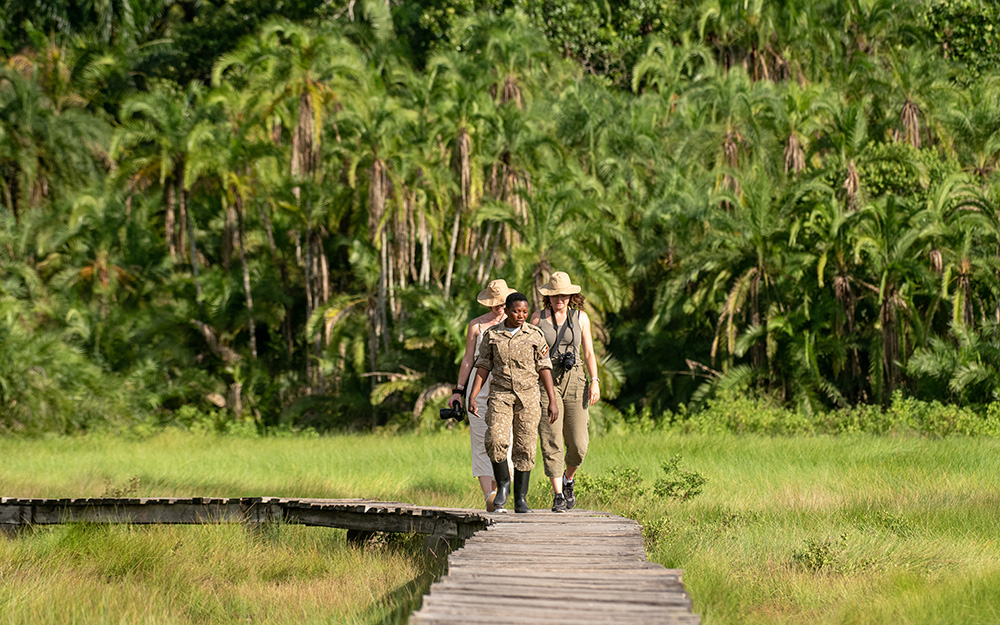
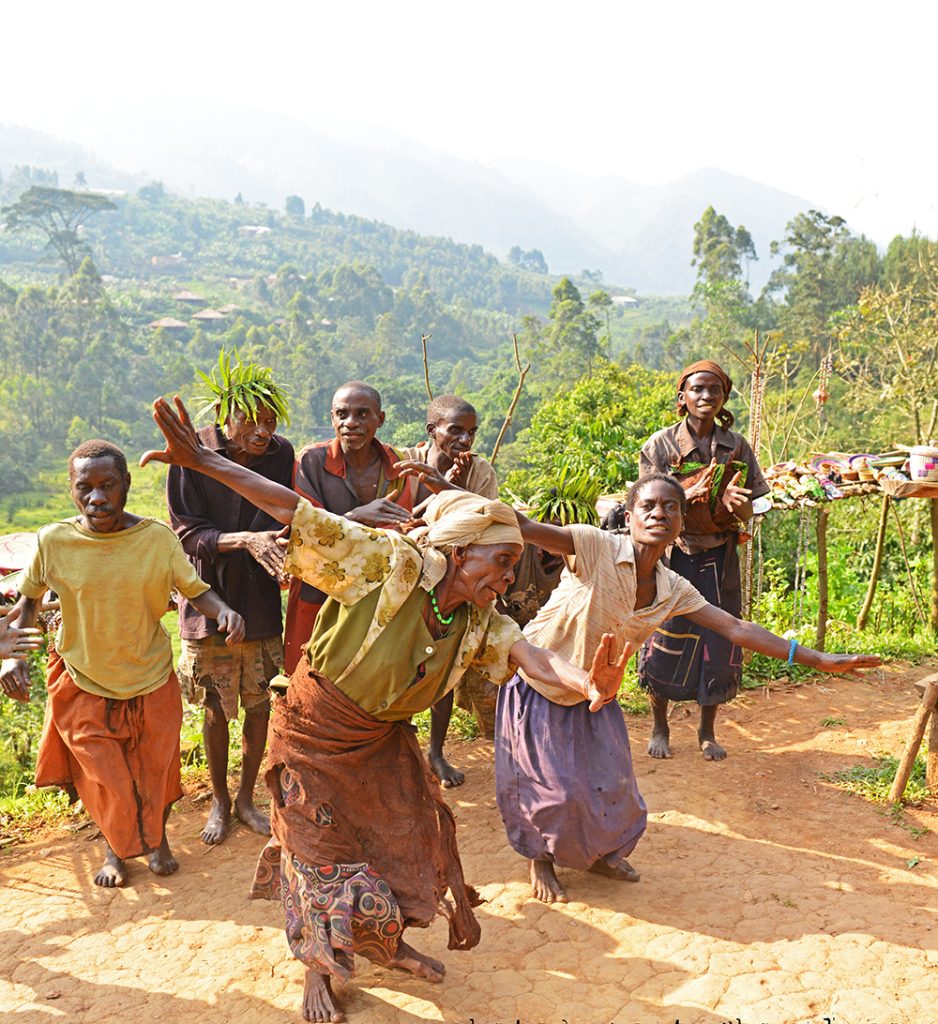
Long before there were conservation areas or national parks, the Batwa people lived in Semuliki’s forests. They have one of the closest relationships with the forest of any people in the world. Often called “pygmies” (though they prefer their own tribal names), the Batwa are one of Africa’s oldest cultures, with a way of life that fits perfectly with the forest. Spending time with them gives you a sense of how people once lived in harmony with nature thousands of years ago.
For the Batwa, the forest is much more than a place to survive. Every tree, stream, and animal has its own meaning and importance in their worldview. Their traditional knowledge covers medicinal plants, seasonal changes, animal behavior, and ways to find their way through the forest—skills passed down for generations. When you spend time with Batwa guides, you realize how much modern society has lost its connection to the environment.
Local Communities and Traditional Practices
Several different ethnic groups live around Semuliki National Park, each with their own traditions and ways of relating to the forest. The Bakonjo people, for example, live on the lower slopes of the Rwenzori Mountains and have developed farming and cultural practices suited to the edge of the mountain forest.
The Bamba are the main ethnic group in the area. Their traditions include storytelling, music, and dance that often feature forest animals and natural events. Their beliefs about the hot springs and forest spirits still shape how local people interact with the park and its resources.
Cultural Tourism Experiences
A visit to Semuliki lets you experience real African cultural practices that have stayed the same for many generations. When you visit local communities, you can see traditional brewing, pottery, basket weaving, and food preparation that all use forest resources in a sustainable way.
The best part of any cultural visit is spending time with Batwa guides. They can show you traditional hunting, how to make fire, find your way in the forest, and use medicinal plants. These experiences are not just fun—they teach you a lot and can change how you see the connection between people and nature.
Tourism Activities and Attractions
Forest Drives and Nature Walks
Semuliki does not have the typical open savanna game drives, but its forest wildlife viewing offers close-up encounters that can be even more rewarding than seeing animals from far away. The park’s forest trails let you explore different habitats and see wildlife that changes throughout the day.
Morning nature walks are truly special. They begin before sunrise, as the forest wakes up with bird calls, primate sounds, and the movement of animals starting their day. The changing light through the trees creates beautiful colors and shadows, making it a great time for photography. It feels like watching the forest come to life each day.
Afternoon Forest Walks offer different experiences entirely, as many animals seek shade during the hottest times of the day, and different bird species become active. The afternoon light creates different photographic opportunities and reveals aspects of forest life that morning visits might miss.
At night, Semuliki feels like a different place. Nocturnal animals come out, and the forest is filled with sounds you don’t hear during the day. On spotlight walks, you might see bush babies, forest genets, and night birds. These walks create a sense of mystery and discovery, showing you a side of the forest that only appears after dark.
Birdwatching Tours
Semuliki is known as one of Africa’s top places for birdwatching. Birding tours here are intense and rewarding, often letting you see many rare species. Professional guides know the best spots and times to find the park’s most wanted birds, making even tough forest birding successful.
Birdwatching at dawn in Semuliki is a special experience. Guides take small groups out before sunrise to places where forest birds start calling and feeding. The change from night sounds to the morning chorus and then to full daylight lets you see different bird species as the morning goes on.
Canopy-level birding uses towers and viewpoints to bring you up to the level of the forest canopy, where many of the park’s most impressive birds live. You can watch hornbills move between fruiting trees or see flycatchers hunting insects, giving you a view of bird behavior you can’t get from the ground.
Special birding tours for rare species use different methods. Guides might use recorded calls, decoys, and their knowledge of small habitats to find birds like the Ituri Batis, African Piculet, and forest kingfishers. These tours often mean waiting patiently, but seeing these rare birds in the wild is worth the effort.
Multi-day birding trips let serious birders work through Semuliki’s long species list by visiting different habitats at the best times. These tours can result in seeing over 200 bird species in just three or four days, making them some of the most rewarding birding experiences in Africa.
Hot Springs Visits [Sempaya Hot Springs]
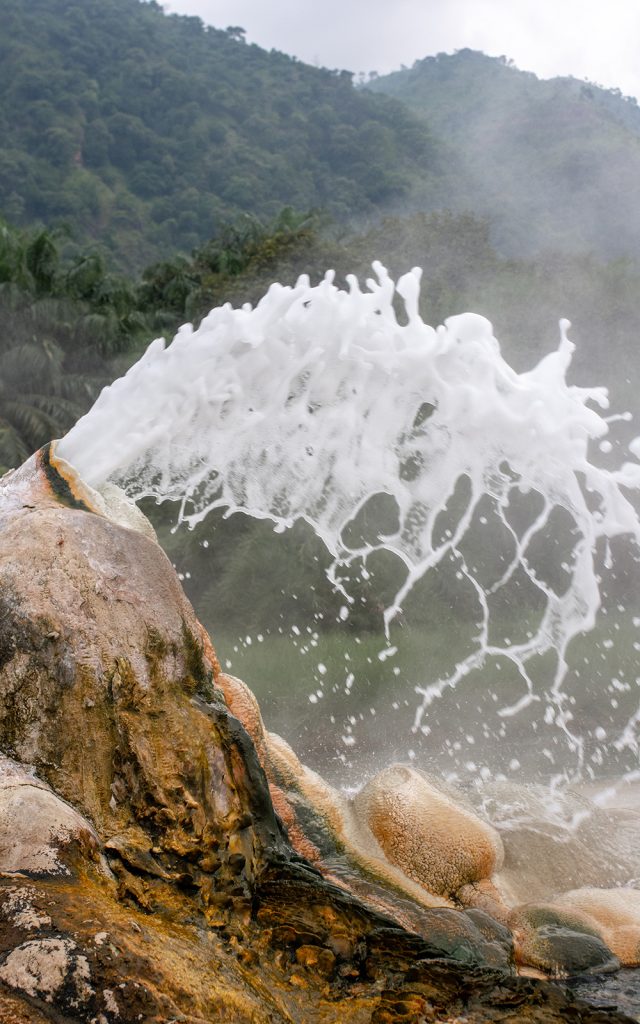
A trip to Semuliki isn’t complete without seeing the Sempaya Hot Springs. The powerful geothermal activity creates a landscape that feels almost unreal. Getting to the hot springs is an adventure, as you walk along forest trails and see different parts of the park’s ecology.
The Female Hot Spring (Nyasimbi) is the most dramatic, with geysers of superheated water and steam shooting into the air. The area around it, shaped by minerals and steam, has special plants that can live in these hot, mineral-rich conditions. Visitors often cook eggs and bananas in the spring, making for a memorable outdoor meal.
The Male Hot Spring (Bintente) is smaller and quieter, with bubbling pools and sulfur formations that are great for photography. The light changes throughout the day, from misty mornings to dramatic afternoon steam, giving you different views and moods of these natural features.
Local guides add meaning to the hot springs visit by sharing traditional stories about their origins, healing powers, and spiritual importance. Learning how different cultures see and use the springs turns a simple visit into a valuable cultural experience.
Traditional Stories Behind the Hot Springs
The story of Semuliki’s hot springs, known together as the Sempaya hot springs, starts with a mysterious stranger who arrived in the area many generations ago. The Bamba clan first called him ‘Bakamwbire,’ which means “the unknown one,” because no one knew where he came from or who his family was. Later, the Basaiga clan welcomed him, gave him the name ‘Bamaga’ because of the way he moved, and arranged for him to marry Nyansimbi, the daughter of an elder. Bamaga settled in, raised children, and became a valued member of the community.
One morning, Bamaga went hunting as he always did, but he never came back. After searching for three days, Nyansimbi and the others found his spear and bark cloth at the place now known as the male hot spring. They realized Bamaga had died in the boiling waters and named the spot ‘Bitente,’ which means “he has gone.” Heartbroken, Nyansimbi went into the forest and vanished as well.
Three days later, her sons found her bark cloth at a different bubbling spring, which they named Nyansimbi to remember her. The story of Bamaga and Nyansimbi lives on through these two hot springs, which still bubble as they did on the day the legend began.
Photography Opportunities
Semuliki National Park gives photographers a rare mix of subjects and settings that can be both challenging and rewarding for beginners and professionals alike. The forest’s lighting can be tricky, but those who master it can capture the unique beauty of the tropical rainforest.
Wildlife photography in Semuliki is different from taking photos in the savanna. The thick vegetation, low light, and quick animal movements mean you need fast reflexes and good skills. If you learn these techniques, you can photograph rare animals and behaviors that most people never get to see.
Bird photography may be the biggest challenge and also the best opportunity here. The park is home to many different birds, from small, colorful species to large hornbills. The canopy makes lighting tough, but if you succeed, you can get photos of Central African birds that are rarely seen elsewhere.
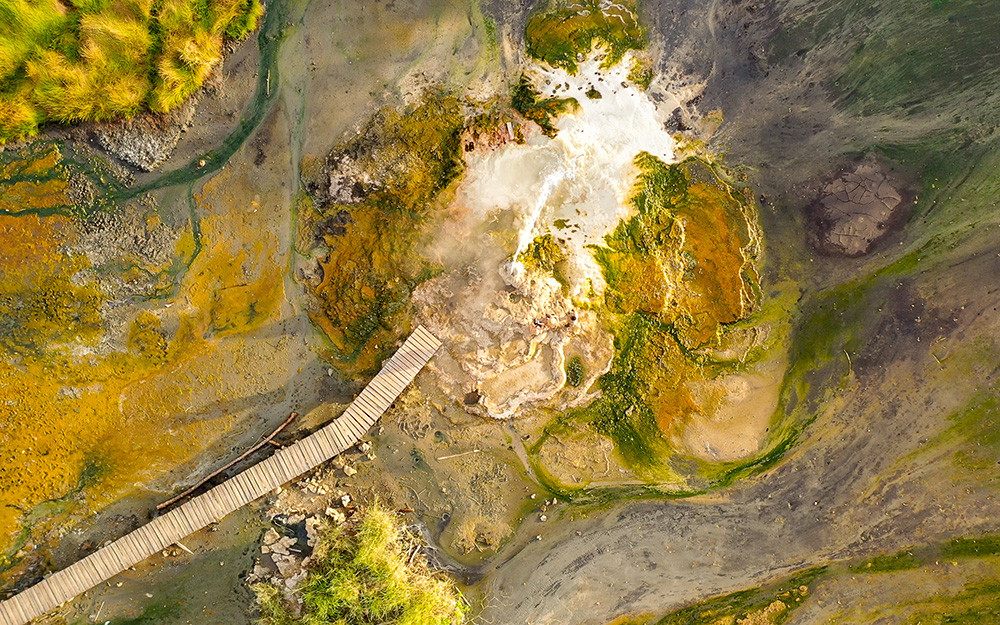
Landscape photography can be hard in a thick forest, but Semuliki has special spots like the hot springs, forest streams, and views of the canopy that make for striking photos of the rainforest.
Cultural photography here lets you capture traditional ways of life and how people interact with the forest—things that are becoming rare in other parts of Africa. By working with local guides and communities, you can take genuine photos that show real culture, not just tourist scenes.
Macro photography is especially rewarding in Semuliki because of its many insects and plants. Every log, flower, or stream edge can be a great subject for close-up shots. The variety of butterflies alone gives endless chances for those who are patient and observant.
Cultural Encounters
What makes Semuliki special is the chance to experience real African traditional culture, not just tourist shows. Visitors can meet communities whose daily lives are still closely tied to the forest. These are real cultural experiences, not staged events, and they offer a window into traditions and beliefs that are still alive today.
The Batwa cultural experiences are the most meaningful in Semuliki. They give you a look into one of Africa’s oldest cultures. With Batwa guides, you can learn about forest skills like finding medicinal plants, traditional hunting, making fire, and moving through the forest—skills passed down for thousands of years.
Visiting nearby villages lets you see how different groups live with the forest. You might watch or join in with traditional brewing, cooking, crafts, or storytelling. These visits often let you take part in daily life, learn new skills, and better understand rural African communities.
When possible, joining a traditional ceremony gives visitors a rare chance to see or take part in cultural practices that connect people to the forest. These experiences call for respect and sensitivity, but they offer a unique look at African religious and social traditions.
Conservation Efforts
Park Management and Protection
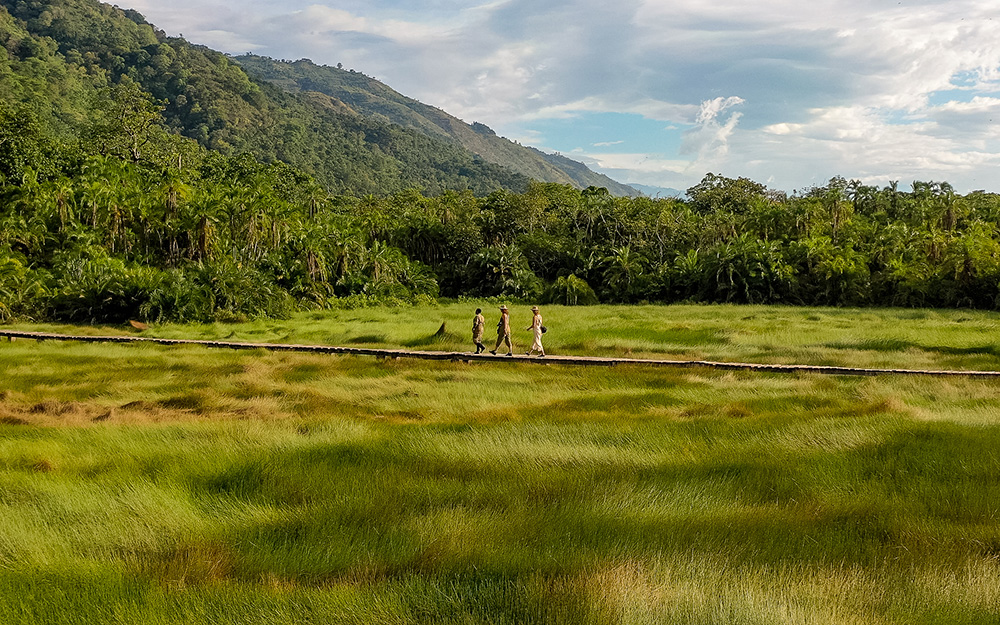
Semuliki National Park’s conservation success shows what dedicated management and international support can achieve in protecting critical ecosystems. The Uganda Wildlife Authority, with conservation partners, has developed strategies that balance biodiversity protection with community needs and tourism development.
Anti-poaching efforts protect the park’s vulnerable species, especially forest elephants and primates, through ranger patrols, community engagement, and technology-assisted monitoring. The park’s small size makes comprehensive protection feasible, but also means every conservation success or failure significantly impacts overall ecosystem health.
Community Conservation Programs
The long-term success of Semuliki’s conservation depends on positive relationships with surrounding communities, making community-based conservation programs essential to park management. These programs recognize that local communities are the park’s most important conservation partners, with traditional knowledge and direct stakes in forest health.
Community Benefit Programs ensure local people receive tangible benefits from park tourism and conservation activities, including jobs as guides, porters, and hospitality providers. Revenue-sharing programs direct portions of park fees to community development projects, creating economic incentives for conservation support.
Traditional Knowledge Integration programs collaborate with community elders and traditional healers to record and protect forest-related knowledge. They also promote sustainable use practices that help preserve cultural ties to forest resources.
Challenges and Threats
Like many protected areas in Africa, Semuliki faces ongoing conservation challenges that need regular attention and flexible management. Learning about these issues helps visitors appreciate the park’s achievements and the work needed to keep this unique ecosystem healthy.
Human-wildlife conflict happens when animals like elephants and primates leave the forest and enter nearby farms, causing crop damage and financial losses for local farmers. Managing these issues involves regular communication, compensation programs, and building barriers so people and wildlife can live together.
The effects of climate change are already seen in Semuliki. Changes in rainfall are affecting the forest, animal behavior, and the hot springs. To respond, conservation strategies need long-term monitoring and flexible management.
Research and Monitoring
Semuliki is a natural laboratory for tropical forest research. Ongoing studies look at primate behavior, forest ecology, climate change, and traditional ecological knowledge. This research supports evidence-based conservation and gives visitors a chance to learn about the latest conservation science.
Long-term ecological monitoring tracks changes in the forest, animal populations, and ecosystem health. This helps provide early warnings about conservation threats and measures the success of conservation programs.
Collaborative research programs unite international researchers, Ugandan scientists, and local knowledge holders. Working together, they tackle conservation questions that need different perspectives and expertise.
Practical Visitor Information
How to Get to Semuliki National Park
Getting to Semuliki National Park is an adventure in itself, taking you through some of Uganda’s most beautiful scenery. There are several routes to choose from, depending on where you start and how you like to travel. The journey lets you see the varied landscapes and communities of western Uganda.
From Kampala (about 300km): The most common route goes through Mubende and Fort Portal. This drive usually takes 5-6 hours and passes through grasslands, forests, and mountain foothills. It’s a great way to see Uganda’s ecological diversity in one day. The road passes through Fort Portal, known as Uganda’s tourism capital, where many visitors stop for supplies and accommodation before heading to Semuliki.
From Fort Portal (67km): This is the most direct route to Semuliki, following the road toward Bundibugyo through beautiful mountain and valley scenery. The trip takes about 1.5 to 2 hours and passes several small trading centers, with views of the Rwenzori Mountains along the way.
Public transportation: Although it is more challenging than driving yourself, you can reach Semuliki by taking buses and shared taxis from Kampala to Fort Portal, then connecting to Bundibugyo and the park gates.
Fly-in options: You can arrange charter flights to airstrips near Fort Portal. This option needs advance planning and is more expensive.
Best Times to Visit
Semuliki’s spot in the Rift Valley gives it stable weather, making it a good place to visit all year. Each season has its own benefits for different activities. Knowing the seasonal patterns helps visitors plan trips for the best wildlife viewing and photography.
Dry seasons (June-August and December-February) are the easiest times to visit, with less rain making trails and hot springs more accessible. Wildlife often gathers around water sources during these months, which can improve your chances of seeing animals.
Wet seasons (March-May and September-November) make Semuliki even greener, with more bird activity, blooming plants, and lots of butterflies. Trails can be harder to walk, but visitors who don’t mind some rain are often rewarded with lively wildlife and scenery.
Year-round birding: Semuliki is great for birdwatching all year. Some seasons are better for certain species, but resident birds are always around, and seasonal changes can bring in new species at different times.
Accommodation Options
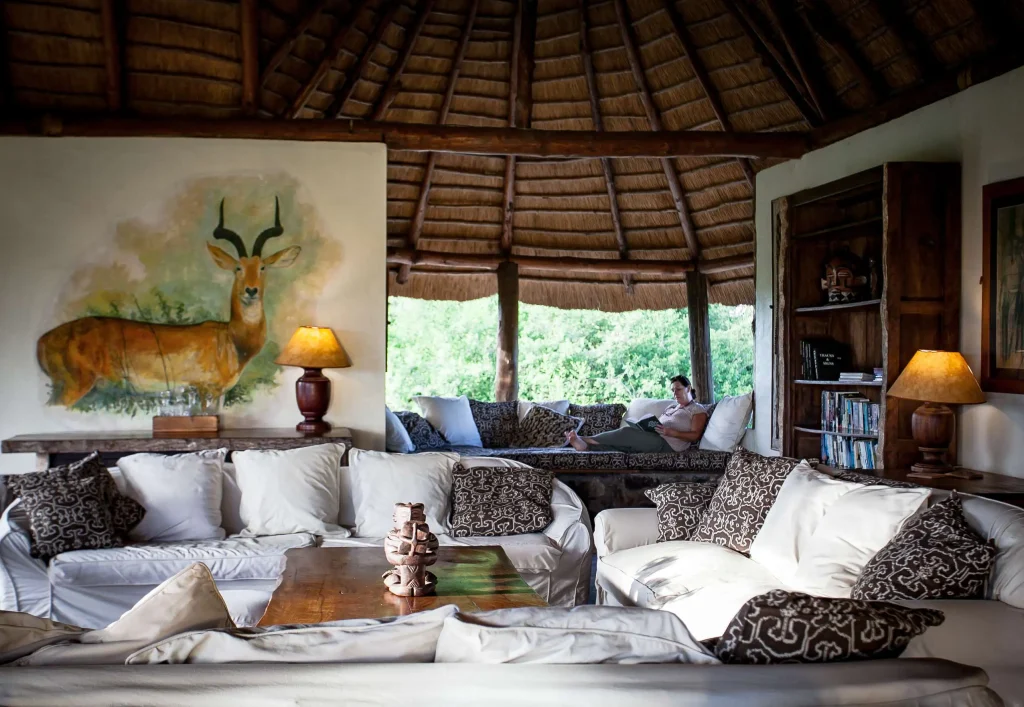
Semuliki offers a range of places to stay, from luxury eco-lodges to budget camping. This means visitors with different needs and budgets can enjoy the park. Each type of accommodation has its own benefits and can add to your experience.
Luxury Accommodation Options
Semliki Safari Lodge is one of the most luxurious places to stay in the Semuliki area. Guests stay in large tents with private bathrooms, electricity, and raised platforms for forest views and natural cooling. The lodge has a central dining area, bar, and lounge that fit in with the surroundings. Guests can enjoy guided nature walks, cultural visits, hot spring tours, and birding trips with expert guides. The lodge also uses solar power, manages waste responsibly, and supports local conservation through community programs.
Ntoroko Game Lodge is another luxury choice, offering comfortable cottages with private bathrooms, mosquito nets, and raised designs to catch cool breezes. Guests enjoy full-board dining with both local and international dishes. The lodge also arranges guided activities, transport, and special photography and birding services. Its location makes it easy to join park activities and explore nearby communities.
Semuliki Eco Lodge offers both comfort and a focus on the environment. The eco-friendly rooms are designed to reduce impact while keeping guests comfortable. Each room has a private bathroom with hot water, comfortable beds with mosquito nets, and access to shared dining and lounge areas. Guests can join guided forest walks, visit hot springs, and take part in cultural activities. The lodge uses renewable energy, saves water, and supports the local community.
Mid-Range Accommodation Options
Bumaga Forest Camp has comfortable permanent tents with shared bathrooms, dining areas, and basic amenities at an affordable price. The camp is known for birding and wildlife viewing, with experienced guides and equipment for forest activities. Guests get three meals a day with both local and international food, plus guided walks, hot spring visits, and cultural experiences. The camp is right by the forest, offering easy access and a good level of comfort.
Semuliki River Lodge is a mid-range option with simple but comfortable banda-style rooms, shared bathrooms, and communal dining. Guests get full-board meals that focus on local dishes and fresh ingredients. Activities include guided forest walks, birding trips, hot spring visits, and cultural experiences. The lodge sits by the river, giving guests great views of wildlife and a peaceful setting in the evenings.
Bundibugyo Forest Resort offers private rooms with basic amenities and shared bathrooms in a convenient location. Guests can enjoy meals with both local and international choices, and the resort helps arrange park visits, cultural activities, and transport. While it is simpler than luxury options, the resort is clean, comfortable, and a great base for exploring Semuliki.
Budget Accommodation Options
UWA Bandas at Semuliki are basic but clean and located inside the park, making them the most affordable and convenient choice for visitors. The bandas have simple rooms with basic bedding, shared bathrooms, and cooking areas. Guests can cook for themselves or ask park staff to help with meals. While the amenities are simple, staying here lets you enjoy early morning and evening wildlife and the special experience of sleeping inside the park.
Bundibugyo Guesthouse is a budget option in the nearby town, with simple private rooms, shared bathrooms, and affordable meals focused on local food. The guesthouse is clean and gives guests a chance to experience local life. You will need transport to reach the park, but this is the cheapest place to stay in the area.
Community Campsites are the most adventurous and affordable way to stay, offering camping spots with basic shared bathrooms and cooking areas. Guests can meet local people, help prepare traditional meals, and experience real rural African life. Comfort is basic, but these campsites give you a unique cultural experience and help support local communities.
What to Pack and Prepare
Getting ready for a trip to Semuliki means thinking about the forest environment, the activities you want to do, and the season. Good preparation helps you stay safe, enjoy your visit, and make the most of what the park has to offer.
Essential clothing should protect you from insects, thorns, and changing weather, while keeping you comfortable during forest walks. Wear long-sleeved shirts and pants made from light, breathable fabric to guard against mosquitoes and thorns. Choose neutral colors like green, brown, or khaki for better wildlife viewing and photos.
Footwear is very important in Semuliki’s forests, where trails can be smooth or muddy and full of roots. Waterproof hiking boots with ankle support are a must, and rubber boots are helpful in the wet season. Gaiters can also protect you from thorns, insects, and mud.
For photography and wildlife viewing, bring binoculars, a camera with extra batteries and memory cards, a telephoto lens for animals, and a macro lens for close-ups of butterflies and plants. Also pack rain covers, lens cleaning supplies, and a secure bag to protect your gear in the forest.
For health and safety, pack insect repellent (DEET-based is best), sunscreen for sun exposure in clearings and at hot springs, your personal medications, and a basic first aid kit. Anti-malarial medicine is essential, and you should check with a travel health specialist about recommended vaccines.
Entry Fees and Permits
Knowing Semuliki’s fee structure helps you plan your budget and follow park rules that support conservation. The fees go toward park management, conservation, and community programs that help protect Semuliki.
Park Entry Fees for international visitors currently stand at $40 per person per day, with reduced rates for East African residents and Ugandan citizens. These fees include basic park access but additional charges apply for specific activities and guided services.
Activity Fees include charges for guided nature walks, cultural visits, hot spring tours, and specialized birding expeditions. These fees vary depending on group size and activity duration, with discounts often available for multi-day packages.
Permit Requirements are straightforward for most visitors, though advance booking is recommended during peak seasons to ensure availability of guides and accommodation. Special permits may be required for research activities, professional photography, or extended stays within park boundaries.
Comparison with Other Ugandan National Parks
Semuliki National Park is different from Uganda’s better-known savanna parks, offering unique experiences and wildlife. Knowing these differences helps visitors see what makes Semuliki special and why it’s worth including in a trip to Uganda.
Semuliki stands out because it protects Uganda’s only true lowland tropical rainforest, while parks like Queen Elizabeth and Murchison Falls feature savanna. This unique habitat means different wildlife, plants, and visitor experiences that add variety to a Uganda trip.
Semuliki is home to species not found anywhere else in Uganda, especially many Central African forest birds and unique forest mammals. While other parks are better for seeing the “Big Five,” Semuliki offers rare wildlife you won’t find elsewhere in East Africa.
Tourism in Semuliki is very different from other parks. Instead of game drives and wide-open views, Semuliki offers close-up forest walks, specialized birding, and cultural experiences. Exploring the forest, with its unique sounds and sights, gives a sense of adventure you won’t find in the savanna.
Future Outlook and Development Plans
Semuliki National Park is at a turning point. Conservation successes have made it possible to expand tourism, but ongoing challenges need new solutions and commitment. Future plans aim to balance more visitor access with protecting the ecosystem, keeping conservation as the main goal while tourism helps fund the park.
Plans for infrastructure focus on making it easier and more comfortable for visitors to access the park, while keeping environmental impact low. This includes better trails, a larger visitor center, and upgraded accommodation that meets international standards but still protects the forest. The goal is to attract more visitors while keeping the park’s wild, intimate feel.
Conservation programs are expanding to include more research, better community involvement, and new technology for wildlife monitoring and anti-poaching. Adapting to climate change is also a growing focus, as changes in rainfall and temperature affect the forest.
Tourism development aims to make Semuliki a top spot for birding and forest wildlife. Marketing targets nature lovers, photographers, and cultural tourists who want unique and authentic experiences, rather than mass-market tourism.
The park’s long-term goal is to support sustainable tourism that benefits local communities and protects one of Africa’s oldest and most diverse forests. Achieving this will make Semuliki a model for community-based conservation in tropical forests.
Frequently Asked Questions
Semuliki National Park is about 220 square kilometers (85 square miles) of untouched lowland tropical rainforest. It is one of Uganda’s smaller parks but is very rich in biodiversity.
You can reach the park by road from Kampala (300 km, about 5-6 hours) through Fort Portal, or directly from Fort Portal (67 km, about 1.5-2 hours). The drive takes you through beautiful mountains and valleys, making the trip itself an adventure.
Semuliki is known as Uganda’s only true lowland tropical rainforest. It is famous for its amazing birdlife (441 species, including 46 found only here in East Africa), the impressive Sempaya Hot Springs, and as the home of the Batwa people.
The park is in Bundibugyo District, western Uganda, in the Great Rift Valley. It forms part of the border between Uganda and the Democratic Republic of Congo.
Semuliki National Park is fully within Bundibugyo District in western Uganda, but its ecosystems also stretch across the border into the Ituri Forest in the Democratic Republic of Congo.

Conclusion
Semuliki National Park is one of Africa’s most unique and lesser-known wilderness areas. Its ancient forests are home to species not found anywhere else in East Africa, and traditional cultures here have maintained their connection to the forest for thousands of years.
From the bubbling hot springs to the chance to see rare Central African forest birds, Semuliki offers experiences that can change your understanding of African biodiversity and conservation.
Whether you are a dedicated birder searching for rare species, a photographer wanting to capture the beauty of the rainforest, or someone who enjoys exploring ancient ecosystems, Semuliki National Park offers adventures that will leave you with lasting memories and a greater appreciation for African forests.
The park’s success as a conservation area and tourism spot shows what can be accomplished when local communities, conservation groups, and government agencies collaborate toward shared objectives.
Visiting Semuliki gives you unique experiences and also helps support efforts to protect one of Africa’s most important forest ecosystems for future generations.
If you want to explore and help conserve this place, contact us at info@territoryexplorers.com. We can help you plan your adventure, just as we have for many other adventurers over the years.