
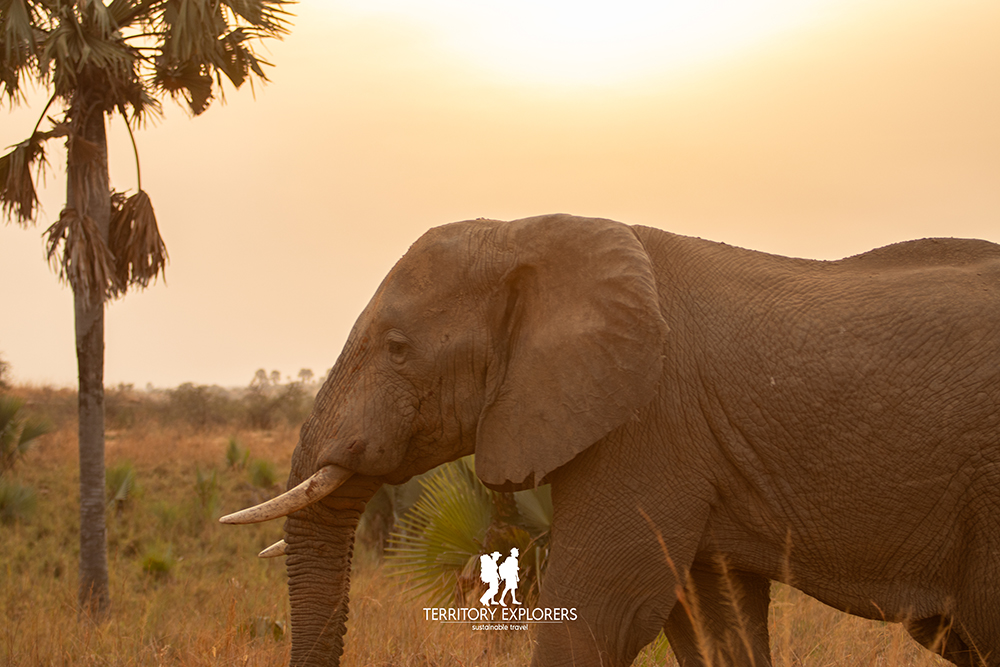
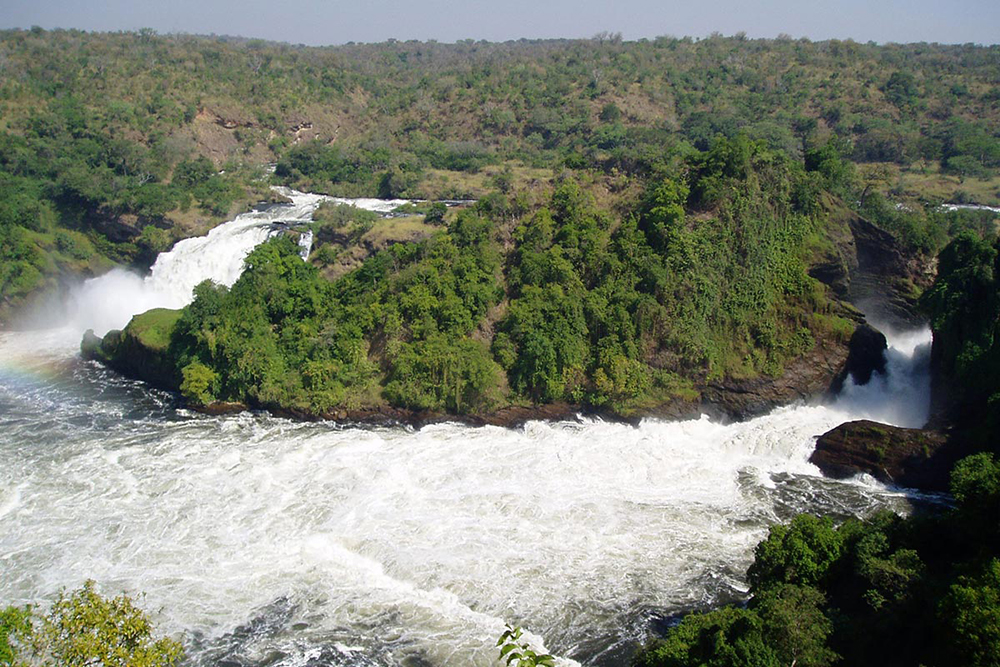
Murchison Falls National Park is Uganda’s largest and most historic protected area, covering about 3,840 square kilometers in the country’s northwest. The powerful Victoria Nile cuts through the park, creating the famous waterfall. For over 2,000 years, this landscape has seen many chapters of human history. Ancient kingdoms, local communities, Victorian explorers, Hollywood filmmakers, and famous writers have all left their mark on Murchison Falls.
This history follows the park’s journey from its first known people around 290 AD, through colonial times, the creation of conservation areas, times of both success and hardship, and its rise as a top wildlife destination in Africa. The story includes not just the park, but also the many communities who have lived here, the changing wildlife, and the global visitors drawn to its beauty.
Knowing this history helps us understand the complex ties between people, wildlife, and the land—connections that still influence conservation work in the area today.
Key Takeaways
Ancient Foundations (290 AD – 1500s)
• Human settlement in the Murchison Falls area dates back to at least 290 AD, with the Abachwezi kingdom (1300s-1500s) establishing sophisticated trade networks based on wild coffee, salt, and iron.
• The Lwo migration in the 1500s created five distinct ethnic groups (Acholi, Alur, Jonam, Palwo, Lango) that, along with the Banyoro and Bagungu, form seven communities surrounding the park today.
• Traditional conservation practices—including totemic systems, the Won-Tim hunting management, and sacred sites—protected wildlife long before colonial intervention.
Colonial Transformation (1860s – 1960s)
• Samuel and Florence Baker’s 1861-1872 expeditions “discovered” and named Murchison Falls and Lake Albert, bringing European attention to features long known to local populations.
• The Sleeping Sickness Ordinance (1909-1913) forcibly displaced thousands from the “Masindi fly belt,” creating depopulated areas that would become the park—a displacement many local people remember as their ancestral homelands.
• The ivory and slave trade devastated both human communities and wildlife, with figures like Theodore Roosevelt killing nine white rhinos in 1909 during what was considered “sport.”
Hollywoods African Adventure(1951)
• John Huston’s filming of The African Queen, starring Humphrey Bogart and Katharine Hepburn, brought unprecedented international attention to Uganda and helped establish the romanticized Western image of East Africa.
• The Masindi Hotel (built 1923) served as sanctuary for the cast and crew, with Bogart staying in Room 5 and Hepburn in Room 3—rooms now preserved as the African Queen block.
• The park also served as location for King Solomon’s Mines, Tarzan Escapes, and Trader Horn, cementing its place in cinema history.
Legendary Visitors
• Ernest Hemingway survived two plane crashes in January 1954 near Murchison Falls, with global headlines declaring him dead before his miraculous survival and recovery at the Masindi Hotel.
• The Prince of Wales (later King Edward VIII) conducted an unofficial 1930 safari, personally driving across Uganda and experiencing the “indescribable grandeur” of Lake Albert.
• By the 1960s, Murchison Falls became the most visited national park in Africa, attracting international celebrities and political figures.
The Crisis Years (1972 – 2002)
• Idi Amin’s regime (1972-1979) closed the park to tourists, renamed it Kabalega Falls, and triggered catastrophic wildlife decline when retreating troops paid for safe passage with weapons, replacing traditional spears with AK-47s.
• Elephant populations crashed from 8,000 (1966) to zero south of the Nile (1982), representing one of Africa’s most devastating wildlife collapses.
• The Lord’s Resistance Army (1986-2006) used the park as a hideout, training ground, and source of bushmeat, making conservation work nearly impossible and causing immeasurable human suffering.
Remarkable Recovery (2000s – Present)
• Elephant populations have rebounded to thousands, demonstrating that wildlife can recover dramatically when given peace, security, and proper management.
• Modern conservation combines two approaches: Law Enforcement (armed protection under the Wildlife Act of 2000) and Community Conservation (revenue sharing, traditional knowledge, conflict resolution).
• Rhino reintroduction plans are underway, with Ziwa Rhino Sanctuary breeding stock toward the goal of 15-20 individuals before translocation can begin.
Essential Lessons For Conservation
• Enforcement alone fails without community engagement—the most effective conservation combines legal protection with community benefits and respect for traditional knowledge.
• Indigenous conservation practices (totemic systems, sacred sites, traditional hunting regulations) were sophisticated and effective long before colonial authorities arrived.
• Displacement from ancestral lands creates lasting tensions that undermine conservation—many people still speak of park areas as their homelands.
• Wildlife resilience is remarkable but depends absolutely on stable governance, security, and peace—lessons learned painfully through decades of conflict.
The Human Wildlife Continuum
• Murchison Falls is not wilderness in isolation but a landscape embedded in 2,000 years of human history and contemporary community life.
• Seven ethnic groups maintain distinct cultural identities and traditional practices while living alongside the park, creating both challenges and opportunities for conservation.
• Heritage tourism—including the Masindi Hotel and film history sites—adds economic value while connecting natural wonders to human stories spanning continents and centuries.
• Successful future conservation requires recognizing that people and wildlife have always coexisted here, and balancing multiple priorities: wildlife protection, community benefits, cultural preservation, and sustainable tourism.
Ancient Origins & First Peoples (290 AD – 1500s)
Archeological Evidence
Archaeological research shows that people lived in what is now Murchison Falls National Park much earlier than written records suggest. Excavations in the Chobe area, within the park, have found evidence of human settlement dating to around 290 AD. The latest archaeological work, done in late 2010, is still helping us learn about these early people and how they lived in this resource-rich place.
Early people found this region very welcoming. There was plenty of wildlife, some areas had fertile soil, the Nile provided fish, and there were useful resources like salt and iron ore for daily life and trade.
The Abachwezi Dynasty (1300s-1500s)
Oral histories preserved by the Banyoro recall that, from the 1300s onward, the land south of the Nile was inhabited by the Abachwezi. The Abachwezi, who would become ancestors of the Bunyoro-Kitara kingdom, are credited by some scholars as establishing the first sophisticated kingdom system that would spread throughout the region that is now Uganda.
The Abachwezi kingdom thrived by using the area’s natural resources. Wild coffee grew in what is now Budongo Forest, salt was valuable for trade and preserving food, and iron deposits allowed them to make tools and weapons. This strong economy supported a well-organized society.
According to legend, the Abachwezi used drums made from waterbuck hide to send messages over long distances. The unique sound of these drums could be heard for miles, showing how organized their kingdom was.
What happened to the Abachwezi is still a mystery. They disappeared in the 1500s, leaving only their cultural legacy and stories passed down through generations. Their descendants became the Banyoro, a major ethnic group in the region today.
The Lwo Migration $ Dispersal (1500s)
While the Abachwezi lived south of the Nile, the 1500s brought big changes north of the river. Oral histories tell of three Lwo brothers—Gypir, Labongo, and Teffil—who had a dispute known as ‘the story of the bead and the spear.’ This disagreement caused their followers to spread out across the region.
Labongo’s followers moved east, Gypir’s group stayed in the north, and Teffil’s people went west. This migration led to the formation of five Lwo-speaking groups still living around Murchison Falls National Park: the Acholi, Alur, Jonam, Palwo, and Lango. Each group developed its own culture and identity, but they all share a common language background.
Indigenous People’s & Cultural Heritage
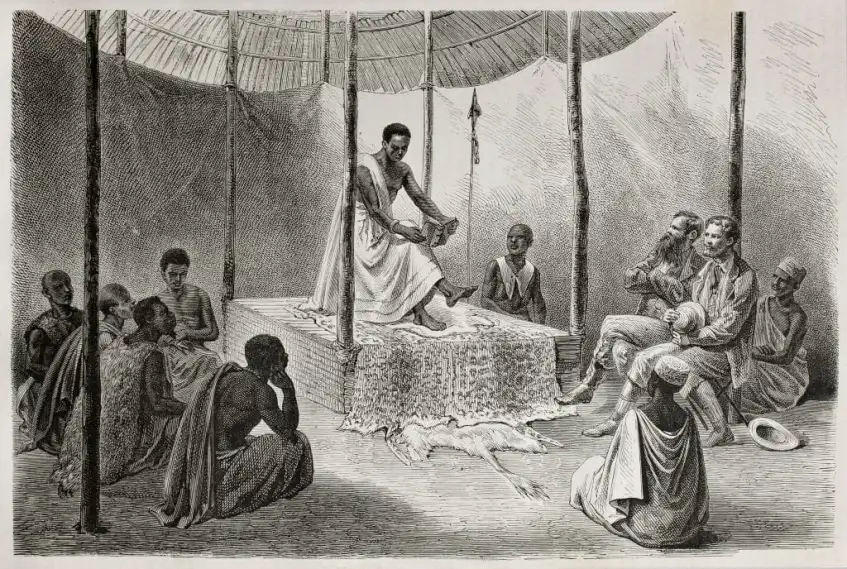
Today, seven different ethnic groups live around Murchison Falls Conservation Area. Each group has its own culture, history, and connection to the land. This diversity comes from the old Lwo migration from Sudan and the complex history of the Bunyoro-Kitara Kingdom, which includes many ethnic identities.
The Acholi
The Acholi are a well-known Lwo group respected for their careful hunting traditions. They managed the land to make sure meat was available when needed. A leader called the Won-Tim, much like a modern game warden, oversaw hunts and was given a special cut of meat as a reward.
Colonial officials saw the Acholi as a warrior people, especially after they resisted colonial rule in the Lamogi Rebellion of 1911-1912. Many Acholi later joined the King’s African Rifles and Police, and some became the first rangers and assistant wardens in Uganda’s national parks.
The Alur
The Alur are Lwo-speaking people who have traditionally lived in Congo and West Nile. Over the past century, many have moved across the Nile and Lake Albert. In February 1930, for example, 20,000 Alur fled Kilo Mines in Congo and crossed Lake Albert into Uganda. Such migrations into Bunyoro have happened throughout history and still occur today.
Alur hunters would get the chief’s blessing before going out to hunt. If they succeeded, they had to give the chief animal skins and meat from the side that touched the ground. Hunters who ignored these customs were thought to risk arrest by rangers or even death from wild animals.
The Jonam
The Jonam have their own identity as a kingdom in southern West Nile, apart from the larger Alur group. They are mainly fisherfolk living in the lowlands and protect important sacred sites. Between Wadelai and Pakwach at Adyang, there is a burial forest for past rulers of the Kingdom of Ragem. Bongo and Kavuji trees mark the graves, and the community takes care of these trees. Cutting them is strictly forbidden and seen as disrespectful.
The Palwo
The Palwo are sometimes called the ‘Chope,’ which means ‘no men’ in Lwo. According to legend, when foreigners arrived during a famine, the men had left to look for food. The women, unable to speak the outsiders’ language, could only say ‘Chope.’ Many people call them the ‘Bachope,’ but the Palwo themselves do not use this name.
Palwo who moved to northeastern Bunyoro still see themselves as a Lwo group, though they became part of their host kingdom. In the 1800s, rebel princes fought for Palwo independence, but many were drafted into King Kabalega’s army. Later, colonial authorities moved them from areas rich in wildlife to Kiryandongo. Many Palwo then became skilled elephant hunters, especially as wild animals made farming harder.
The Lango
The Lango trace their roots to Nilotic and Hamitic peoples from Sudan and Ethiopia. They now speak the Lwo language, but the Langi see themselves as a mix rather than direct descendants of the 1500s Lwo migration. They settled in Lira in 1914.
The Lango totem is the rhinoceros, an animal that was once hunted by foreigners in places like Kamdini. Today, rhinos no longer live in the wild here, so the totem serves as a powerful reminder of what has been lost.
The Banyoro
The Banyoro come from three dynasties: the Abatembuzi, the Abachwezi, and the Ababito. These traditions go back hundreds of years and include rules for conservation. While they are often seen as herders who only hunted during famine, wild animals were also important as tribute. Children were not allowed to hunt.
The Banyoro are known for wearing traditional barkcloth clothing. Making barkcloth involves special methods of growing, harvesting, and crafting, all rooted in tradition. Cutting down barkcloth trees is forbidden, showing an early respect for the environment.
The Bagungu
The Bagungu are part of the Bunyoro-Kitara Kingdom but have their own language, Lugungu, and unique customs. Their origins are still debated among themselves, but they have lived in the Bugungu area, now in Buliisa District near the park’s southwest border, for centuries.
Although the Bagungu are known as fisherfolk, they also keep gardens in the fertile areas near the park boundary. In the 1950s and 1960s, they clashed with authorities by poaching crocodiles at night for their valuable skins.
Cultural Practices & Conservation
Indigenous groups around Murchison Falls created cultural practices that often helped conserve nature, even if colonial authorities or early conservationists did not always see it that way.
Totems
Totems are an important traditional way to protect nature. In Uganda, a totem is a plant or animal linked to a family, clan, or bloodline. People must follow special customs about their totem, usually not eating, killing, or even touching their totem animal. Some clans even worship their totem and celebrate it on special days.
This system matters for conservation because totem traditions help protect plants and animals. Communities with these practices can guide community-based conservation, and traditional knowledge is a powerful tool for teaching sustainable living.
The Won-Tim System
The Acholi Won-Tim system is a good example of traditional wildlife management. The Won-Tim, who oversaw hunts, acted much like a modern game warden, making sure hunting followed set rules and happened at the right times. The Won-Tim was rewarded with a special cut of meat, which encouraged careful management of wildlife.
Spiritual Sites
Spiritual sites also helped protect the environment. Wang Tok (called Wang Jok in Acholi), meaning ‘place of the spirits,’ is another name for Murchison Falls. This spiritual meaning is shown in the story of Alice Auma, who started the Holy Spirit Movement. In May 1986, she was said to be possessed by the spirit of Lakwena, an Italian General. She used ‘holy water’ from Murchison Falls in her spiritual work, taking it home to purify Acholi soldiers during the civil conflict.
The Jonam burial forest at Adyang, where Bongo and Kavuji trees mark the graves of Ragem rulers, is another sacred place. Tradition protects the environment here, as cutting these trees is strictly forbidden.
Traditional Economies
The different ethnic groups around the park developed their own ways to make a living, based on the local environment. Fishing communities like the Bagungu and Jonam used the rich waters of the Nile and Lake Albert. Fertile areas near water also allowed for gardens and small farms.
In other areas, people focused on herding and farming, with the Banyoro especially known for keeping cattle. But most groups did a mix of farming and herding, changing their activities based on the environment and what was possible at the time.
For some groups, especially the Palwo, elephant hunting was very important. They became known as aligo, or elephant hunters. When wild animals threatened crops, hunting elephants became more common. Later, the ivory trade made this practice much more destructive.
The Ivory and Slave Trade
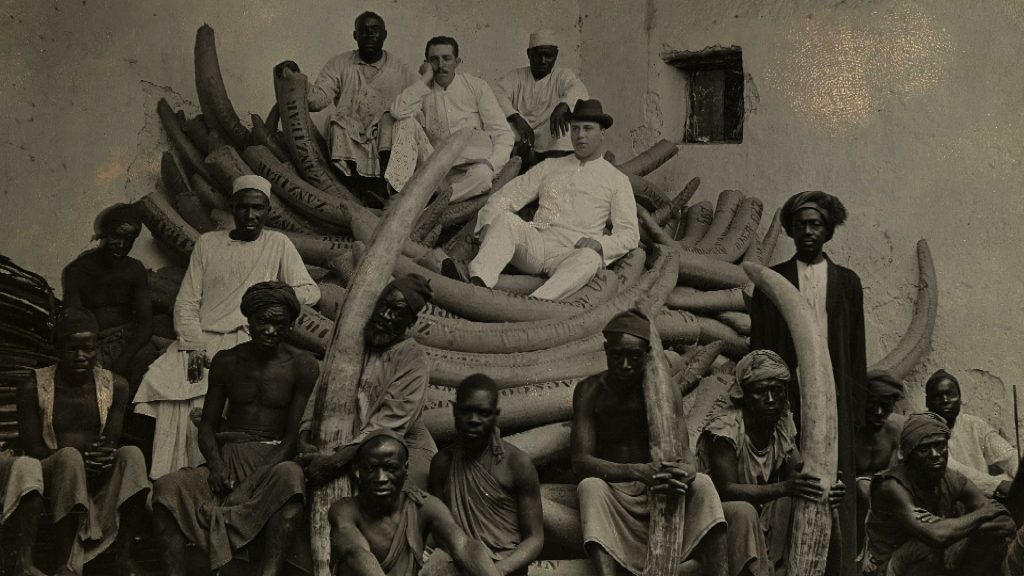
In the 18th and 19th centuries, the ivory and slave trade grew rapidly in the White Nile region. Sir Samuel Baker wrote, ‘The country was so rich in ivory that it was a perfect bank upon which he [the trader] could draw without limit, provided that he remained an ally to the King.’
People and ivory tusks became the main goods traded in the region, moved along the Nile and its many lakes and rivers. Jonam oral history says the Kingdom of Ragem in West Nile took advantage of the disorganized Lendu and Okebo tribes, capturing them in Congo and selling them, along with ivory, to Arab traders at Wadelai. This trade caused great suffering and led to a sharp decline in elephant and rhino numbers.
The Age of Exploration (1860s-1890s)
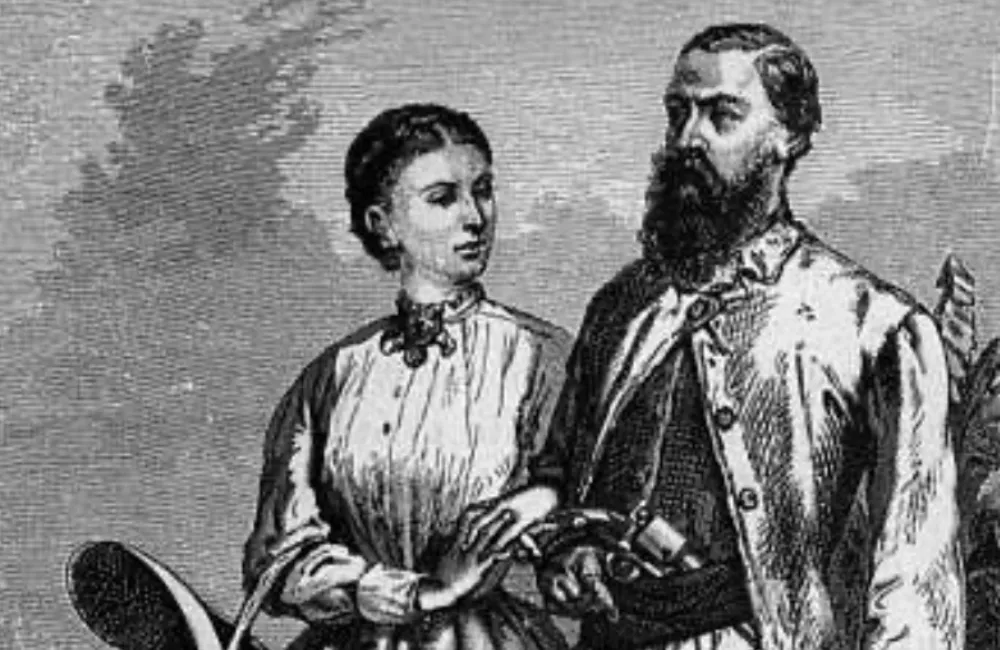
Samuel And Florence Baker (1861-1872)
Samuel and Florence Baker were one of the most remarkable couples of 19th-century exploration. In March 1861, they set out to find the sources of the Nile, a journey that fascinated people in Victorian times. Unlike many explorers of their era, the Royal Geographical Society did not fund their trip. Instead, Samuel Baker paid for the expedition himself, using money he earned as a hunting guide and farm owner in Ceylon.
The Bakers left Khartoum with three boats, 96 men, 21 donkeys, camels, and four horses. Along the upper Nile, they faced dangerous slave traders. Florence’s knowledge of Arabic, learned during her time in the Ottoman Empire, helped save them from death or capture more than once. She also made clothes for the expedition, trained local staff, and often helped her husband out of tough situations.
Geographic ‘Discoveries’
The Bakers made what were seen as major geographic ‘discoveries,’ including Murchison Falls—named after Sir Roderick Murchison, president of the Royal Geographical Society—and Lake Albert. Local people had known about these places for centuries, but the Bakers introduced them to Europeans and put them on colonial maps.
The Battle of Masindi (1872)
In 1872, Samuel Baker was sent back to the region with a military mandate to eradicate the slave trade infecting the Equatoria Province of Egypt. Baker and his troops were stationed at Fort Patiko, just north of present-day Gulu. However, he was not met with the warmth of Bunyoro King Kamurasi, but with his fierce son, Kabalega.
On June 8, 1872, Kabalega and Baker fought a series of battles. In one fight, 1,200 of Baker’s men killed nine Banyoro chiefs before retreating to Patiko. This event, now called the Battle of Masindi, was an early example of armed resistance to colonial rule.
Colonial Era & Park Establishment (1890s-1960s)
The Sleeping Sickness Crisis (1902-1913)
Sleeping sickness, also known as trypanosomiasis and transmitted by the tsetse fly, was first identified in animal populations in 1902. Local communities referred to the disease as Amekeebe, meaning ‘disease of the cattle.’ At first, these animal infections seemed to have minimal impact on human populations. By 1907, however, the Protectorate documented the spread of infection to human populations along the marshes of southern rivers. Colonial authorities attributed deaths among residents of the area now comprising the park to this outbreak.
Between 1909 and 1913, the Protectorate Government, acting under the Sleeping Sickness Ordinance, enforced the evacuation of the Masindi fly belt, an area that constitutes a significant portion of present-day Murchison Falls National Park. This policy resulted in the displacement of thousands of people from their ancestral lands. Although many colonial administrators regarded this as a justified and humanitarian intervention, contemporary scholarship questions the scientific rationale for the evacuation.
A 1914 study found only a few cases of sleeping sickness and none among the 288 people surveyed. Clearing people from these areas made it easier to set up protected lands. Even now, many locals call places in the park their ancestral homes and remember being forced out, which still affects how they relate to conservation authorities.
Drawing Conservation Boundaries (1894-1950s)
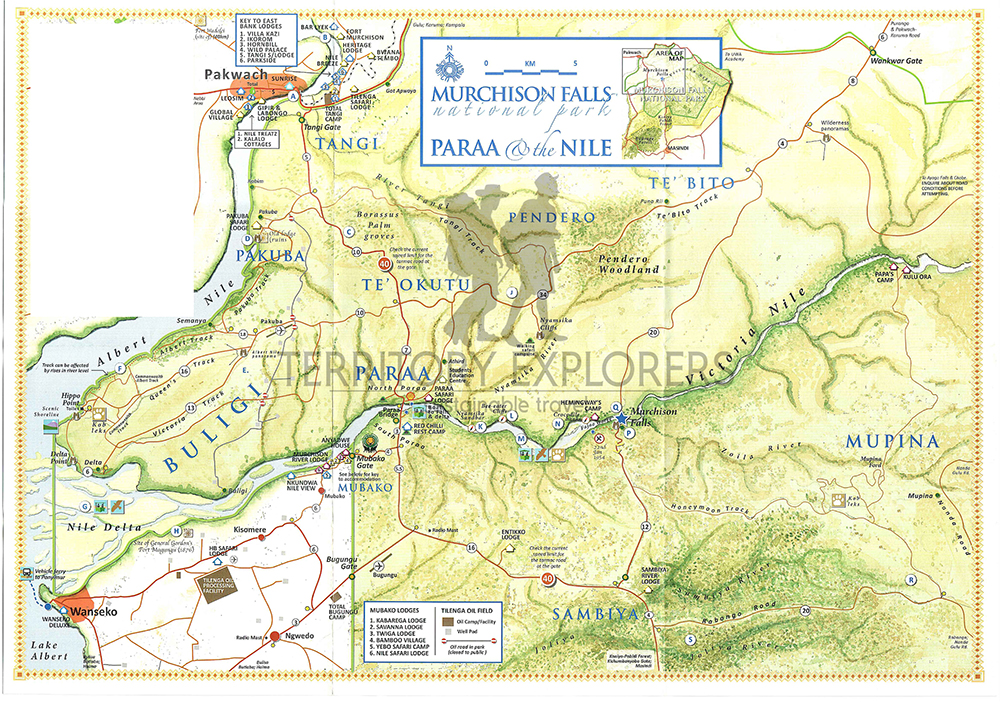
The colonial era was, in large part, an exercise in drawing boundaries. Colonial powers drew lines defining their territories, and within those territories, they drew lines demarcating conservation areas. Uganda’s protectorate boundaries were first etched in 1894, establishing British control over the region.
In the early 1900s, game reserves were set up mainly to protect wildlife for European hunters. In 1925, the Elephant Control Department was created to manage elephant numbers, since elephants often damaged crops. This department later became the Game Department, led by Captain Charles C. Pittman, who helped shape conservation ideas and promoted ways to monitor and protect Uganda’s wildlife.
These early conservation efforts were shaped by colonial views and often ignored or even suppressed local conservation methods and traditional land use. Making ‘uninhabited wilderness’ meant removing or restricting people who had lived there for generations.
The Rhinoceros Story
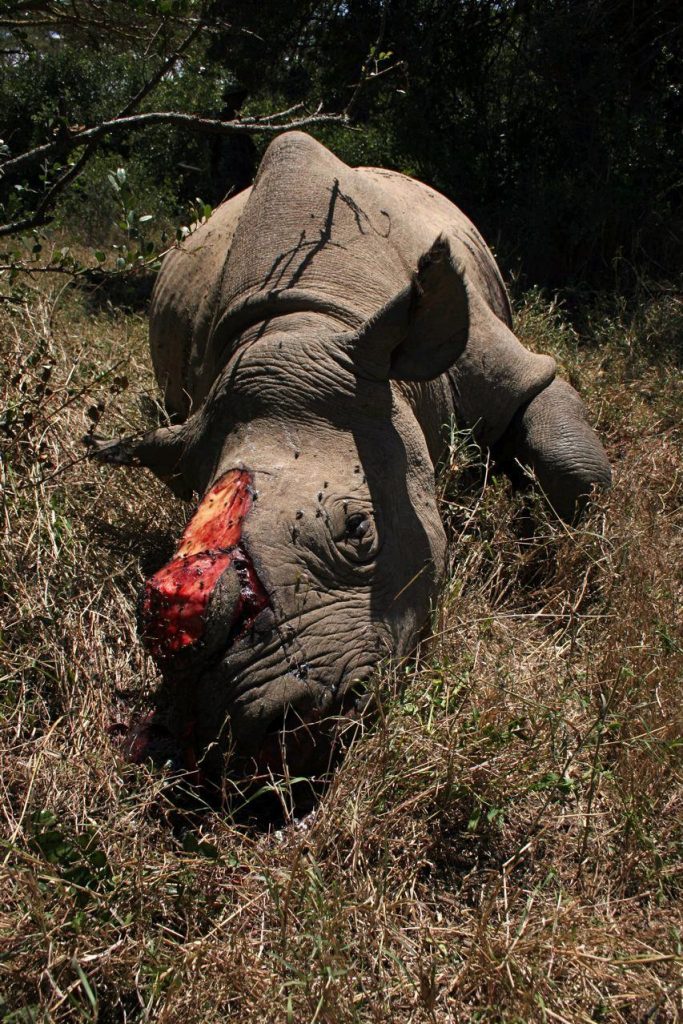
The story of rhinos in the Murchison Falls area shows the damage caused by colonial-era hunting and the difficulties of conservation. In 1909, former U.S. President Theodore Roosevelt shot nine white rhinos in northern Uganda during his safari. At the time, this was seen as a sporting success, but it marked the start of a steep decline.
The Rhino Horn Trade
By the mid-1950s, white rhinos in the Madi region were in serious danger. Rhino horn sold for 80 shillings per pound locally, and a big rhino could provide ten pounds of horn, earning a poacher 800 shillings. Prices doubled or more in East Asian markets, where horn could sell for up to £1,000 as a supposed aphrodisiac.
Translocation Attempts And Extinction
In 1961, Uganda National Parks planned to move white rhinos into Murchison Falls so they could live with black rhinos. This effort had mixed results. Surveys in 1976 and 1980 still found rhinos in the park, but it is believed a poacher killed the last one in 1982.
Reintroduction Efforts
Today, work continues to bring rhinos back to their old home. Ziwa Rhino Sanctuary and Rhino Fund Uganda are leading this effort, breeding rhinos with the hope of returning them to Murchison Falls National Park or the Madi region. However, some conditions must be met first:
• Breeding stock should reach 15-20 individuals before a family of 5-6 can be translocated
• The conservation area must be stable and protected
• Local communities and game wardens must be properly sensitized
The motto has shifted from trophy hunting to ‘Wanted Alive,’ showing that living rhinos are now seen as the real prize.
It is also important to note that in January 2026, the Uganda Wildlife Authority (UWA) successfully translocated four Southern white rhinos from Ziwa Rhino Sanctuary to Ajai Wildlife Reserve in northern Uganda. This marks the return of rhinos to the reserve for the first time in over 40 years, with the aim of restoring the population and boosting regional tourism. The project plans to introduce 20 rhinos to the area.
Hollywood Comes to Africa (1951)
The African Queen Production
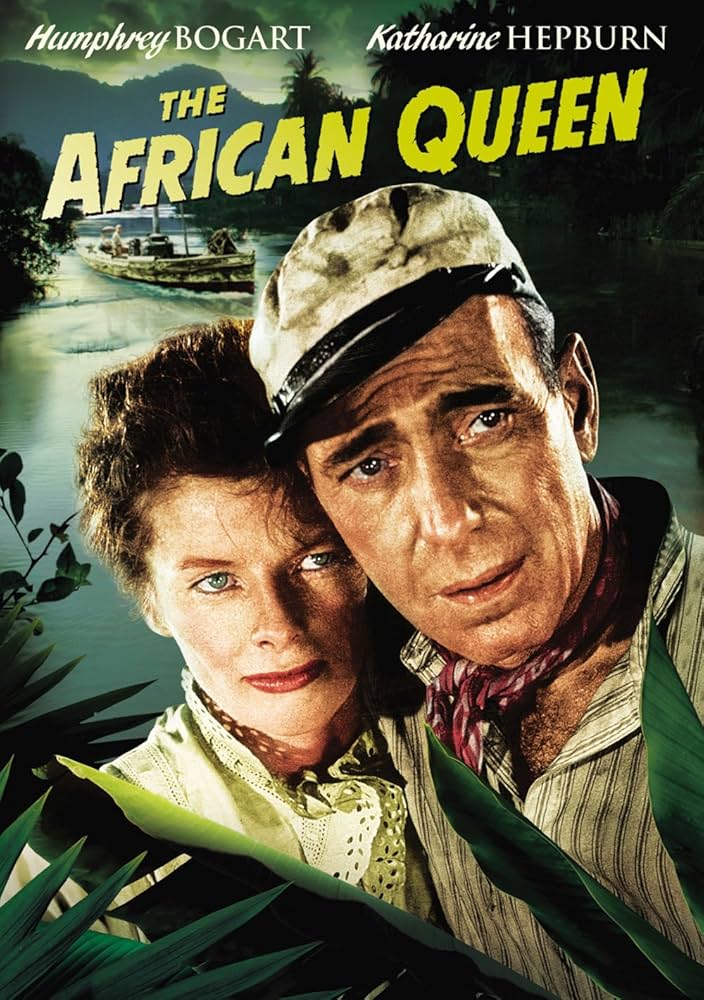
In 1951, a Hollywood film crew traveled deep into East Africa to create what would become one of cinema’s most enduring adventure classics. Directed by John Huston and starring Humphrey Bogart and Katharine Hepburn, The African Queen tells the unlikely World War I-era romance between a rough riverboat captain and a reserved British missionary. The narrative unfolds along treacherous East African waterways as the pair attempts to sink a German gunboat while discovering an unexpected bond.
Unlike most Technicolor films of the time, which used studio sets, The African Queen was filmed mostly on location. About half the movie was shot in Africa, especially in the Belgian Congo (now the Democratic Republic of the Congo) and near Murchison Falls in Uganda. Huston believed the real African wilderness could not be copied in a studio, so he worked hard to bring the cast and equipment deep into Central and East Africa.
The Challenge Of Location
Huston’s choice to film on location turned the production into a true adventure and a tough challenge. The crew faced venomous snakes, scorpions, swarms of mosquitoes, extreme heat, and tropical storms. Many people got sick, especially with dysentery from bad water, which affected almost everyone on set.
Bogart And Huston’s Solution
Two notable exceptions stood out: Humphrey Bogart and John Huston famously avoided local water and drank imported Scotch whisky instead. Bogart later quipped, ‘All I ate was baked beans, and all I drank was Scotch. Whenever a fly bit Huston or me, it dropped dead.’
Katharine Hepburn’s Dedication
Katharine Hepburn, disciplined and curious by nature, embraced the terrain around her despite falling gravely ill. Cinematographer Jack Cardiff recalled that during one church scene, Hepburn required a bucket just off-camera due to severe dysentery. Her feverish appearance is visible in the final cut of the film. Off set, she became fascinated by Uganda’s plants and wildlife, often asking for their Latin names. She later documented the entire ordeal in her memoir The Making of The African Queen, now considered one of the most entertaining accounts of Hollywood filmmaking.
Bogart’s Ordeal
Humphrey Bogart, on the other hand, disliked the experience from the start. He often complained about the insects, heat, and humidity, and spent his free time drinking or finding more comfortable places. His wife, Lauren Bacall, came with him and acted as a camp nurse during the worst sickness outbreaks. Even with all the discomfort, Bogart gave a performance that became famous and won him his only Academy Award for Best Actor.
Huston’s Elephant Obsession
Director John Huston saw the whole production as an adventure. He became obsessed with hunting a bull elephant, which often delayed filming and annoyed the crew. His safari trips added to the stories and legends about the making of the film.
The Masindi Hotel Connection
Although much of the movie was shot on rivers and in the wild, the cast and crew used the Masindi Hotel as their base. Built in 1923 by the East African Railways and Harbours Company, the hotel was an important stop during colonial times and offered comforts that were hard to find elsewhere in the area.
During filming, the hotel was a safe haven, with real beds, regular meals, and protection from insects and wild animals. Humphrey Bogart stayed in Room 5, and Katharine Hepburn in Room 3. Today, these rooms are part of the African Queen block, keeping the memory of these famous guests alive.
Masindi Hotel is important for more than just film history. It also hosted writer Ernest Hemingway after his two near-fatal plane crashes in Uganda in the 1950s, making it a well-known refuge for legendary visitors.
Legacy & Impact
The African Queen was a major critical and commercial success upon release. Beyond Bogart’s Academy Award, it has become a cornerstone of 20th-century cinema. The arrival of a major Hollywood production in the early 1950s brought unprecedented international attention to Uganda and particularly to the Murchison Falls region.
For many Western viewers, The African Queen was their first look at the African landscape. The film sparked interest in safaris and river trips, helping to create a romantic image of East Africa that lasted for years and made the region a top tourist spot.
Other Films Shot At Murchison Falls
The African Queen was not the only film shot at Murchison Falls. The region also served as a location for:
• King Solomon’s Mines (starring Deborah Kerr and Stewart Granger)
• Tarzan Escapes (with Johnny Weissmuller and Maureen O’Sullivan)
• Trader Horn, described as ‘the miracle of pictures’ by Metro-Goldwyn-Mayer
Together, these films made Murchison Falls famous as a movie location and connected it to Hollywood’s golden age of adventure movies.
Other Legendary Visitors
Ernest Hemingway’s Crashes (January 1954)
On January 22, 1954, Ernest Hemingway and his wife Mary Welsh left Kenya for a flying holiday to the Congo as a Christmas present. While flying over Murchison Falls, their pilot Roy Marsh’s blue and silver Cessna hit an old telegraph wire, damaging the propeller and tail. The crash high on the escarpment left the couple and their pilot stranded.
The First Crash And Rescue
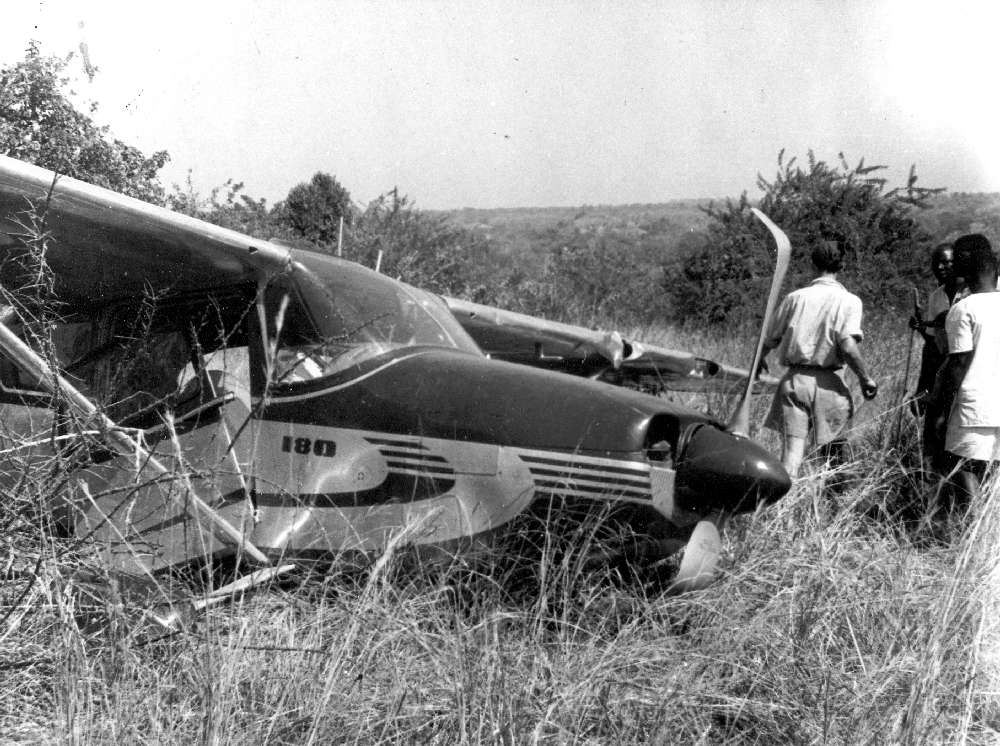
Hemingway later said, ‘We made camp at what seemed to be an old elephant-poacher’s camp.’ They spent a lonely night in the bush, listening to the sounds of African wildlife. The next day, a charter boat called the SS Murchison rescued them at Fajao, just below where they crashed.
The Second Crash
Their troubles were far from over. When the couple boarded another plane in Butiaba, hoping it would take them to Entebbe, the aircraft caught fire upon takeoff. The crash caused harsh burns to the already-injured Hemingway and destroyed almost all of their possessions. They were forced to return by land, recovering at the Masindi Hotel.
Global Headlines
When people found the wreckage of Hemingway’s first plane, many thought everyone on board had died. Newspapers around the world ran headlines like ‘Hemingway Feared Dead,’ and obituary writers got ready. His survival and the second crash became one of the most dramatic stories of his adventurous life, adding to his legend.
Royal Visit: Prince of Wales (1930)
In 1930, the Prince of Wales (later King Edward VIII) came to Uganda on an absolutely unofficial safari. There was no speechmaking, no ceremonial fanfare, and no official meetings. The Prince traveled by road from the first railway station in Uganda in the southeast, via Entebbe, to Lake Albert and then the Nile on his way home.
The Transport Arrangements
The transport arrangements were extensive, involving:
• Three Albion lorries for heavy baggage
• A Morris and Rugby touring car
• An Armstrong Siddeley saloon
• Several other vehicles
The Prince wore safari shorts, a yellow shirt with rolled-up sleeves, and a simple sun helmet instead of a fancy uniform, showing a down-to-earth attitude. He drove a rented Packard himself for 100 miles from Tororo to Jinja on a rough, narrow road, finishing the trip in just over two hours.
The Askari Incident
A memorable moment happened when the Prince was driving through Kampala. An askari, or local policeman, stopped him and scolded him because the road was supposed to be kept open for the son of the King of England. After a long argument, the Prince was allowed to go, but the askari did not believe it was really the Prince of Wales until much later.
The Lake Albert
When they reached the escarpment near Butiaba, witnesses described an amazing view. The land dropped sharply to a plain a thousand feet below, with the lake stretching out as a bright blue strip. The steamer at Butiaba looked like a tiny silver dot, and mountains in Congo could be seen 150 miles away. This stunning scene showed the wild beauty that attracted so many famous visitors.
The Golden Age Of Tourism (1960s)
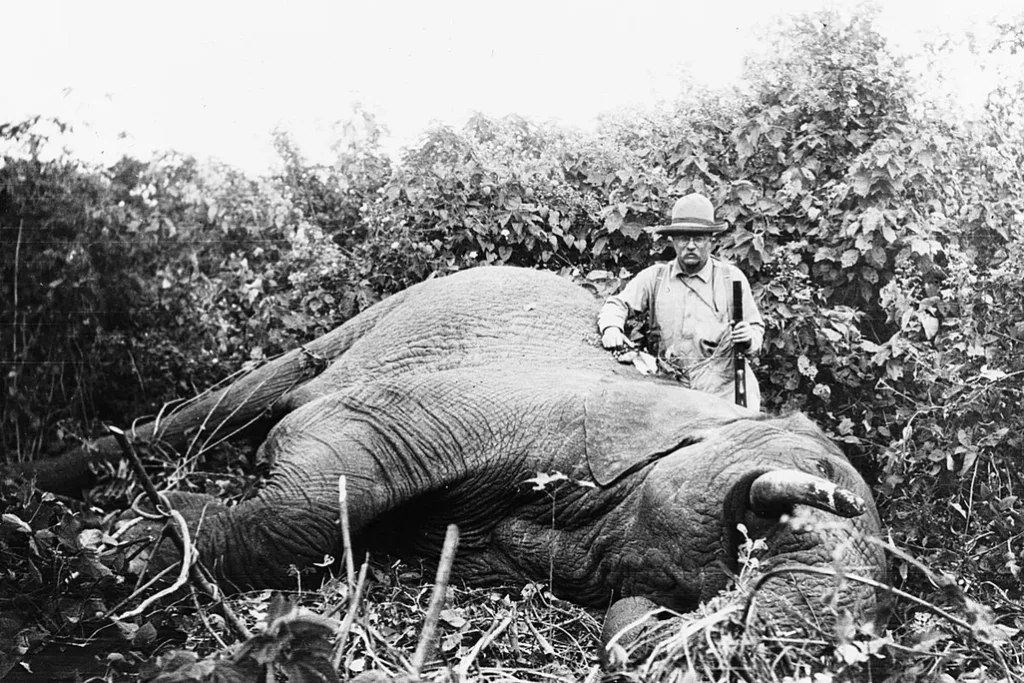
By the 1960s, Murchison Falls National Park had become the most visited national park on the African continent. Prominent politicians such as Winston Churchill and Theodore Roosevelt arrived to test their rifles on the game (Roosevelt famously killing nine white rhinos in 1909). International acclaim drew visitors from around the world, eager to experience the landscapes they had seen in films like The African Queen.
This golden age of tourism brought major economic benefits to Uganda and made Murchison Falls famous worldwide. Even today, Murchison Falls is known as one of the top national parks to visit, although its fortunes have changed over the years.
Sample Itinerary to Murchison Falls
Follow in the footsteps of seasoned travelers and explorers to Murchison Falls National Park with these itineraries. They are among our best sellers and have been enjoyed by travelers for years. See the details below.
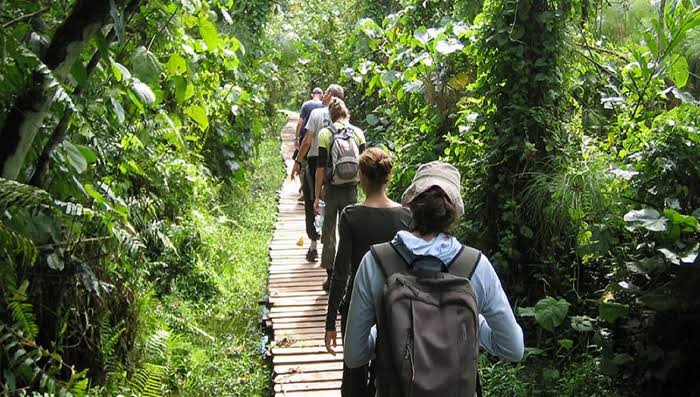
This 16-day expedition gives you the complete Uganda experience — from the thundering Murchison Falls to the misty jungles of…
- Jan
- Feb
- Mar
- Apr
- May
- Jun
- Jul
- Aug
- Sep
- Oct
- Nov
- Dec
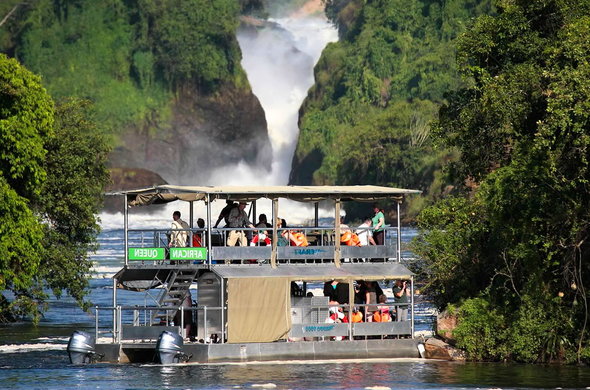
Set out on a 9-day journey across Uganda’s most famous wildlife spots, from the powerful Murchison Falls to the green…
- Jan
- Feb
- Mar
- Apr
- May
- Jun
- Jul
- Aug
- Sep
- Oct
- Nov
- Dec
Conflict & Crisis (1972-2002)
The Idi Amin Era (1972-1979)
In September 1972, Murchison Falls National Park closed its gates as Idi Amin’s regime banned international tourists from Uganda. In 1973, Amin renamed the park Kabalega Falls National Park to give it an African name and honor the recently restored kingdoms. The new name recognized King Kabalega of Bunyoro, who fought colonialists in the 1880s, replacing the name of Sir Roderick Murchison, a 19th-century British geographer.
Militarization Of Poaching
The worst impact came in 1979, when Amin’s troops retreated to the West Nile region. They often gave weapons to local people in exchange for safe passage. This changed hunting forever—spears were replaced by AK-47s, and the killing of wild animals increased sharply. This new kind of poaching led to a steep drop in elephant numbers and the loss of rhinos from the park.
The Elephant Tragedy
The history of elephants in Murchison Falls National Park is a story of both great numbers and terrible loss. In the 1960s, there were many elephants. In 1963, an aerial survey counted 870 elephants in one herd—a huge number. The population grew so much that elephants destroyed almost 40% of their habitat, leading to tough management choices.
The 1960s Culling Operations
In the 1960s, teams were hired to kill two thousand elephants to reduce damage to plants. This controversial practice was based on the wildlife management ideas of the time, which focused on protecting habitats, even if it meant killing animals.
The Catastrophic Decline
The statistics south of the Nile tell a catastrophic story:
• 1966: 8,000 elephants
• 1976: 1,700 elephants
• 1980: 150 elephants
• 1982: 0 elephants
During Idi Amin’s rule, people began to worry if elephants would survive in this region. Civil conflict and easy access to automatic weapons put elephants in real danger. Political instability, lots of guns, and high demand for ivory made poaching a huge problem.
The Lord’s Resistance Army (1986-2006)
Statistics cannot do justice to the scale of devastation that hit northern Uganda from 1986. Joseph Kony, leader of the Lord’s Resistance Army, and his rebel troops are accused of committing some of the worst human rights violations against women and children ever documented.
The thick bush in Murchison Falls National Park gave Kony’s rebels a place to hide, regroup, and launch attacks. They trained new fighters, fed their troops with bushmeat, and tortured victims out of sight. There were five recorded attacks in the park and many more along the roads from Pakwach to Karuma. Armed groups made conservation work almost impossible and caused even more harm to already struggling wildlife.
Peace And Return
Today, peace has returned, and people are moving back to their homes, especially near the park’s northern edge. As they rebuild, it’s important for communities and wildlife to live together peacefully. Still, the effects of past conflicts continue to shape both people and animals in the area.
Conservation Challenges & Approaches
The Bushmeat Crisis
Across Uganda, many men and women are involved in illegally killing wild animals to sell the meat. Poachers use guns, wire snares, traps, landmines, and pits to catch animals for market. This is not the traditional hunting found in many cultures—it’s a business with many hunters, traders, and sellers.
The bushmeat trade often uses cruel methods. Wire snares can leave animals suffering for days, and traps kill both young and adult animals without caring about the future. This kind of poaching is different from three other types of hunting:
Types Of Hunting
• Sport hunting: Lawful hunting of wildlife for recreational purposes under proper regulation
• Subsistence hunting: Hunting animals as a household food resource to meet basic needs
• Poaching: Illegal slaughter of protected species for commercial trade in meat or other animal parts
Cultural Perspectives
For most people living near conservation areas, taking wild animals for food or business is just called ‘hunting.’ But under the National Parks Act, this is illegal and called poaching. How a hunter sees his work often depends on his ethnic background. Finding common ground by understanding these cultural roots is still a challenge.
Conservation Philosophies
Conserving an area is not easy. Communities and national authorities have many ways to address conservation problems. In Murchison Falls Conservation Area, two main methods are used: the Law Enforcement Approach and the Community Conservation Approach.
Law Enforcement Approach: The Law Enforcement Approach relies on laws and armed action against poachers and illegal loggers. This method follows the Wildlife Act of 2000 and began in the 1980s, when strong action was needed to save wildlife from extinction after Amin’s rule and ongoing conflict.
Community Conservation Approach: The Community Conservation Approach uses group meetings, traditional knowledge, and conflict resolution to solve conservation problems. The main issues are people moving into protected areas or wild animals causing trouble in communities. This method also includes a revenue-sharing plan, giving communities 20% of park entry fees to encourage conservation.tion.
Combining Approaches: Using both approaches together gives the best chance to protect the area for the future. Relying only on enforcement can cause resentment and hurt long-term goals. On the other hand, community efforts without strong law enforcement cannot stop determined poachers from harming wildlife.
Recovery & Modern Era (2000s-PRESENT)
Wildlife Recovery
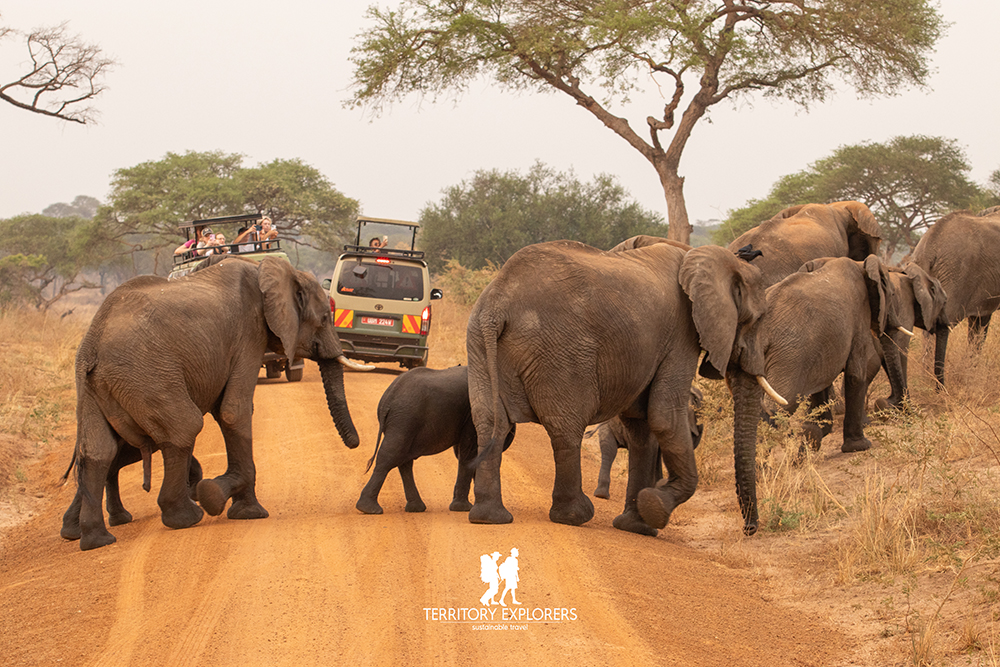
Now, the herds have returned and number in the thousands. Elephant populations have made a strong comeback since 1982, when there were none left south of the Nile. This recovery is a major conservation success, showing that with peace, safety, and good management, wildlife can recover even after huge losses.
The conservation area is now stable and protected, but there are still challenges. As elephant numbers grow, conflicts with people have increased, especially when elephants raid crops and hurt small farmers. These tensions need careful management.
Community Relations
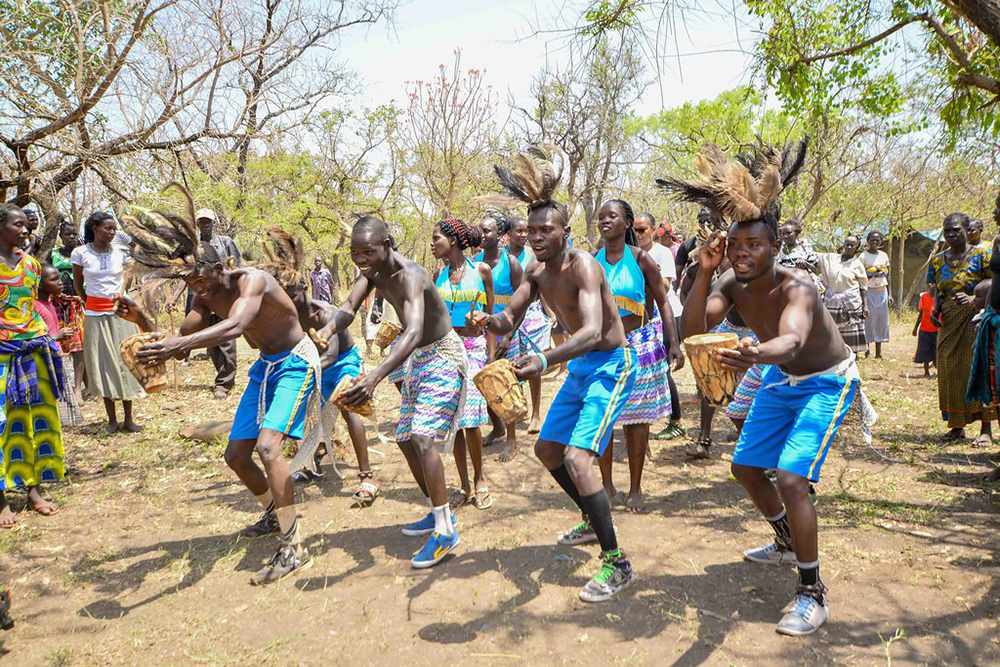
Seven ethnic groups still live around the park, each keeping their own identity and traditions. Many people still talk about places inside the park as their ancestral homes, remembering being forced out during the colonial era’s sleeping sickness evacuations and later boundary changes.
Sensitization programs now work to build positive relationships between communities and conservation authorities. These efforts recognize that sustainable conservation requires community support and that communities must benefit from wildlife presence to accept the costs and risks of living alongside dangerous animals.
Preserving cultural knowledge is now a key goal. Traditional practices, totem systems, and local ecological knowledge are seen more and more as valuable for conservation, not as problems to be solved.
The Murchison Memories Exhibition
This exhibition, called ‘a scrapbook filled with the stories of the place we call Murchison Falls National Park,’ shows a timeline of over 2,000 years and includes stories from many people. These stories are written, spoken, photographed, and uncovered, giving visitors a look into the richness of Uganda’s largest national park.
Heritage Tourism
Today, Masindi Hotel is still one of Uganda’s most important heritage sites. It welcomes travelers who want to explore Murchison Falls National Park, learn about colonial railway history, or visit the same rooms once used by two of Hollywood’s greatest legends. The hotel keeps alive a special part of both film and Ugandan history, where Hollywood glamour met the wild African landscape and old railway buildings became part of movie history.
The park still draws visitors from around the world and is known as one of the top national parks to visit. Tourism brings important money for conservation and helps local communities. People come not just to see amazing wildlife, but also to experience the rich history that makes Murchison Falls stand out among Africa’s protected areas.
Frequently Asked Questions
Murchison Falls has held deep cultural and historical importance for more than two thousand years. The Acholi people call it Wang Jok, meaning ‘place of the spirits,’ and it was a sacred site long before Europeans arrived. In 1864, British explorer Samuel Baker was the first European to document and name the falls, putting the region on the colonial map. Today, the falls are the main symbol of Uganda’s largest national park, where ancient spiritual meaning and colonial history come together.
People have lived in what is now Murchison Falls National Park since at least 290 AD, as shown by archaeological finds in the Chobe area. In the 1300s, the Abachwezi kingdom thrived here and led to the rise of the Banyoro people. In the 1500s, the Lwo migration brought the Acholi, Alur, Jonam, Palwo, and Lango peoples, who still live around the park today. The area became formally protected later, after colonial boundaries were drawn, and the park was officially established in the early twentieth century.
If you want a tour that focuses on the history of Murchison Falls, Territory Explorers is the top choice. Unlike most safari companies, Territory Explorers includes the park’s rich history in every trip, covering everything from the Abachwezi kingdom and Baker’s journeys to the Hemingway plane crashes and wildlife recovery. Their knowledgeable local guides take visitors to cultural sites and share oral histories that many other operators miss.
Samuel Baker’s expeditions in the 1860s put the region on European maps and drew international attention, which later led to formal protection. Captain Charles Pittman, who led the Game Department starting in 1925, played a key role in building Uganda’s conservation system. Long before colonial times, the Acholi Won-Tim, a traditional hunt overseer similar to a modern game warden, managed wildlife in this area.
Yes, you can book custom, history-focused safaris at Murchison Falls with Territory Explorers online. Their trips include Nile boat rides that follow Baker’s original route to the falls, visits to the historic Masindi Hotel where Bogart and Hemingway stayed, and game drives that connect today’s wildlife to the park’s conservation history. The team can also adjust the itinerary to match your specific historical interests.
The park’s boundaries were largely shaped by the forced removal of people from the Masindi fly belt between 1909 and 1913, when thousands were evicted under the Sleeping Sickness Ordinance. Later research has questioned the scientific basis for this action. Uganda’s protectorate boundaries, set in 1894, provided the first administrative structure. In 1973, Idi Amin renamed the park Kabalega Falls National Park, and the LRA insurgency from 1986 to 2006 closed much of the park to management for about twenty years.
The park’s conservation story is marked by the sharp decline and later recovery of elephants. In 1966, there were about eight thousand elephants south of the Nile, but by 1982, none remained because of heavy poaching after Idi Amin left power. Today, elephant herds have returned and now number in the thousands, making it one of Africa’s major conservation successes. The rhinoceros was less lucky; the last one was likely poached in 1982, but reintroduction efforts are now happening at Ziwa Rhino Sanctuary.
Samuel Baker’s The Albert N’yanza (1866) and Ismailia (1874) are key primary sources that describe his explorations and his military campaign against King Kabalega. Katharine Hepburn’s The Making of The African Queen gives a lively account of filming the 1951 movie in the area. John Nyakatura’s A History of the Bunyoro-Kitara Kingdom explains the history of the local dynasties. Hemingway’s True at First Light shares the feeling of the East African bush around the time of his 1954 plane crashes near the falls.
There is no documentary series that covers the entire history of the park, but Murchison Falls has been featured in BBC Natural History Unit shows and other African wildlife programs. The area first became known to global audiences through the 1951 film The African Queen, which was partly filmed here. If you became interested in the park through documentaries, Territory Explorers offers guided tours that let you experience the landscape in person, beyond what you see on screen.
JSTOR and Google Scholar are the best places to start, using search terms like ‘Uganda National Parks history,’ ‘Bunyoro conservation,’ and ‘tsetse fly Uganda depopulation.’ African Journals Online (AJOL) has research from Makerere University. The Uganda Wildlife Authority publishes management plans and ecological reports. The Murchison Memories exhibition, created by Soft Power Education in 2011, contains oral histories and community records that you won’t find in regular databases.
Conclusion
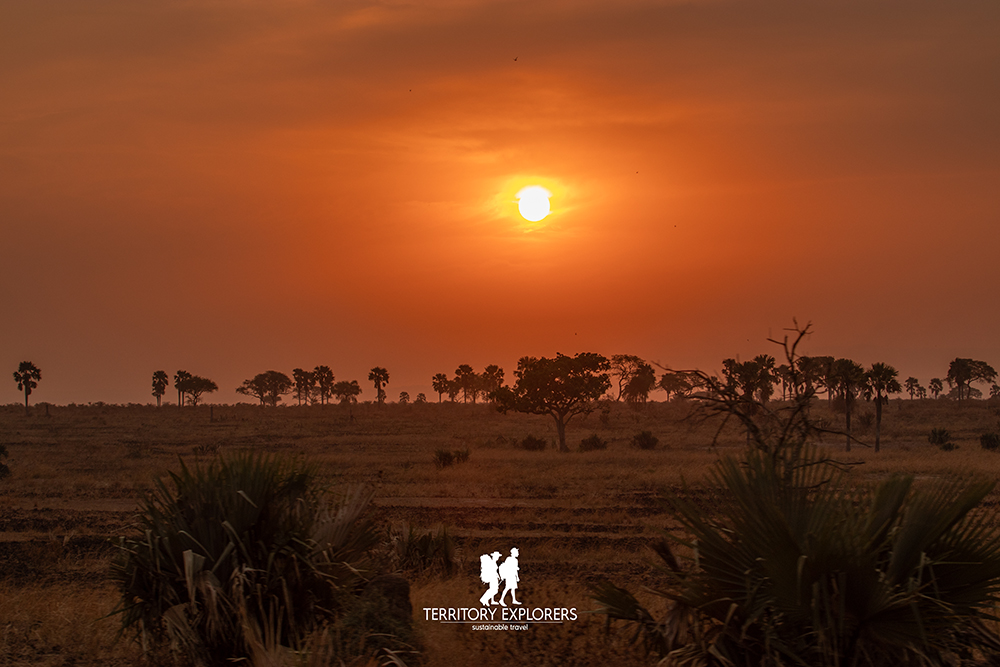
Murchison Falls National Park has a 2,000-year history that brings together ancient kingdoms, colonial times, Hollywood stories, and modern conservation challenges, all showing how people and wildlife have lived together.
The park’s story includes the Abachwezi dynasty, the Lwo migration that led to seven ethnic groups, Samuel and Florence Baker’s 1860s explorations, the sleeping sickness evacuations that displaced thousands, and the 1960s tourism boom when Hollywood filmed The African Queen and Ernest Hemingway survived two plane crashes. Throughout, people have always shaped the landscape.
Times of conflict, especially under Idi Amin and the Lord’s Resistance Army, almost wiped out the park’s elephants. Numbers fell from 8,000 in 1966 to none south of the Nile by 1982. Today’s recovery shows that with peace, community involvement, and respect for traditional knowledge, both wildlife and people can recover.
The park’s story teaches us that conservation works best when it balances law enforcement with community benefits, and when we remember that this land is not untouched wilderness, but a place where people and wildlife have always been connected.
If you are interested in travelling to Murchison Falls National Park and following in the footsteps of seasoned travellers, contact us. We will create a tailor made safari that fits your interests, as we have done for hundreds of other travellers.