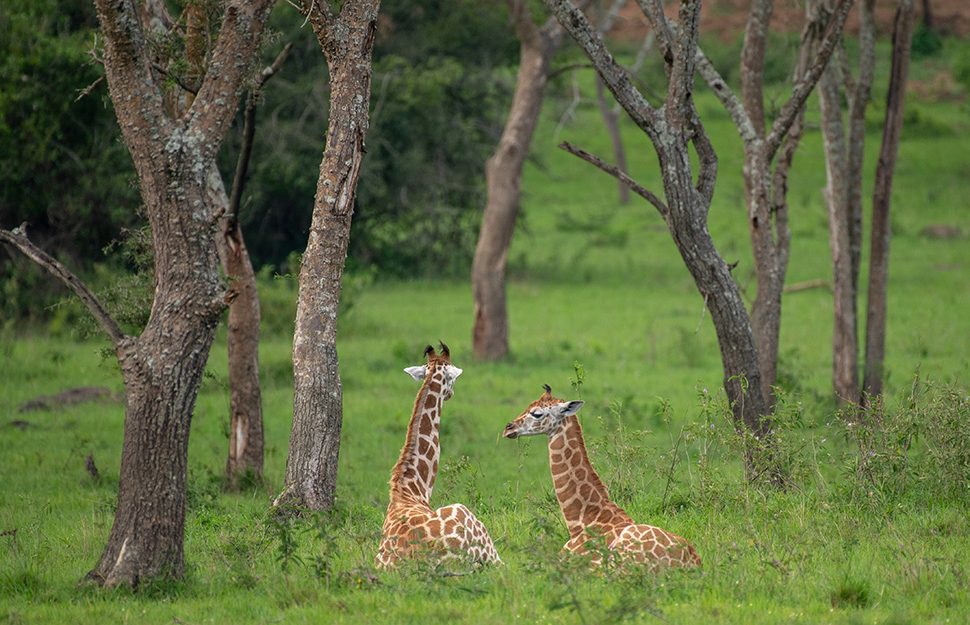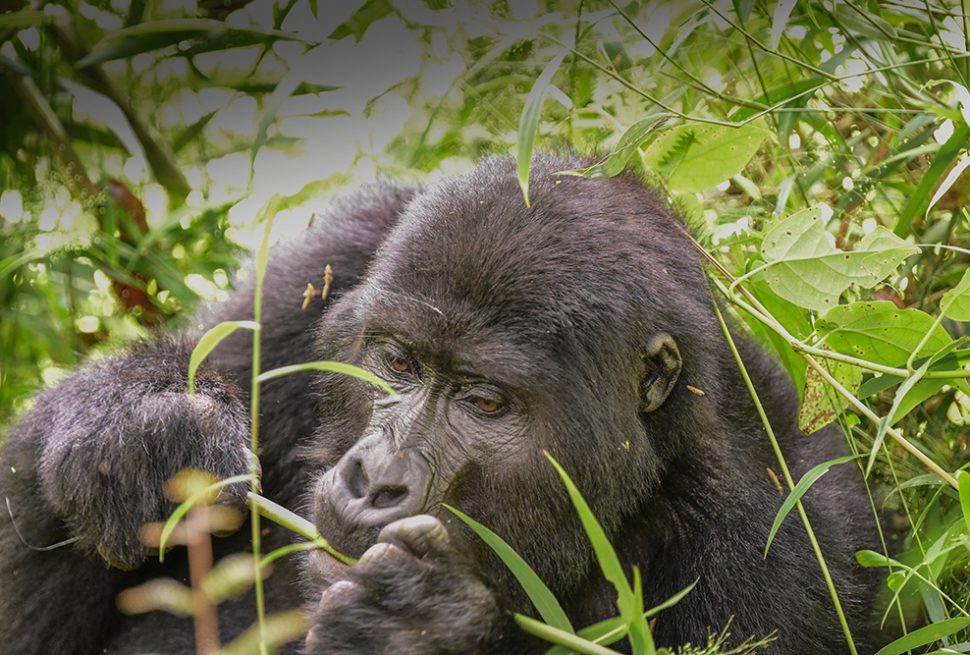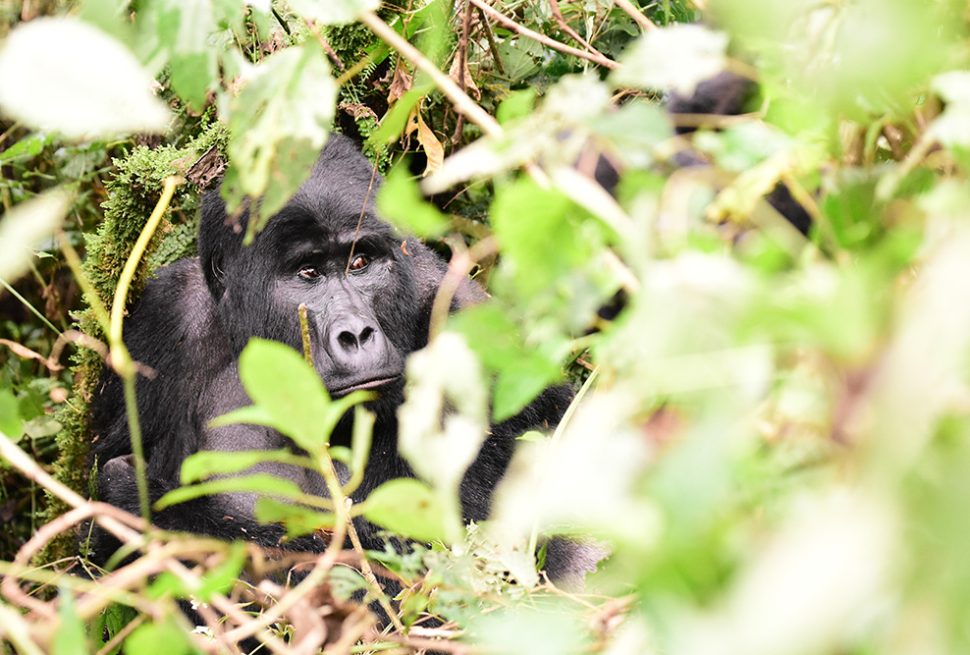


Picture yourself walking among tall trees, with sunlight filtering through the leaves and the sounds of primates echoing around you. This is Kibale Forest National Park, Uganda’s top destination for primate viewing and one of Africa’s richest rainforests. Since 1993, this 776-square-kilometer park has protected one of the last pre-montane forests in East Africa, offering a unique place where conservation and adventure come together.
Key Takeaways
• Location: 776 square kilometers of pristine tropical rainforest in western Uganda, 320km from Kampala
• Main Attraction: Home to over 1,500 chimpanzees – the highest concentration in East Africa
• Primate Diversity: 13 primate species including red colobus monkeys, L’Hoest’s monkeys, and grey-cheeked mangabeys
• Birding Paradise: 375+ bird species including rare Albertine Rift endemics and the spectacular shoebill stork
• Best Activities: Chimpanzee tracking (98% success rate), primate walks, bird watching, and cultural encounters
• Optimal Visiting Time: Dry seasons (December-February, June-September) for easier forest navigation
• Conservation Success: Over 30 years of research has made this a global model for primate conservation
• Accommodation: Options from budget camping ($15-30) to luxury eco-lodges ($300-500+ per night)
• Permits Required: Chimpanzee tracking ($200), habituation experience ($250)
• Unique Features: Only park in Uganda with Nahan’s francolin, Blue headed bee eater, Lowland masked apalis and Cassin’s spine tail
Location and Geography
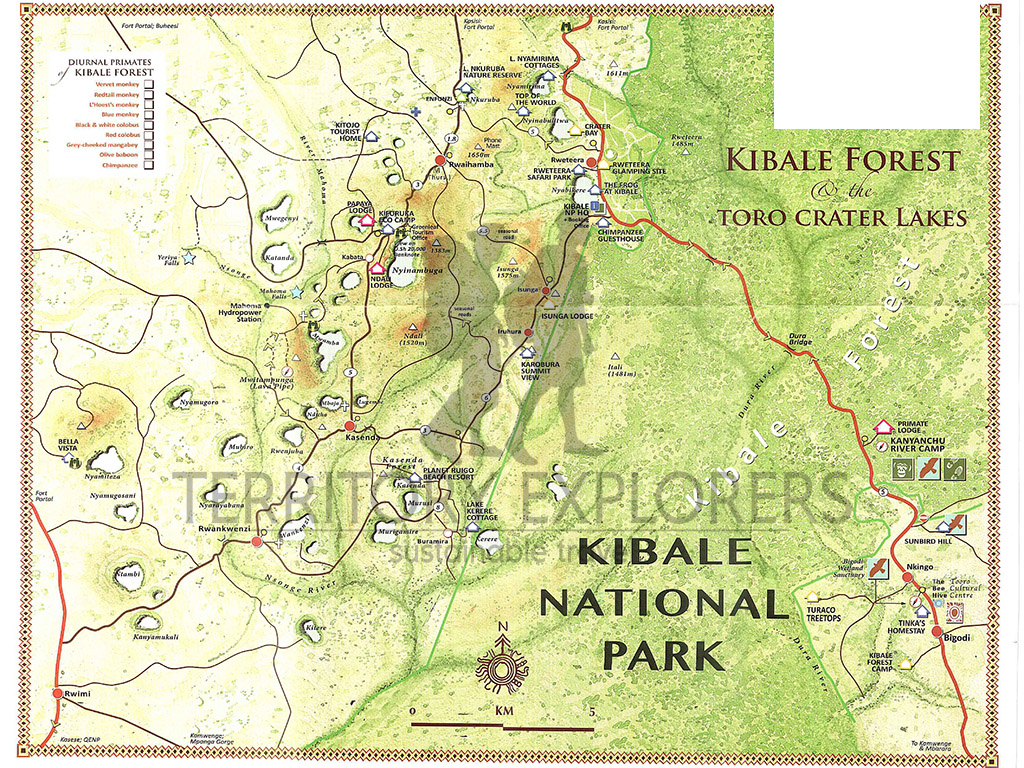
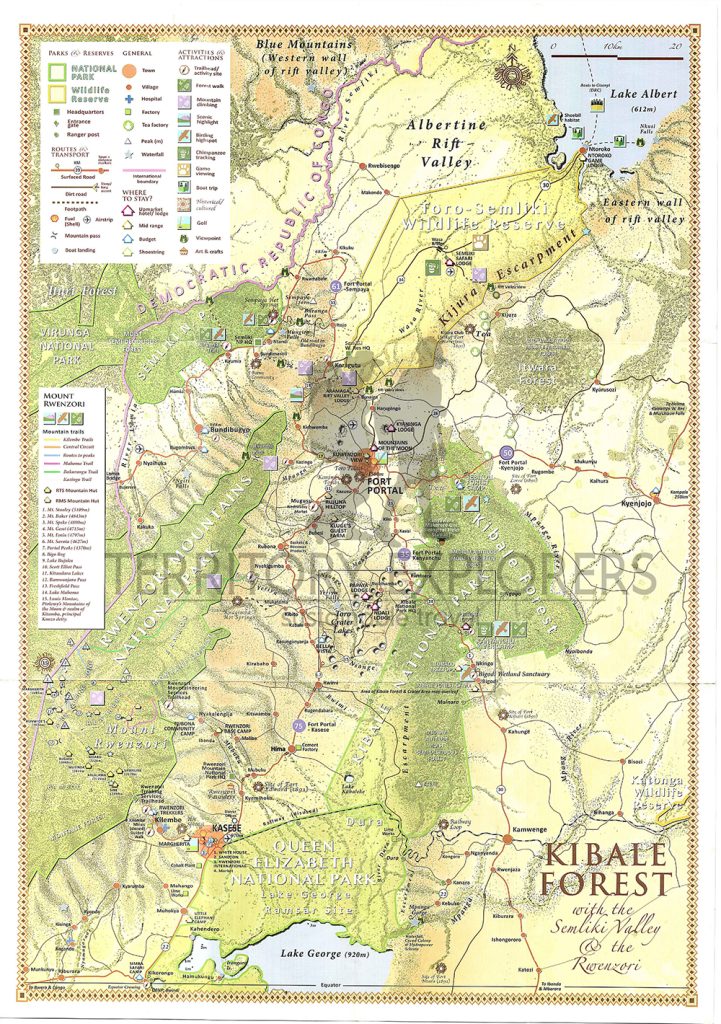
Kibale Forest National Park is located in western Uganda, covering parts of Kabarole and Kamwenge districts, about 320 kilometers from Kampala. The park sits at elevations between 1,100 and 1,600 meters, where northern rainforest gradually changes into southern savanna grasslands. This variety in landscapes makes exploring Kibale feel like visiting several different environments in one place.
The park forms part of a larger conservation area that connects to Queen Elizabeth National Park through the Kazinga Wildlife Corridor, creating one of Uganda’s most important wildlife migration routes. The Mpanga River system flows through the forest, feeding into numerous streams and wetlands that support the park’s incredible biodiversity.
Park History and Establishment
Kibale was first set aside as a forest reserve in 1932 for timber, but its change to a national park is a major conservation achievement. Today, trails that once heard logging now ring with the calls of over 370 bird species and 13 types of primates. The Kibale Chimpanzee Project, started in 1987, began one of the world’s longest studies of wild chimpanzees.
Turning Kibale from a forest reserve into a national park was more than a legal change; it marked a move from using the forest for resources to protecting it. At first, local communities were unsure about losing access to the forest, but over time, eco-tourism brought new jobs and income, making them strong supporters of the park.
Why Kibale Matters: Conservation Significance
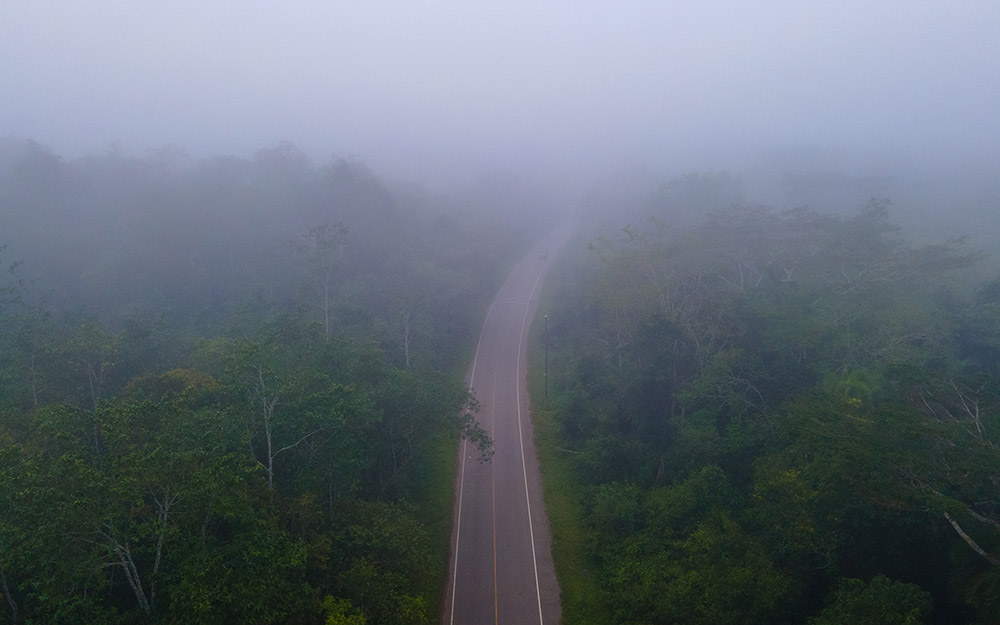
As tropical forests vanish in many places, Kibale offers hope for primate conservation. It has Uganda’s largest group of endangered red colobus monkeys and the highest primate density in Africa. The park is often called the “Primate Capital of the World” because nowhere else has as many primates per square kilometer as Kibale. It truly deserves this title.
Kibale is important for more than just its wildlife numbers. It serves as a place where researchers from all over the world study topics like chimpanzee behavior and forest ecology.
The park plays a key role in climate regulation by absorbing large amounts of carbon, producing oxygen, and helping control local weather. Many visitors find seeing this conservation success just as inspiring as meeting the chimpanzees.
Wildlife and Biodiversity
Primates: The Crown Jewel
Kibale is truly the “Primate Capital of the World,” a title supported by science. With 13 primate species living here, the park gives visitors a rare chance to see many of our closest animal relatives in the wild. You can spot everything from red colobus monkeys in the treetops to shy nocturnal pottos after dark.
1. Chimpanzees (Pan troglodytes)
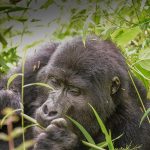
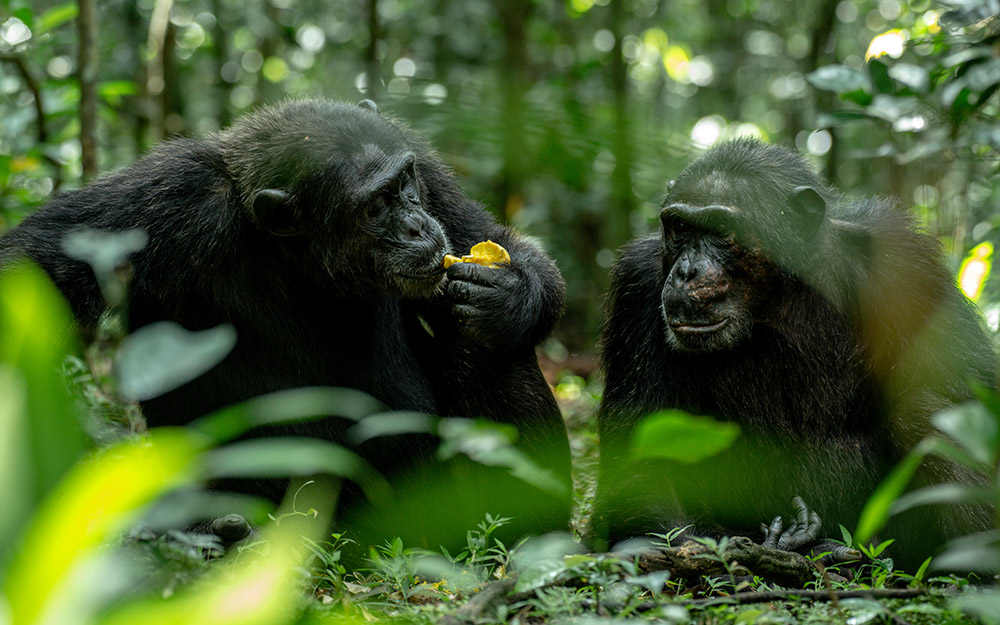
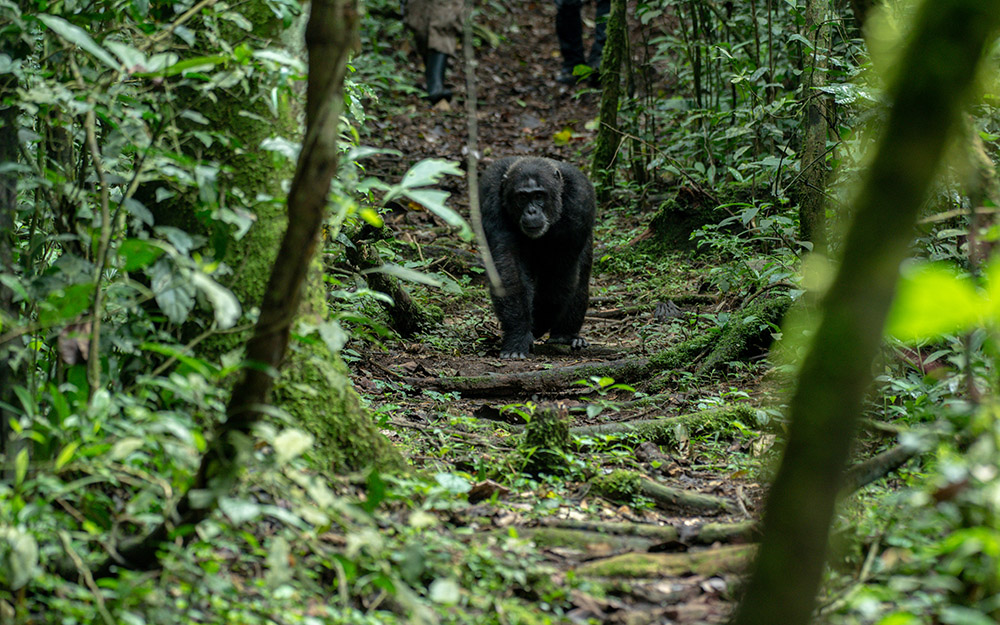
The stars of Kibale are undoubtedly its 1,500+ chimpanzees, representing the largest population in Uganda and one of the most studied communities in the world. Walking quietly through the forest, your guide suddenly raises his hand and points to movement in the canopy above, creating a heart-stopping moment that no amount of preparation can diminish. These incredible beings share 98.8% of their DNA with humans, and watching them interact, communicate, and display complex social behaviors offers profound insights into our own evolutionary journey.
What makes Kibale’s chimpanzees particularly special is their habituation to human presence, achieved through decades of patient research and gradual conditioning. The Kanyanchu community, consisting of over 120 individuals, has been followed continuously since 1987, creating a unique database of behavioral data. Visitors often witness tool use, such as chimps using sticks to extract honey or leaves to absorb water, behaviors that underscore their high form of intelligence.
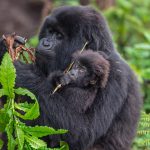
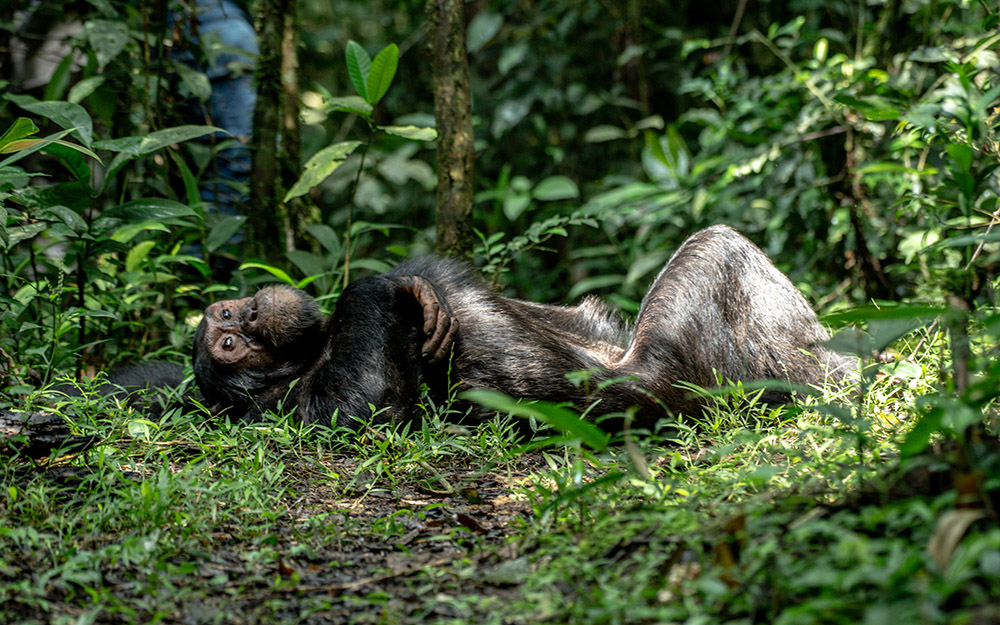
Chimpanzee social life is fascinating. Dominant males guard their groups, mothers care for their young, and young chimps often act much like human teenagers. Chimps show strong emotional bonds: they comfort each other after fights, celebrate hunts, and even mourn lost group members.
2. Red Colobus Monkeys (Piliocolobus tephrosceles)
The endangered red colobus monkey is one of Kibale’s most agile primates, easily leaping between trees high above the ground. These monkeys eat mainly leaves and have special stomachs to digest their tough diet. Kibale is home to more than half of Uganda’s remaining red colobus monkeys, showing how important the park is for their survival.
Red colobus monkeys live in groups of 20 to 80, and watching them move through the treetops is impressive. Their loud calls, made up of roars, screams, and chatters, often signal the start of the day in the forest. These monkeys are not very shy and will keep eating even when people are watching from below, sometimes dropping leaves as they feed.
3. L’Hoest’s Monkeys (Allochrocebus lhoesti)
L’Hoest’s monkeys are easy to recognize by their white chest and dark fur, and many consider them among Africa’s most attractive primates. Their loud calls often give them away before you see them. These monkeys spend a lot of time on the ground, digging for roots, tubers, and insects with their strong hands.
L’Hoest’s monkeys are known for their strong family bonds, with females remaining in their birth groups for life while males migrate to establish new territories. Their social structure is matriarchal, with the oldest female leading the group’s movements and decision-making. During fruiting seasons, multiple groups may converge on the same feeding trees, creating spectacular gatherings of up to 100 individuals.
4. Blue Monkeys (Cercopithecus mitis)
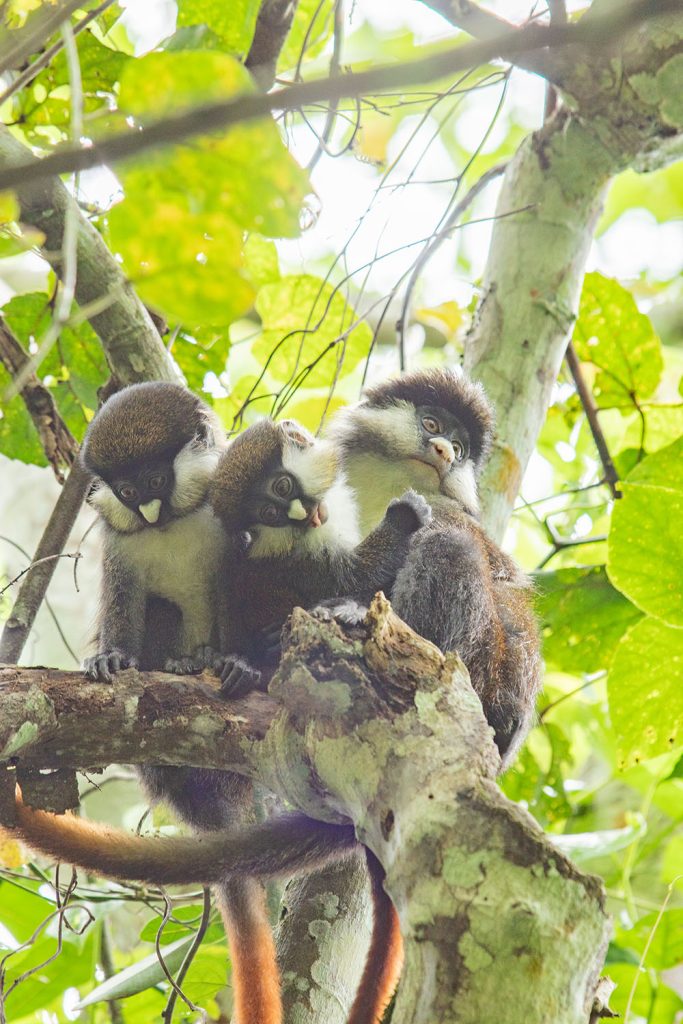
Blue monkeys are actually more grey-brown, with a slight blue tint that can be seen in the right light. They are among the most frequently seen monkeys in Kibale and are known for their curious looks and playful behavior. They mainly eat fruits, leaves, and flowers, but sometimes also eat insects and bird eggs.
Blue monkeys are excellent mothers, with females forming strong nursery groups where young monkeys learn essential survival skills through play and observation. Their alarm calls are sophisticated, with different vocalizations indicating specific threats—from leopards to eagles to snakes. This communication system has helped them thrive in various forest environments across East Africa.
5. Red-tailed Monkeys (Cercopithecus ascanius)
Red-tailed monkeys are easy to spot by their copper-colored tails and heart-shaped nose patches. They often act as the forest’s alarm system, using sharp calls to warn other primates of danger. These monkeys are very social and often join groups with blue monkeys, helping each other find food and stay alert. Their skill at moving through thick vegetation is impressive.
Red-tailed monkeys are incredibly vocal, with over 30 different calls documented by researchers. They’re also tool users, employing sticks to extract insects and using leaves as napkins—behaviors that highlight their intelligence and adaptability.
6. Grey-cheeked Mangabeys (Lophocebus albigena)
Grey-cheeked mangabeys are the largest monkeys in Kibale. Their deep calls can be heard over a kilometer away in the forest, especially at dawn. These strong monkeys help the forest by spreading seeds, which supports new plant growth far from the parent trees.
Mangabeys have unique cheek pouches that allow them to store food while foraging and later process their harvest in safer locations. Their strong jaws and specialized teeth enable them to crack hard nuts and seeds that other primates cannot access, making them important ecological partners in maintaining forest diversity.
7. The Uganda Mangabey (Lophocebus ugandae)
The Uganda Mangabey (Lophocebus ugandae) is a unique Old World Monkey that lives only in Uganda and Tanzania. It was once considered a type of Grey-cheeked Mangabey (Lophocebus albigena), but on February 16, 2007, British-Austrian biologist and anthropologist Colin Groves recognized it as its own species, Lophocebus ugandae.
8. Black-and-white Colobus (Colobus guereza)
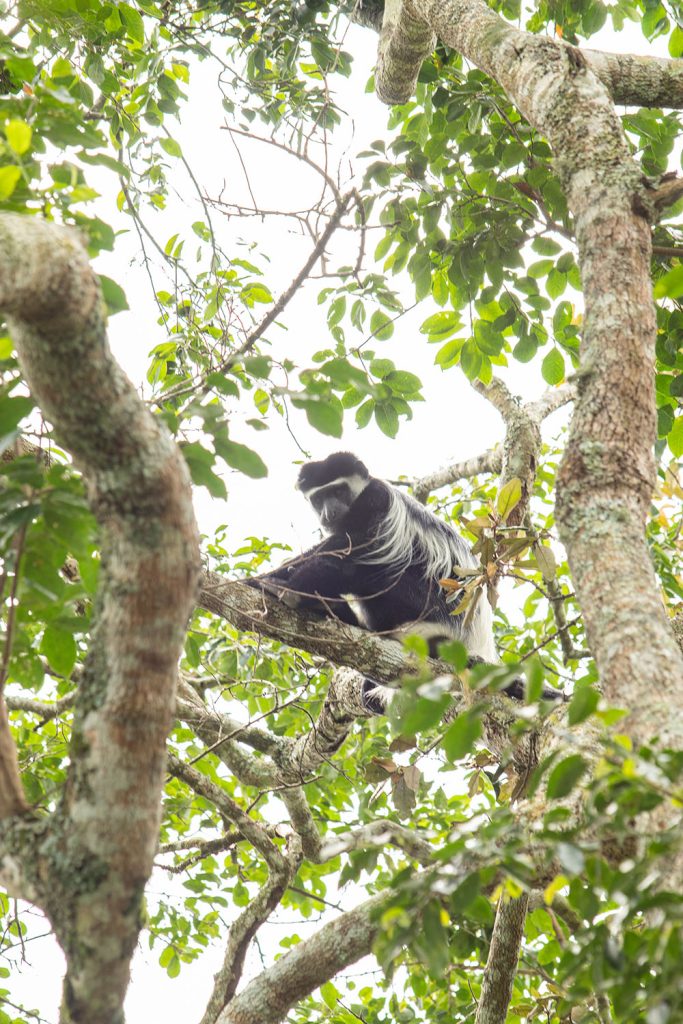
Black-and-white colobus monkeys are known for their striking white and black fur. They eat mostly leaves and often stay still for long periods to digest their food, making them easy to watch quietly. Young colobus monkeys are born with pink faces and white fur, which changes as they grow older.
Colobus monkeys are known for their spectacular leaping ability, using their lack of thumbs (which gives them their name—“colobus” means mutilated in Greek) as an advantage when swinging through trees. Their social structure revolves around a dominant male, multiple females, and their offspring.
9. Vervet Monkeys (Chlorocebus pygerythrus)
While more commonly associated with savanna environments, Kibale’s vervet monkeys have adapted to forest-edge habitats, where they serve as important links between forest and grassland ecosystems. Watching these intelligent primates navigate between two distinct environments offers fascinating insights into adaptation and survival strategies. Their blue and red facial coloring becomes more pronounced during breeding season, creating stunning natural displays.
Vervets are known for their sophisticated predator alarm system, with specific calls for different threats that allow the troop to respond appropriately—whether to look up for eagles, down for snakes, or around for leopards.
10. Olive Baboons (Papio anubis)
Olive baboons are the largest ground-dwelling primates in Kibale and are often seen during forest walks as they search for roots, fruits, and small animals. Their social groups are complex, and their intelligence and adaptability are impressive. Baboons also help the ecosystem by spreading seeds and maintaining the balance of the forest.
Baboon troops can contain over 100 individuals, with intricate social relationships involving alliances, friendships, and rivalries that would make a soap opera writer jealous. Their grooming sessions are particularly fascinating to observe, as they serve both hygienic and social bonding functions.
Nocturnal Primates
At night, three types of nocturnal primates become active in Kibale, each with unique behaviors that can be seen after sunset.
11. Pottos (Perodicticus potto) are perhaps Africa’s most unusual primates, moving with deliberate slowness through the canopy while hunting for insects and tree gums. Night walks offer rare opportunities to observe these cryptic animals whose golden eyeshine reflects flashlight beams like forest jewels.
12. Galagos (Galago senegalensis), also known as bushbabies, are small, large-eyed primates whose haunting calls inspired their common name. Their incredible jumping ability—they can leap over 2 meters—makes them the forest’s acrobatic specialists after dark.
13. Demidoff’s Galago (Galagoides demidovii), the smallest primate in Kibale, weighs only 60 grams but possesses proportionally enormous eyes that help it navigate the dark forest while hunting for insects and tree sap.
Bird Life: A Birder’s Paradise
Kibale Forest is one of East Africa’s top places for bird watching, with over 375 species found here. Its location between East and West African forests means you can see birds that are not found anywhere else in Uganda. Every birding trip offers the chance to spot something special.
Birds in Kibale range from small sunbirds to large hornbills, each adding to the park’s variety. What sets Kibale apart for bird watchers is the mix of forest, wetland, and savanna species, all living in the park’s different habitats.
Albertine Rift Endemics
Kibale is home to several bird species found only in the Albertine Rift, making it a must-visit for dedicated birders. The Black-capped Apalis moves quickly through thick bushes, and the Purple-breasted Sunbird brings bright colors to the forest. The Green-breasted Pitta, known for its rare sightings and beautiful feathers, attracts birders from all over.
The Collared Apalis and Dusky Crimsonwing represent two more Albertine endemics that call Kibale home, each requiring patience and skilled guides to locate. These species evolved in isolation as the Albertine Rift formed, creating unique evolutionary stories written in feathers and song.
Species Unique to Kibale in Uganda
Some birds are only found in Uganda at Kibale, such as the rare Nahan’s Francolin, a ground-dwelling species that is very hard to spot. Seeing this bird is considered a major achievement for bird watchers in East Africa.
The Blue-headed Bee-eater and Lowland Masked Apalis represent two more species that birders can only reliably find in Kibale within Uganda’s borders, while Cassin’s Spinetail adds to the park’s impressive list of specialties that keep international birders returning year after year.
The Shoebill Stork
The Shoebill Stork (Balaeniceps rex) is one of Kibale’s most famous birds. They are mostly seen in the Bigodi wetland. It can grow up to 1.5 meters tall and has a large, shoe-shaped bill. Many birdwatchers visit Kibale hoping to see this rare and impressive species.
Shoebills are patient hunters, standing motionless for hours in shallow water before striking with lightning speed to capture lungfish and other aquatic prey. Their hunting technique is mesmerizing to watch—they’ll remain statue-still until the perfect moment, then explode into action with a precision that belies their prehistoric appearance. The distinctive, machine-gun-like bill-clattering they produce during courtship displays creates an otherworldly sound that echoes across wetlands.
Many birders visit Kibale for the chance to reliably see and photograph shoebills. These birds are often calm around people who keep a respectful distance, allowing visitors to watch them hunt. Their unique appearance and behavior make seeing a shoebill a memorable experience.
The Green-breasted Pitta
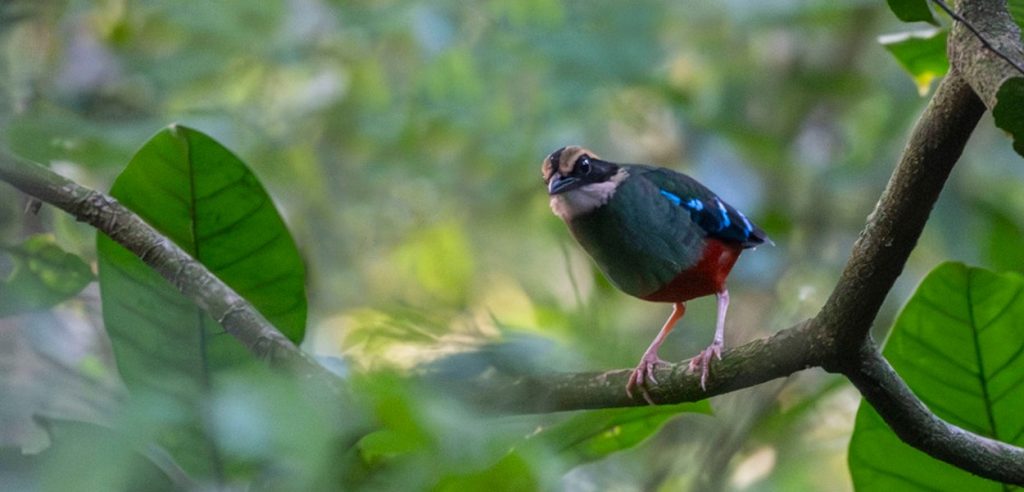
While the shoebill is Kibale’s most famous bird, the Green-breasted Pitta (Pitta reichenowi) is the most elusive. Its bright green, blue, and red feathers make it a top target for birders, but finding one takes skill, patience, and luck.
Green-breasted pittas are very shy and spend most of their time on the forest floor, blending in with the leaves. They prefer dense forest and are hard to spot, so even experienced birders may search for years before seeing one. Spotting a pitta is a rare and exciting moment.
The pitta’s distinctive call, a series of clear, liquid notes that seem to float through the forest air, often provides the only clue to their presence. Patient birders learn to recognize these haunting calls and position themselves along known movement corridors, hoping for that perfect moment when curiosity overcomes the bird’s natural wariness. Many consider photographing a green-breasted pitta to be among Africa’s greatest birding achievements, comparable to finding a snow leopard in the Himalayas.
Wetland Specialists
The papyrus swamps and wetlands near Kibale are home to several unique bird species, best seen during community walks in the Bigodi Wetland Sanctuary. The Papyrus Gonolek, with its black and red feathers, is only found in papyrus habitats. Its call is a special sound for birders visiting Africa.
White-winged Warblers and Papyrus Canaries add golden flashes to green papyrus walls, while the secretive White-spotted Flufftail challenges even expert birders with its mouse-like movements through dense vegetation. These wetland specialists highlight the importance of protecting entire ecosystem complexes rather than isolated forest patches.
Other Notable Bird Species
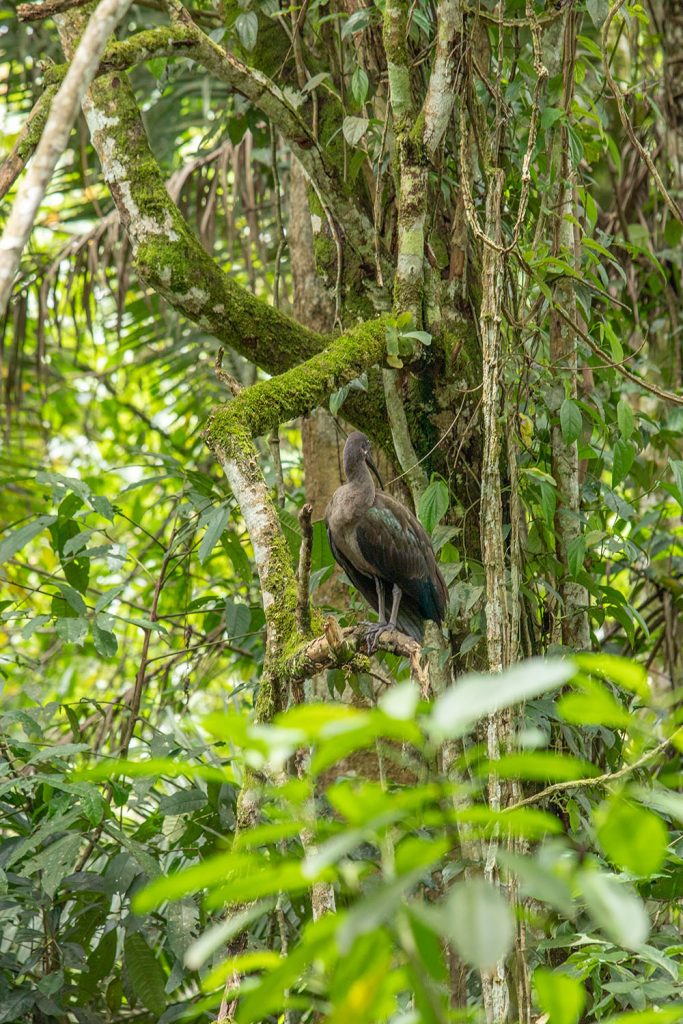
In addition to rare and wetland birds, Kibale has many other bird species that fill the forest with sounds and color. From small sunbirds to large hornbills, there is always something interesting to see, even for casual bird watchers.
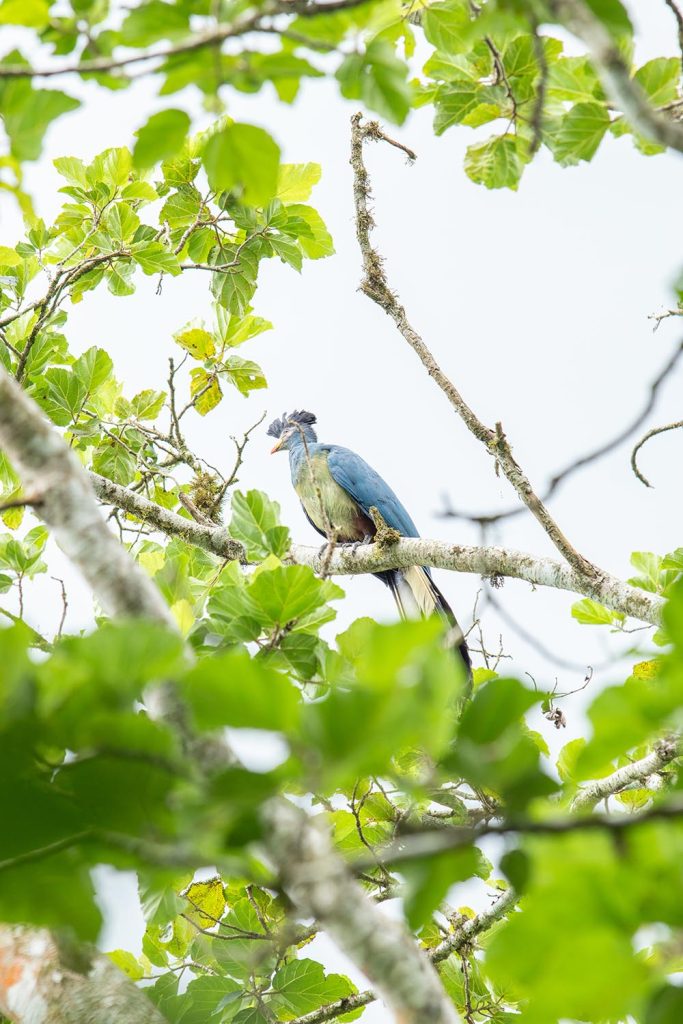
The forest’s hornbill species include the Black-and-white Casqued Hornbill, Crowned Hornbill, Pied Hornbill, and White-thighed Hornbill, each playing crucial roles as seed dispersers while providing dramatic sightings with their impressive size and distinctive calls. Great Blue Turaco and Ross’ Turaco add splashes of brilliant color to the canopy, while the Black-billed Turaco completes this stunning family with its elegant black and green plumage.
Kingfisher enthusiasts will delight in encountering multiple species, including the Blue-breasted Kingfisher, Giant Kingfisher, Malachite Kingfisher, Shining-blue Kingfisher, and Woodland Kingfisher, each occupying different niches from forest streams to temporary pools.
The African Grey Parrot represents one of the forest’s most intelligent residents, while various sunbird species, including the Blue-headed Sunbird, Blue-throated Brown Sunbird, Collared Sunbird, Green Sunbird, and Superb Sunbird, add iridescent flashes of color throughout the forest understory and clearings.
The comprehensive bird list continues with species such as Afep Pigeon, African Broadbill, African Pitta, Banded Prinia, Banded Snake Eagle, Black Bee-eater, Black Cuckoo, Black-bellied Seedcracker, Black-faced Rufous Flycatcher, Black-necked Weaver, Blue-shouldered Robin Chat, Blue-throated Roller, Brown-chested Alethe, Brown-eared Woodpecker, Cinnamon-chested Bee-eater, Crowned Eagle, Double-toothed Barbet, Dusky Long-tailed Cuckoo, Dusky Tit, Elliot’s Woodpecker, Emerald Cuckoo, Green Twinspot, Grey-throated Barbet, Hairy-breasted Barbet, Honey-guide Greenbul, Jameson’s Wattle-eye, Joyful Greenbul, Ludher’s Bushshrike, Magpie Mannikin, Narin Trogon, Narrow-tailed Starling, Olive Green Camaroptera, Palm Nut Vulture, Purple-headed Starling, Red-chested Olivet, Red-headed Bluebill, Red-headed Malimbe, Red-tailed Ant Thrush, Scaly-breasted Illadopsis, Sooty Flycatcher, Speckle-breasted Woodpecker, Speckled Tinkerbird, Toro Olive Greenbul, Ugandan Woodland Warbler, Velvet-mantled Drongo, Western Black-headed Oriole, Western Bronze-naped Pigeon, Western Nicator, White-breasted Negrofinch, White-chinned Prinia, White-collared Oliveback, White-headed Wood Hoopoe, White-naped Pigeon, White-tailed Ant Thrush, White-throated Greenbul, Yellow-billed Barbet, Yellow-mantled Weaver, Yellow-spotted Barbet, and Yellow-throated Tinkerbird.
Thanks to this diversity, even a short walk in the forest can reveal 20 to 30 bird species. With an expert guide, dedicated birders can see over 100 species in a single day during the best times.
Other Wildlife: Mammals, Reptiles, and Amphibians
Kibale is home to much more than just its well-known primates and birds. Many first-time visitors are surprised by the variety of other wildlife here. Sometimes, forest elephants move through the undergrowth, creating unforgettable moments that show the strength of nature and how everything in the forest is connected.
Forest elephants are smaller than those found on the savanna, but they are just as important. They help shape the forest by making clearings and paths that many other animals use. Local guides often share stories about elephant families returning to the same fruit trees each year, following routes learned from previous generations.
Forest buffalo are smaller and more reddish than those on the savanna. They travel in small groups, and you might only notice them by spotting fresh tracks in the mud. Giant forest hogs, the largest wild pigs in Africa, dig through the undergrowth and create small habitats that help other animals.
Kibale is also home to carnivores like leopards, servals, golden cats, and different types of mongoose, but they are shy and hard to spot. The forest has many antelope species, such as bushbuck, duikers, and the small suni antelope. Each plays a unique role in the forest ecosystem.
Flora: The Forest Ecosystem
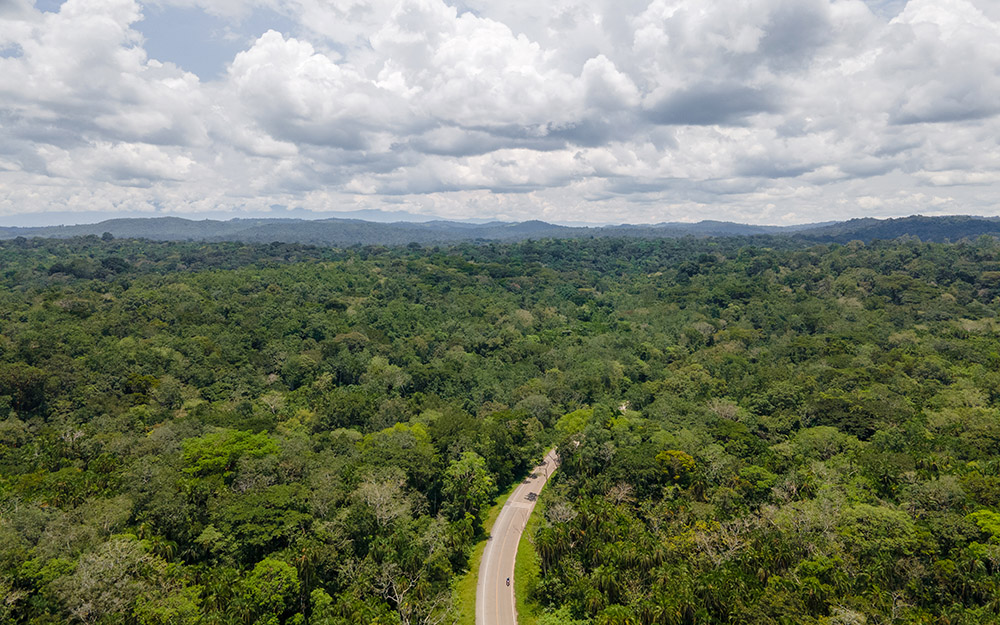
Some of Kibale’s trees are hundreds of years old, even older than the first European explorers in Uganda. The forest has more than 350 tree species, from tall mahogany and ironwood trees in the canopy to smaller plants below that have adapted to grow in the shade.
Walking among these huge old trees, with roots big enough to shelter people and trunks so wide that it would take ten people holding hands to reach around them, makes you realize how short human history is compared to theirs. The forest has different layers: the sunny canopy where birds and primates eat fruit, and the darker forest floor where decomposers break down leaves and rare plants bloom when sunlight reaches them.
Epiphytes, which are plants that grow on other plants, cover tree branches with ferns, orchids, and bromeliads. These create vertical gardens that support many types of insects, spiders, and small animals. Over thousands of years, these species have formed partnerships, showing how nature works together.
Key Activities and Experiences
Chimpanzee Tracking: The Main Attraction
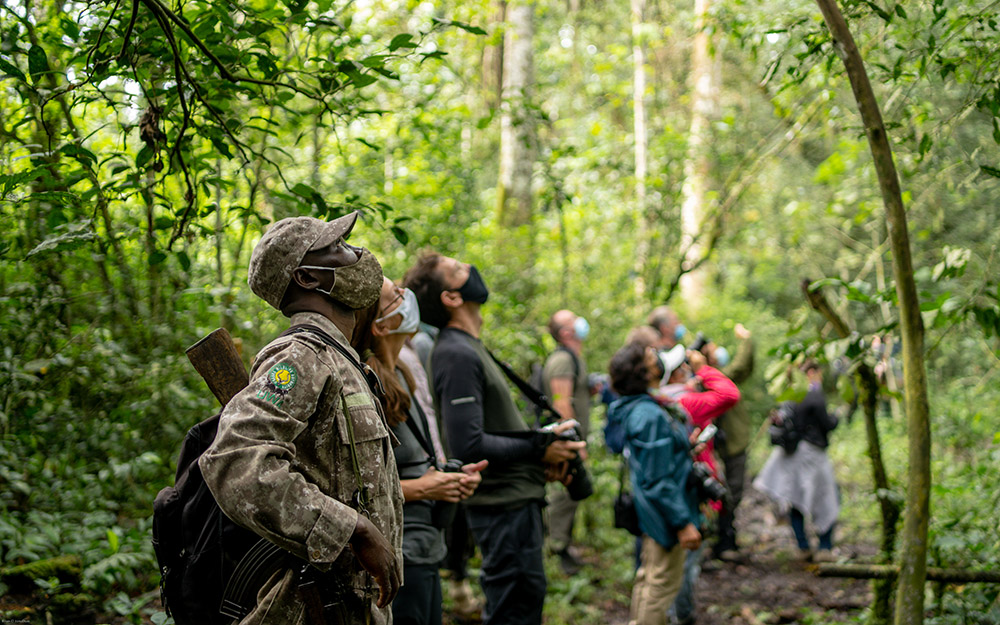
As you enter Kibale’s forest at dawn and follow your guide into the green shadows, you can feel the excitement grow with each step and every distant hoot. Chimpanzee tracking here is one of the world’s most reliable wildlife experiences, with success rates over 98% due to years of research and habituation that have built trust between chimps and people.
Your visit starts at the Kanyanchu Visitor Center, where you’ll get a detailed briefing on safety, chimpanzee behavior, and conservation. Each tracking group has a maximum of eight people to reduce impact on the chimps and give you a better chance to observe them up close. Guides know the chimps well and use radios to communicate with researchers, helping them find the group before leading you along trails that can be easy or challenging, depending on the route.
Tracking can take anywhere from 30 minutes to several hours, depending on where the chimps are and what they’re doing. Sometimes you’ll find them eating in trees close to the trail, while other times you may follow them deep into the forest. This unpredictability makes each experience exciting, as you might see anything from territorial disputes to tool use or gentle moments between mothers and their young.
When you find the chimps, you get to spend one hour with them. Watching them groom, play, eat, and communicate gives you a real sense of our shared evolutionary history. Because of habituation, the chimps usually ignore visitors and continue their normal activities.
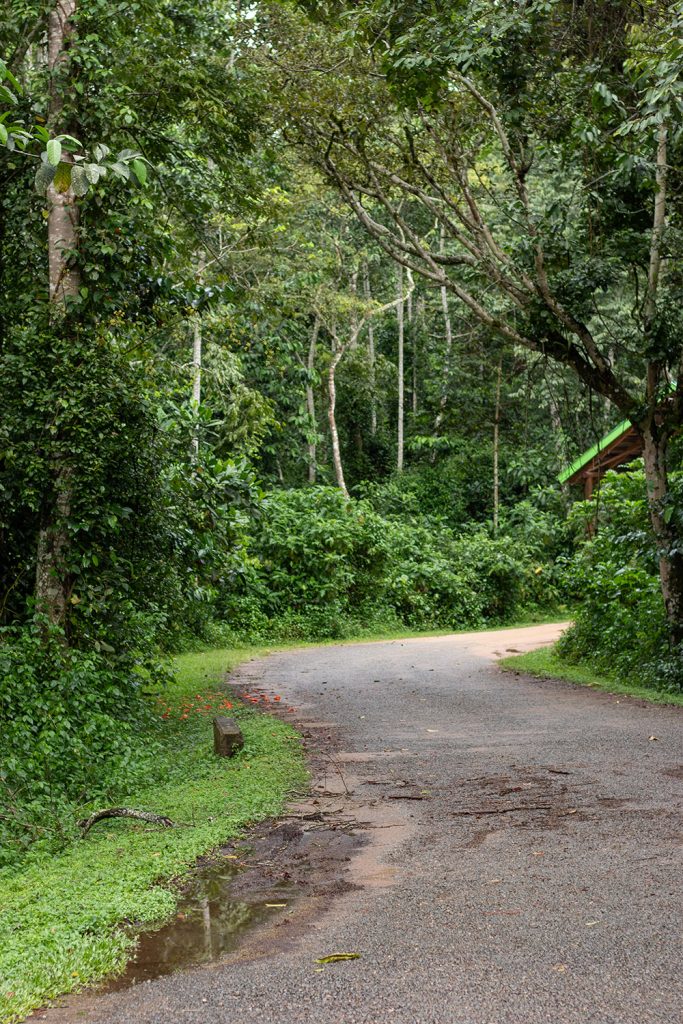
This encounter often leaves a strong impression. Many people feel a deep connection and a new understanding of our place in nature, something that goes beyond what you can get from a documentary or book. Seeing the intelligence in a chimp’s eyes, the care between mothers and young, and the group’s social life creates memories that last for years.
Taking photos while tracking means finding a balance between getting good shots and enjoying the moment. Flash is not allowed, and the thick forest makes lighting tricky, so patience helps. Still, the photos you take—or even just the memories—will be special reminders of this unique experience.
Chimpanzee Habituation Experience
If you want to spend more time with the chimps, the habituation experience is a full-day adventure. You can be with the chimps for up to eight hours, following them from when they leave their nests in the morning to when they build new ones in the evening. It’s a chance to see a whole day in their lives.
During the habituation experience, you visit chimp groups that are still getting used to people. These encounters feel more real and less predictable, as the chimps may be more cautious or curious about you. By joining, you help with conservation, since your presence is part of the process that lets these chimps join future eco-tourism programs.
Spending more time with the chimps lets you see things you’d miss on a shorter visit. You might watch them settle arguments or make and use tools. With the slower pace, guides can explain more about each chimp’s behavior, personality, and social ties.
The habituation experience starts before sunrise and lasts until late afternoon, so it requires good fitness and focus. In return, you get to see how chimps feed on different foods, make day nests to rest, and sometimes build their evening nests—things you rarely see on shorter visits.
You’ll also meet researchers working on current studies, giving you a chance to learn about their methods and the challenges they face. These talks can be just as interesting as watching the chimps, offering new views on primate behavior, forest life, and conservation.
Primate Walks and Research Opportunities
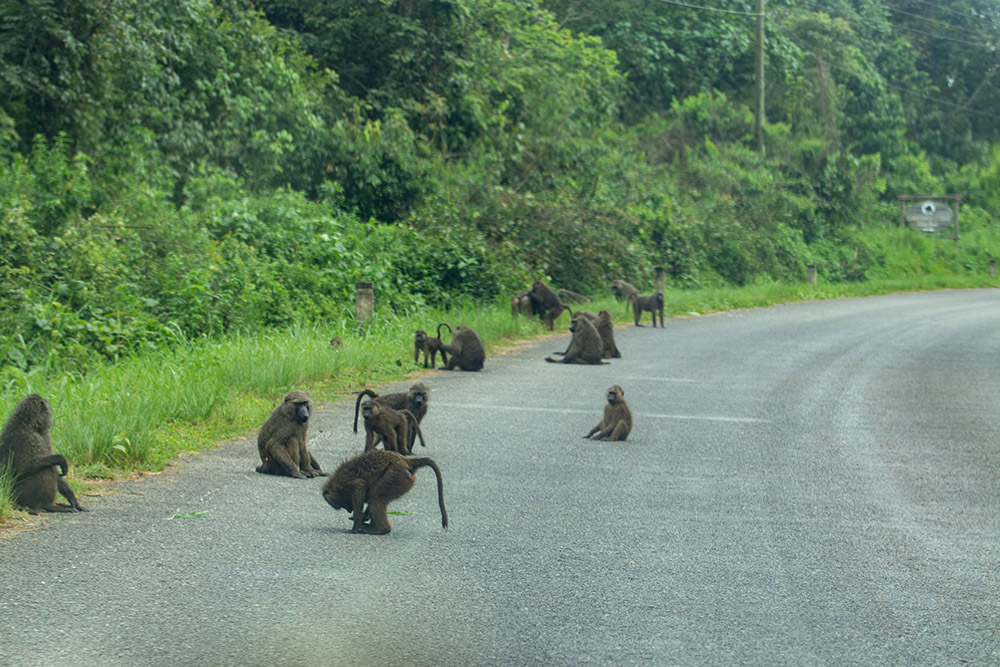
In addition to chimpanzee tracking, Kibale offers primate walks that let you see the park’s many primate species in one trip. Expert guides lead these walks, and you can often spot six to eight different species during a morning trek.
Primate walks are special because you never know what you’ll see, and you always learn something new. Chimps are exciting with their loud calls and energetic movements, but watching red colobus monkeys or black-and-white colobus can be just as interesting and teaches you about how primates have adapted over time.
Kibale draws students and scientists from all over the world for research, from undergraduate fieldwork to PhD projects. The Makerere University Biological Field Station is the center for these efforts, supporting studies on primate behavior, forest ecology, and climate change.
If you’re interested in citizen science, you can join monitoring programs and help researchers track animal populations, behaviors, and habitat use. These activities let visitors play a real part in conservation and connect more deeply with the forest.
Bird Watching Tours
Kibale is great for birdwatchers of all levels, whether you enjoy spotting colorful sunbirds or are searching for rare Albertine Rift species. Early morning walks let you hear and see hundreds of birds as the forest comes alive with sound and activity.
Professional bird guides can spot and identify birds by sight and sound, even when they’re hidden from view. They also share information about bird behavior, breeding, and conservation, turning each walk into a natural history lesson.
There are special tours for those interested in certain birds or habitats, like night walks for nocturnal species or wetland trips for papyrus birds. Photography tours are also available, with guides who know both bird habits and what photographers need.
Bird activity changes with the seasons, so each visit is unique. Migratory birds from the north arrive in winter, and breeding seasons bring more activity and colorful displays, making birdwatching exciting all year round.
Nature Walks and Forest Hikes
Kibale has many trails for all fitness levels, from easy walks for everyone to tough hikes into remote parts of the forest. Some trails let you see the forest from above, while others show you the details of plants, insects, and small animals up close.
Botanical walks teach you how to identify plants and learn about their traditional uses. Guides share local knowledge about medicinal plants, foods, and materials for crafts, showing how communities have used the forest in sustainable ways for generations.
Night walks show you a different side of the forest, as daytime animals rest and night creatures become active. You’ll hear unique sounds, like galagos calling and animals moving in the dark, making for memorable and sometimes surprising wildlife encounters.
Hiking to waterfalls takes you to beautiful spots where streams flow over rocks, perfect for relaxing or taking photos. These areas also have unique plants that thrive in the moist environment, adding to the scenery.
Cultural Encounters with Local Communities
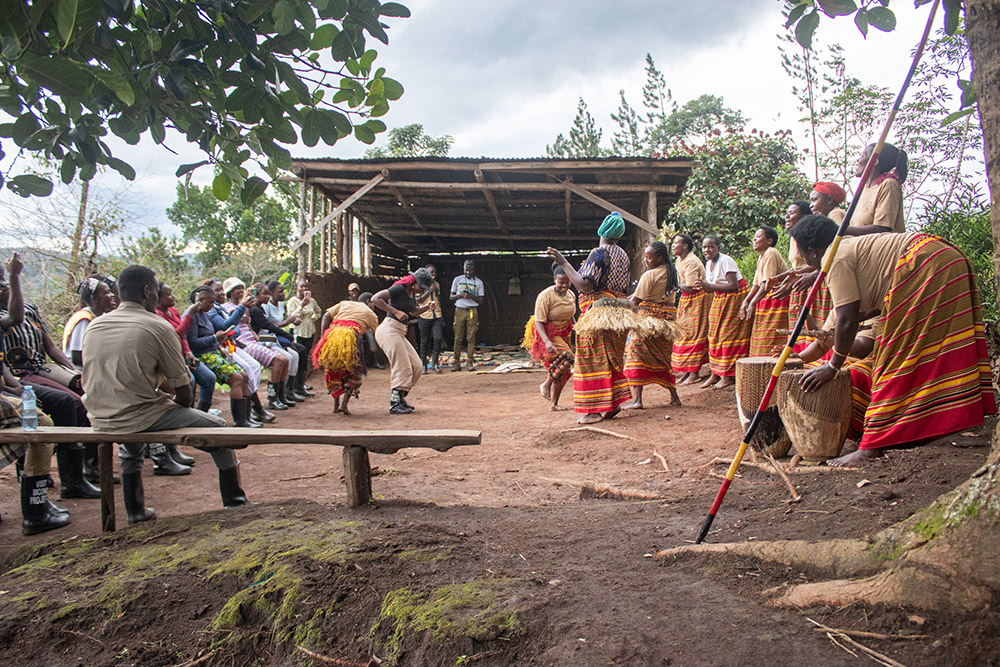
Kibale National Park works closely with nearby communities, creating one of East Africa’s most effective conservation models. Eco-tourism here offers sustainable options instead of cutting down forests and helps keep cultural traditions alive. Community walks in places like Bigodi let visitors experience rural Ugandan life and directly support local development projects.
During village visits, you can meet traditional healers who know a great deal about forest plants and their uses as medicine. These experiences offer a unique look at local knowledge that works alongside modern conservation science, showing how both traditional and new methods can help protect natural resources.
Cultural performances feature traditional music, dance, and storytelling that share ecological knowledge and conservation values built up over generations. These events are more than just entertainment; they are living sources of environmental wisdom that have helped local communities live sustainably in the forest.
Craft workshops give visitors the chance to learn skills like basket weaving, pottery, and woodcarving. By joining these workshops and buying crafts, you support local artisans who use sustainable materials and keep traditional techniques alive. This direct support helps preserve cultural practices that could otherwise be lost.
Research and Conservation
The Kibale Chimpanzee Project began in 1987 and is now one of the longest-running studies of wild chimpanzees in the world. Over more than thirty years, researchers have tracked individual chimps by name, age, family ties, and personality across generations. Their work has shown that different chimpanzee groups have their own cultural traditions, such as unique ways of using tools and social behaviors, which are passed down over time.
These findings show that chimps have cognitive abilities once thought to be only human. The project’s health monitoring has also set up important rules to prevent diseases from spreading between people and chimpanzees during tourism, which became especially important during the COVID-19 pandemic.
Kibale acts as a living laboratory, with the Makerere University Biological Field Station leading many research projects. These include studies on primate behavior, forest ecology, climate change, and wildlife nutrition. Scientists look at how breaking up habitats affects primate groups, giving important information that helps shape conservation plans, such as building wildlife corridors and managing tourism in East Africa. By tracking climate over time, researchers can spot small environmental changes early and respond to new threats before they grow.
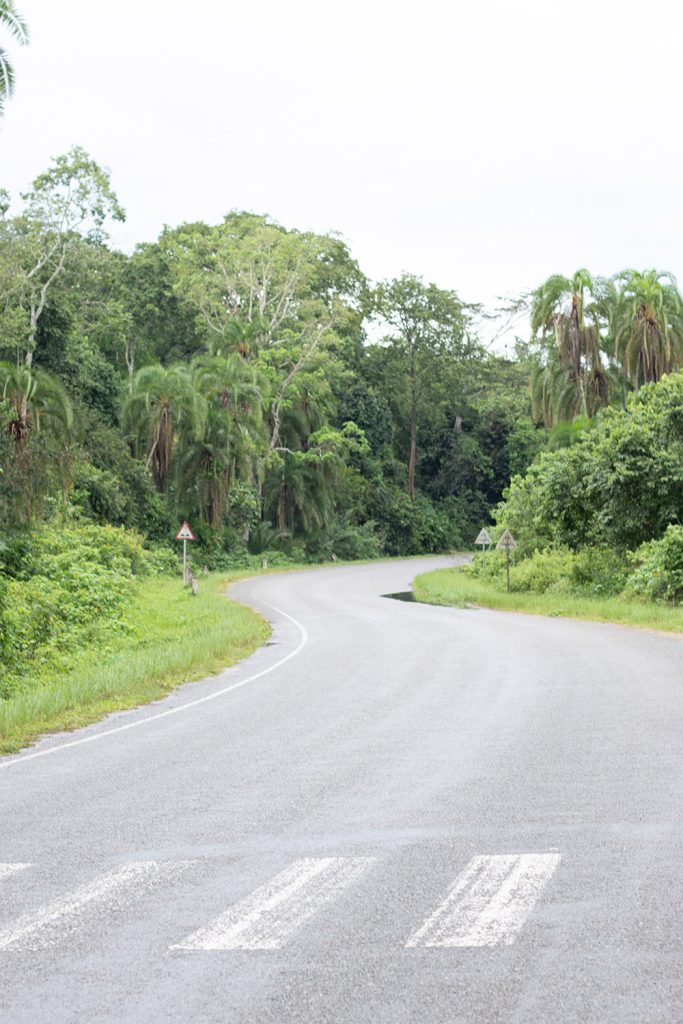
The park’s conservation efforts have succeeded by involving local communities as partners, not just resource users, through the benefits of eco-tourism. Money from chimpanzee tracking and other activities supports community projects like schools, health clinics, and programs for sustainable living. This shows that protecting nature can also help people. Women’s groups lead tree-planting projects and create ways to earn money that do not harm the forest. Some people who were once unsure about conservation now work as park guides and advocates, showing how economic growth and wildlife protection can support each other.
Conservation Challenges and Successes
Kibale’s conservation journey has seen both big successes and ongoing challenges, showing how complex it is to protect tropical ecosystems near human communities. Creating and expanding the park were major achievements, but keeping the ecosystem healthy means staying alert and adapting to new threats.
Conflicts between people and wildlife often happen near the park’s edges, as more people and animals compete for space and resources. Primates like baboons and vervet monkeys sometimes raid crops, which is a real problem for farmers. The park tries to help by creating buffer zones, offering compensation, and supporting other ways for people to earn a living.
One of the biggest long-term threats to Kibale is the loss of forest outside the park, as farming and settlements spread. This leaves the park as an isolated patch of forest, which can cause genetic isolation and population drops for animals that need large areas to survive.
Climate change makes things even more complicated. Changes in rainfall and temperature affect which trees grow and where food is found. Some trees struggle during long dry spells, while others do better, which can change the forest and impact primates and other animals.
Community Conservation Efforts
One of Kibale’s biggest successes is changing how local people view forest conservation. Thanks to the economic benefits of eco-tourism, many now see the value in protecting wildlife. Communities that once used the forest mainly for resources now help protect it, since their incomes depend on keeping the ecosystem healthy for tourism.
Tourism jobs, such as guiding, carrying gear, making crafts, and performing, give people direct reasons to care about conservation. Young people who might have left for city jobs can now find meaningful work at home, which helps both their communities and the forest.
Tourism income is shared with local communities to fund projects like schools, health clinics, and water systems. This improves people’s lives and supports conservation at the same time. These programs show that protecting nature can actually help human development, not hold it back.
Women’s groups play a key role in conservation by organizing tree planting, starting community gardens, and finding new ways to earn income that don’t harm the forest. They often mix traditional knowledge with modern methods, leading to creative solutions for managing natural resources.
Planning Your Visit
Sample Itineraries
Visiting Kibale Forest National Park is truly worth every dollar. You’ll see a wide variety of wildlife, including chimpanzees and beautiful birds, and the peaceful forest environment is perfect for relaxing your mind. Take a look at our itineraries for trips to Kibale Forest. Join our community of satisfied clients.
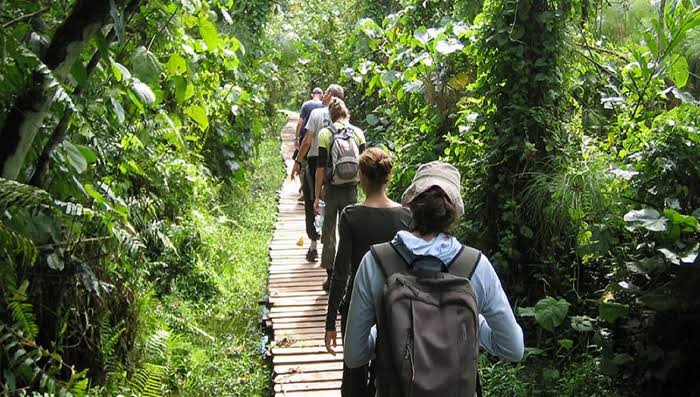
This 16-day expedition gives you the complete Uganda experience — from the thundering Murchison Falls to the misty jungles of…
- Jan
- Feb
- Mar
- Apr
- May
- Jun
- Jul
- Aug
- Sep
- Oct
- Nov
- Dec
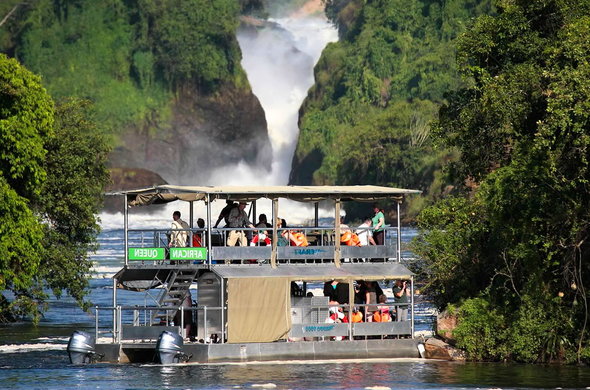
Set out on a 9-day journey across Uganda’s most famous wildlife spots, from the powerful Murchison Falls to the green…
- Jan
- Feb
- Mar
- Apr
- May
- Jun
- Jul
- Aug
- Sep
- Oct
- Nov
- Dec
Best Time to Visit
When you visit Kibale can make a big difference in your experience. Each season has its own benefits for different interests and activities. The dry seasons, from December to February and June to September, are best for walking in the forest, with less mud and better chances for clear photos. However, these times are also more popular, so you may see more visitors.
In the dry seasons, it’s easier to track primates because they gather near water and fruiting trees, making sightings more likely and rewarding. With less thick vegetation, it’s also better for taking photos and watching birds. The pleasant weather makes long walks in the forest more comfortable.
During the wet seasons, from March to May and October to November, Kibale becomes a lush green landscape. Bird activity is at its highest during breeding, and many animals are drawn to the forest by plentiful fruits. While trails can be muddy and afternoon rains may pause activities, the forest is at its most beautiful, with wildflowers, bright green trees, and more primate activity.
If you are a keen bird watcher, the wet seasons are the best time to visit. Local birds are breeding, and migrating species from Europe and Asia add to the variety. Although the conditions can be tougher, the chance to see so much wildlife makes wet season visits especially rewarding for adventurous travelers who want a true forest experience.
Getting There: Transportation Options
Your trip to Kibale usually starts with a scenic drive from Kampala, about 320 kilometers away. The route takes you from city areas through farmland and into forested hills. Many visitors choose private vehicles so they can stop at interesting places along the way, making the journey itself part of the adventure.
The main route goes through Mubende and Fort Portal, where you can see rural Ugandan life and, on clear days, the Rwenzori Mountains. Fort Portal, called the “tourism city of Uganda,” is a great place to stop overnight, with comfortable places to stay and chances to visit crater lakes and local markets.
If you’re traveling on a budget, public buses are available, though the trip takes longer and needs more planning. Buses run often from Kampala to Fort Portal, where you can catch local transport to park accommodations and the visitor center at Kanyanchu.
Flying to nearby airstrips can save a lot of travel time. Charter flights go to Kasese or Fort Portal, followed by a short drive to the park. This is a good choice if you want to visit Kibale along with places like Queen Elizabeth National Park or the Rwenzori Mountains, letting you see more of western Uganda without long drives.
Accommodation: From Budget to Luxury
Kibale offers places to stay for every budget and comfort level. You can choose basic campsites where you hear the forest at night or stay in luxury eco-lodges that combine comfort with care for the environment.
Budget Options ($15-50 per night)
Kibale Forest Camp gives you a real bush experience with simple, clean bandas (traditional huts) and campsites right in the forest. The shared dining area is a great place to meet other travelers, and since there’s no electricity after certain hours, you’ll find yourself going to bed early, just like the forest.
UWA Kanyanchu River Camp is a government-run option with simple cottages and dorms, perfect for travelers on a budget or student groups. Its riverside setting is peaceful in the evenings, and being close to park headquarters makes it easy to join morning briefings and activities.
Bigodi Homestays let you experience local culture while directly supporting the community. These family-run stays offer comfortable rooms and home-cooked meals made with local ingredients, giving you a real taste of rural Ugandan life.
Mid-range Options ($80-200 per night)
Primate Lodge Kibale sits in a beautiful forest and offers comfortable cottages that mix modern comforts with rustic charm. The restaurant is raised up for dining among the treetops, and you might even see primates visiting the lodge grounds.
Chimpanzee Forest Guesthouse is a great value, with comfortable rooms, steady electricity, hot water, and a restaurant serving both local and international dishes. By hiring local staff and buying from nearby communities, the lodge helps support the local economy.
Kibale Guest Cottages is family-friendly, with roomy cottages for groups and a garden that attracts many birds for you to watch. The restaurant serves filling meals to get you ready for forest adventures, and the relaxed setting is perfect for chatting with other guests.
Luxury Options ($300-500+ per night)
Papaya Lake Lodge offers luxury with amazing views of a crater lake, excellent food, and top-notch service. You can relax in the infinity pool overlooking the lake or enjoy spa treatments after a day of exploring the forest.
Kyaninga Lodge sits above a beautiful crater lake and offers luxury cottages with private decks and stunning views. The lodge uses solar power, local materials, and supports community projects, showing that luxury tourism can help both conservation and local people.
Crater Safari Lodge offers luxury stays with easy access to both Kibale and Queen Elizabeth National Parks, making it great for exploring western Uganda. Its high location gives you wide views of several crater lakes, and the stylish décor and excellent service make for a memorable safari experience.
What to Pack and Prepare

Getting ready for forest adventures is different from packing for a savanna safari. You’ll need to protect yourself from plants, insects, and changing weather. Careful planning will help keep you comfortable and safe during your visit.
Wear sturdy, well-broken-in hiking boots with good ankle support for the forest’s uneven and sometimes muddy trails. Waterproof boots or gaiters help in the wet season, and quick-dry pants keep you comfortable when there’s dew or rain.
Wear long-sleeved shirts and pants in neutral colors to protect against thorns and insects, and to blend in with the forest. Avoid bright colors and perfumes, as they can disturb animals or attract insects.
Always bring rain gear, no matter when you visit, since tropical forests can have sudden showers even in the dry season. Lightweight rain jackets and waterproof covers for your camera and gear will keep you and your equipment dry.
If you plan to take photos, remember that forests are humid, dark, and dense, which can be tough on your gear. Bring extra batteries, memory cards, and protective cases. Also, pack light so you can carry your equipment comfortably on long walks.
Permits and Costs
Knowing about permit requirements and costs helps you plan your budget and avoid surprises during your visit. Booking in advance is especially important during busy seasons, when permits can sell out quickly, especially for activities like chimpanzee habituation.
Chimpanzee Tracking Permits cost $200 for non-resident foreigners, $150 for resident foreigners, and UGX 150,000 for East African citizens. These permits include park entrance fees, guide services, and the one-hour chimpanzee viewing experience, but exclude transportation, accommodation, and meals.
Chimpanzee Habituation Experience permits cost $250 for foreign non-residents and give you a full day with chimpanzee groups that are getting used to people. The higher price covers the longer visit and smaller groups, making the experience more personal and educational.
Forest Walks and Bird Watching cost $40 per day for foreign non-residents, plus extra guide fees that depend on your group size and how long you go out. These activities are a good value, especially if you stay several days and try different things in the forest.
Night Walks need special permits and guides, and the cost depends on your group and how long you go. These walks let you see animals that are only active at night, giving you a new way to experience the forest.
Nearby Attractions
Queen Elizabeth National Park Connection
Kibale and Queen Elizabeth National Parks are close to each other, making it easy to enjoy a wide range of wildlife and see Uganda’s rich biodiversity in different habitats. The Kazinga Wildlife Corridor links the parks, helping animals move safely between the forest and savanna.
Visiting both parks lets you enjoy close-up primate encounters in Kibale’s forests and classic safari adventures in Queen Elizabeth’s savannas. Seeing chimpanzees in the forest and lions or elephants in the grasslands shows you how different animals adapt to their habitats.
The tree-climbing lions in the Ishasha area of Queen Elizabeth National Park are a rare sight in Africa. A boat cruise on the Kazinga Channel is also great for spotting hippos, crocodiles, and many birds. These activities add to Kibale’s primate experiences and make for a well-rounded Uganda safari.
Planning a trip to both parks together can save you money and time. Many hotels and lodges offer packages that include transport, permits, and guided tours for both parks, making your visit easier to organize.

Bigodi Wetland Sanctuary
This conservation area is run by the local community and is one of East Africa’s best examples of community tourism. Locals have turned the wetlands into a protected spot for bird watching, earning income while protecting important habitats. The sanctuary shows how eco-tourism can help both nature and people.
A network of boardwalks lets you easily explore the wetlands, which would be hard to reach otherwise. Local guides, trained by the community, help you spot birds and share their knowledge about how people use the wetlands and the challenges of conservation.
More than 200 bird species live in the sanctuary, including some that only live in papyrus and are hard to see anywhere else. The mix of wetlands, forest edges, and farmland gives bird watchers a lot of variety in a small area.
Money from sanctuary tourism helps fund schools, health clinics, and clean water projects, showing real benefits from conservation. Visitor fees also create jobs for local guides, boat drivers, and craft makers.
Local Communities and Cultural Sites
Villages around Kibale give you a real look at rural Ugandan life and let you see traditional ways of living that have lasted for generations. Cultural tourism helps people earn money without harming the forest and keeps traditional knowledge alive alongside modern conservation.
Meeting traditional healers gives you a glimpse into local medicine, which uses forest plants and knowledge passed down over generations. These visits show why protecting the forest matters for both culture and nature.
Craft villages display skills like basket weaving with forest materials, pottery with local clay, and woodcarving using sustainable methods. Buying these crafts supports local artisans and helps keep these traditions alive.
Cultural shows feature traditional music and dance, often sharing lessons about nature and conservation. These performances entertain and teach visitors how local cultures care for the forest.
Park Rules and Regulations

Protecting the forest depends on visitors following rules that keep both people and animals safe and help the environment. By following these guidelines, you show respect for conservation and improve your chances of seeing wildlife.
Chimpanzee tracking groups are kept small, with only eight people, to avoid stressing the animals and to give visitors a better experience. Staying at least 8 meters away from the primates helps prevent disease and keeps their behavior natural.
You can’t use flash photography when watching primates because bright lights can scare them and change their behavior. The forest is dim, so taking good photos takes patience, but following this rule helps animals stay comfortable around people.
Don’t smoke, eat, or drink near primates. This helps stop the spread of disease and keeps animals from getting used to human food, which could be harmful.
Health and Safety Considerations
Visiting a tropical forest means you need to take different health precautions than on a savanna safari. Focus on avoiding insect bites, watching out for certain plants, and being ready for changing weather.
It’s important to take malaria medicine because forests are good places for mosquitoes, especially in the rainy season. Use insect repellent, wear long sleeves, and consider treated clothing for extra protection.
You need a yellow fever vaccination certificate to enter Uganda. Other recommended shots include hepatitis A and B, typhoid, and your regular vaccines. Talk to a travel doctor before your trip to make sure you’re prepared.
Bring a first aid kit with medicine for things like stomach upsets, headaches, and small injuries. Medical help can be far away, so it’s best to be prepared.
Photography Guidelines

Taking photos in the forest is different from the savanna. The light is low, it’s humid, and the plants are thick, so you’ll need special gear and patience to get great pictures.
Protect your camera gear from humidity, which can cause condensation and damage. Use waterproof covers, silica gel, and let your equipment adjust slowly to temperature changes to avoid problems.
A telephoto lens is very helpful for wildlife photos in the forest, since animals can be far away or hidden by plants. Image stabilization is also important because of the low light and longer exposure times.
Follow wildlife photography rules to avoid disturbing animals and to get real, natural photos. Don’t use flash, keep a safe distance, and always put the animals’ well-being first.
Supporting Local Communities
Traveling responsibly helps local communities and supports conservation, not just inside the park but in the surrounding areas too. Knowing how your spending helps can guide you to make choices that do the most good.
When you buy local crafts, food, or services, your money stays in the community and supports traditional skills and sustainable ways of making things. These souvenirs are often more meaningful and connect you with local people.
Choosing local guides and staying in locally owned hotels or using local transport means your money helps the community directly. These choices also give you a more authentic experience.
Always respect local customs and ask before taking photos of people or cultural events. This shows respect and can lead to more meaningful connections during your visit.
Frequently Asked Questions
The trip from Kampala to Kibale is about 320 kilometers and usually takes 4 to 6 hours by car, depending on traffic and road conditions. The drive is scenic, passing farms, villages, and sometimes offering views of the Rwenzori Mountains.
You can also reach Kibale by going through Masaka and Mbarara, which takes longer but lets you visit places like Lake Mburo or Queen Elizabeth National Park. Many travelers break up the trip with a night in Fort Portal or another town to rest and see more sights.
Chimpanzee tracking permits in Kibale cost $200 for foreign non-residents, $150 for foreign residents, and UGX 150,000 for East African citizens. Prices may change, as set by Uganda Wildlife Authority. The permit covers park entry, a guide, and a one-hour visit with chimpanzees, but you’ll need to arrange your own transport, lodging, and meals.
The chimpanzee habituation experience costs $250 for foreign non-residents. This higher price is for a longer visit (up to 8 hours) with smaller groups, giving you a closer and more educational look at chimpanzees. Book early during busy seasons, as permits can sell out.
Chimpanzee trekking is worth the cost for many visitors, who often call it a life-changing experience. Kibale’s high success rate (over 98%), skilled guides, and years of habituation work mean you’re likely to have an unforgettable wildlife encounter.
Your permit fee doesn’t just pay for your visit—it also helps fund conservation, community projects, and research. This support protects chimpanzees and their forest home, and helps local people find alternatives to activities that could harm the park.
Watching chimpanzees use tools, interact, and communicate teaches you things about animals and even human evolution that you can’t get from books or documentaries. Many people say these encounters change how they see wildlife and conservation.
Kibale is home to forest elephants, though they are fewer and harder to spot than in savanna parks. These smaller, shy elephants help the forest by spreading seeds and making paths that other animals use.
Seeing a forest elephant is rare and usually happens by chance during other activities like tracking primates or walking in the forest. Their presence makes visits more exciting and shows why it’s important to protect large areas of forest.
Forest elephants are important for the whole ecosystem. By protecting their habitat, you also help many other species that share the forest.
Kibale is known as the “Primate Capital of the World” because it has the highest number of primates in Africa, with 13 species from small galagos to chimpanzees. Its location between East and West African forests creates special habitats for many different species.
Kibale is also important for birds, with over 375 species, including rare ones found only in this region. Research projects here, like the Kibale Chimpanzee Project, have helped science and shown how conservation can work with local communities.
Kibale is a conservation success story. Eco-tourism here gives people other ways to earn money besides using up forest resources, and the income helps both conservation and local communities. This approach has inspired similar efforts across East Africa.
Kibale has a tropical climate with warm temperatures between 23 and 27°C (73–81°F) all year. The forest and higher ground keep it comfortable, so you can expect pleasant weather whenever you visit. Early mornings and late afternoons are especially nice for walks.
Kibale has clear wet and dry seasons. The heaviest rains are from March to May and October to November. Dry seasons (December to February and June to September) have more predictable weather, while the wet seasons make the forest greener and bring more wildlife activity.
The forest has its own microclimate, with high humidity and sometimes afternoon showers even in the dry season. It’s a good idea to bring rain gear no matter when you visit. This weather helps keep the forest lush and full of wildlife.
Conclusion

Kibale Forest National Park is one of Africa’s top conservation success stories. Years of research, community teamwork, and eco-friendly tourism have shown that people and wildlife can thrive together.
When you step into the green forest, with sunlight shining through tall trees and the sounds of chimpanzees in the mist, you join a story that goes back millions of years and connects to deep human history.
Kibale’s magic is not just its amazing wildlife—like chimpanzees using tools, red colobus monkeys leaping through the trees, and birds singing at dawn—but also how it shows that conservation can help people, not hold them back. Local communities now work as partners in protecting the forest, with their livelihoods tied to keeping the ecosystem healthy.
Whether you want to see chimpanzees up close, find rare birds like the green-breasted pitta, or just explore one of the world’s richest ecosystems, Kibale offers experiences that inspire many visitors to care deeply about conservation.
In a time of big environmental challenges, Kibale gives hope and shows that working together for nature and people can make a real difference.
If you want to visit Kibale National Park, you’re in the right place. Contact us at info@territoryexplorers.com , and we’ll help you plan your adventure.